Print adverts
1920s
One year after its creation, ESB established Ireland’s first public relations department in July 1928, and an advertising campaign began on the 1st of September 1928. Advertising had to be clear and concise, educating the public on the general advantages of electricity for domestic and industrial use.
Long before social media, the only guaranteed access into the homes of Ireland was through the national and provincial newspapers and ESB embraced this medium. On the world stage it was a time of movement and modernisation, socially, technologically and culturally and the general enthusiasm for all things modern helped ESB in the push to electrify the country.
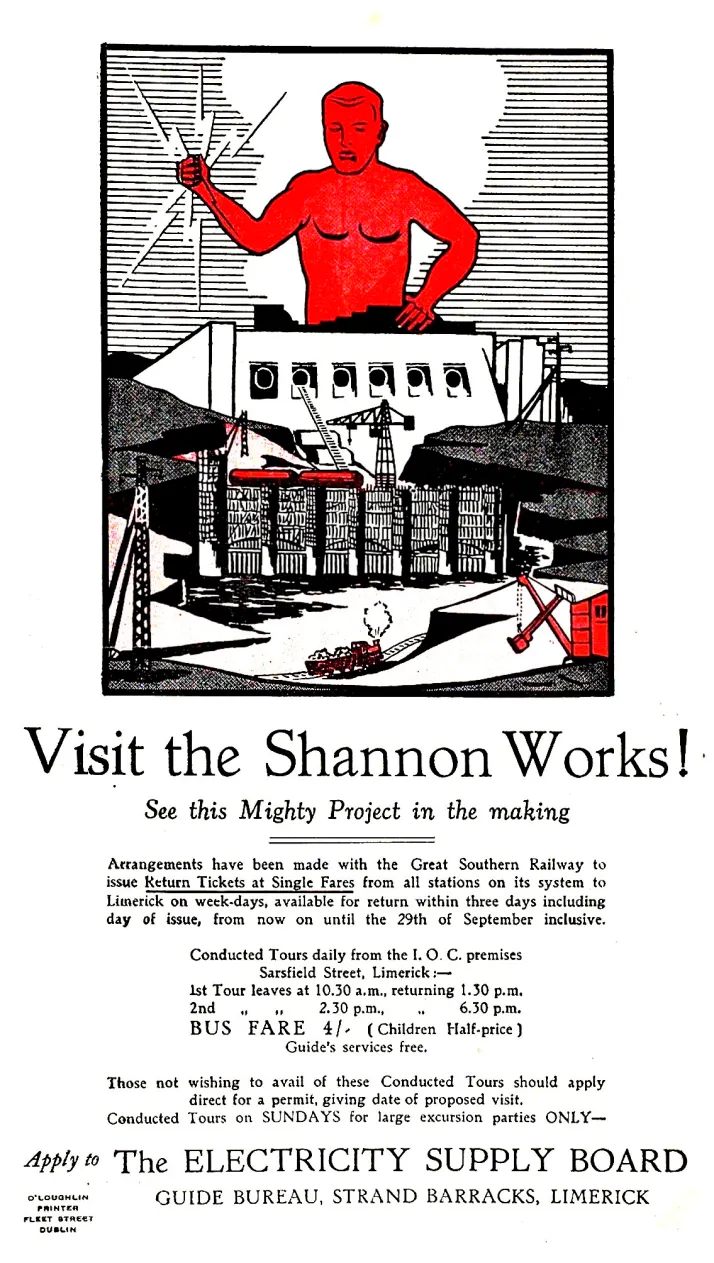
One of the first advertisements featured an image of a giant masterminding the Shannon works and detailed the opening of the Scheme to visitors, to see history in the making and no doubt to instil a sense of national pride.
Early advertisements detailed the engineering logistics of the Scheme noting ‘constructing the huge embankments of the new canal on the Shannon Works, at the rate of 1,200 tons per hour, is the remarkable feat performed by one of the great bank building machines’. The copy for these print advertisements were sophisticated, and typical of the 1920s and 1930s.
1930s
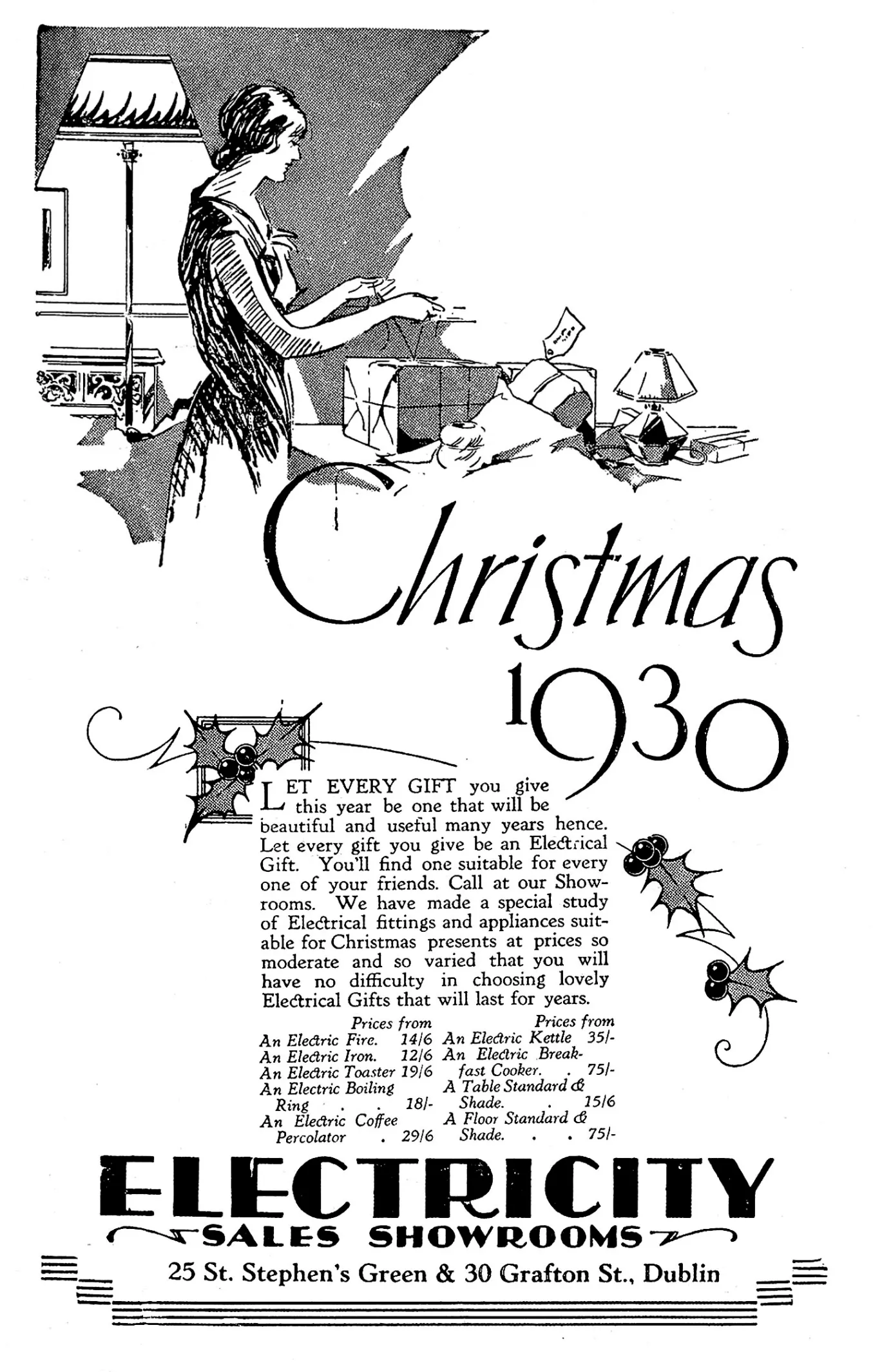
In Ireland in the 1930s electricity was a marvellous technology and, while available in towns and cities from local suppliers since the turn of the century, its use was limited. ESB had to convince the population at large that electricity was not only perfectly safe but also easy to use and would change their lives for the better.
The early 1930s, in spite of the Great Depression had been an opportune time for ESB to launch itself. On the world stage it was a time of movement and modernisation, socially, technologically and culturally and the general enthusiasm for modern technology helped ESB in the push to electrify the country.
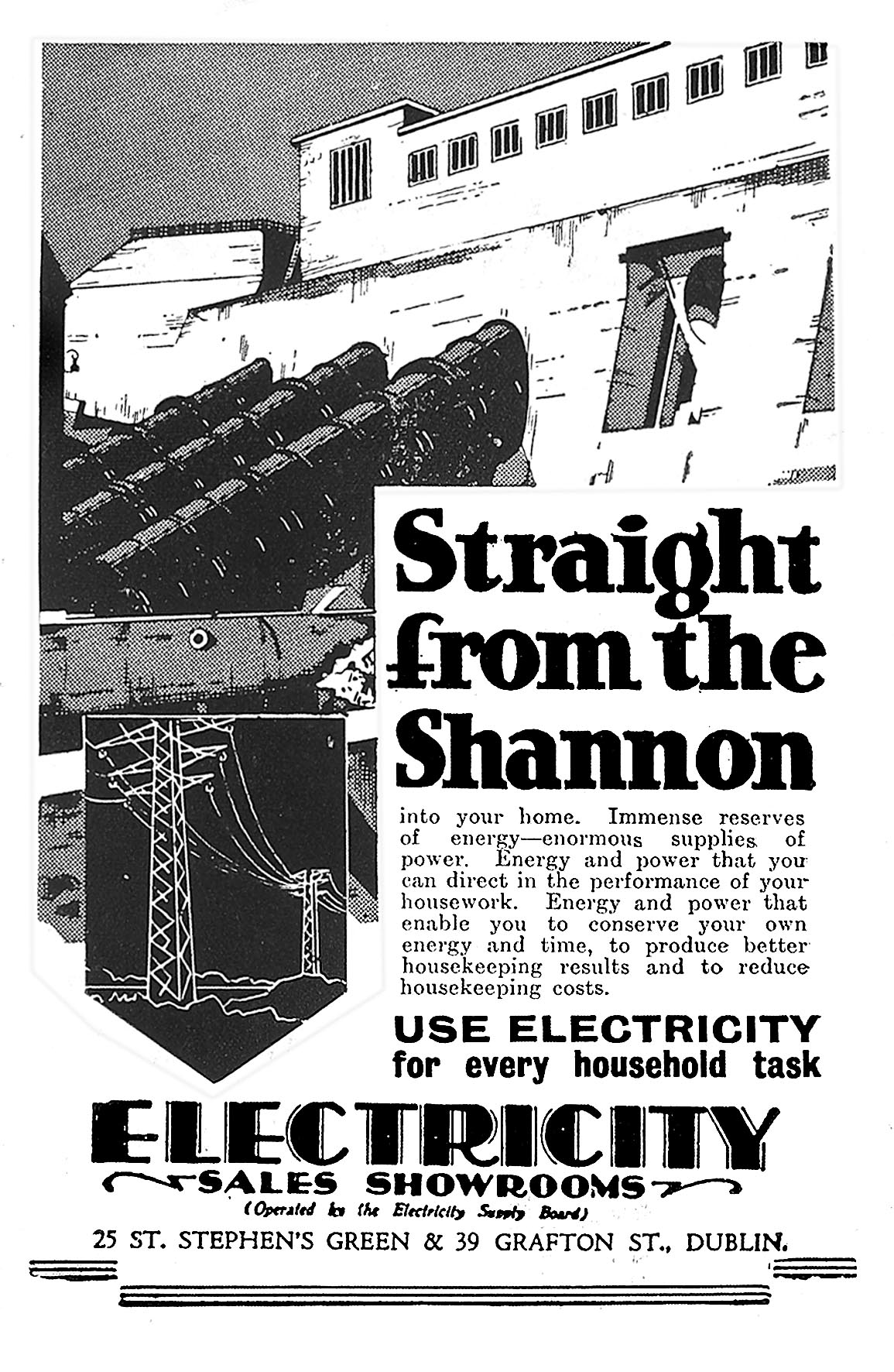
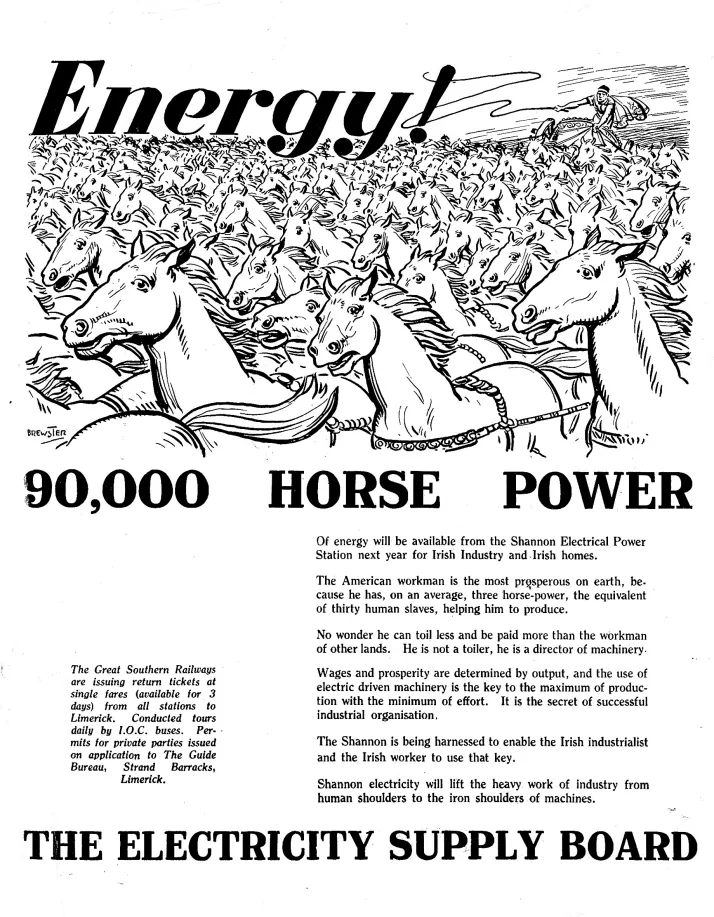
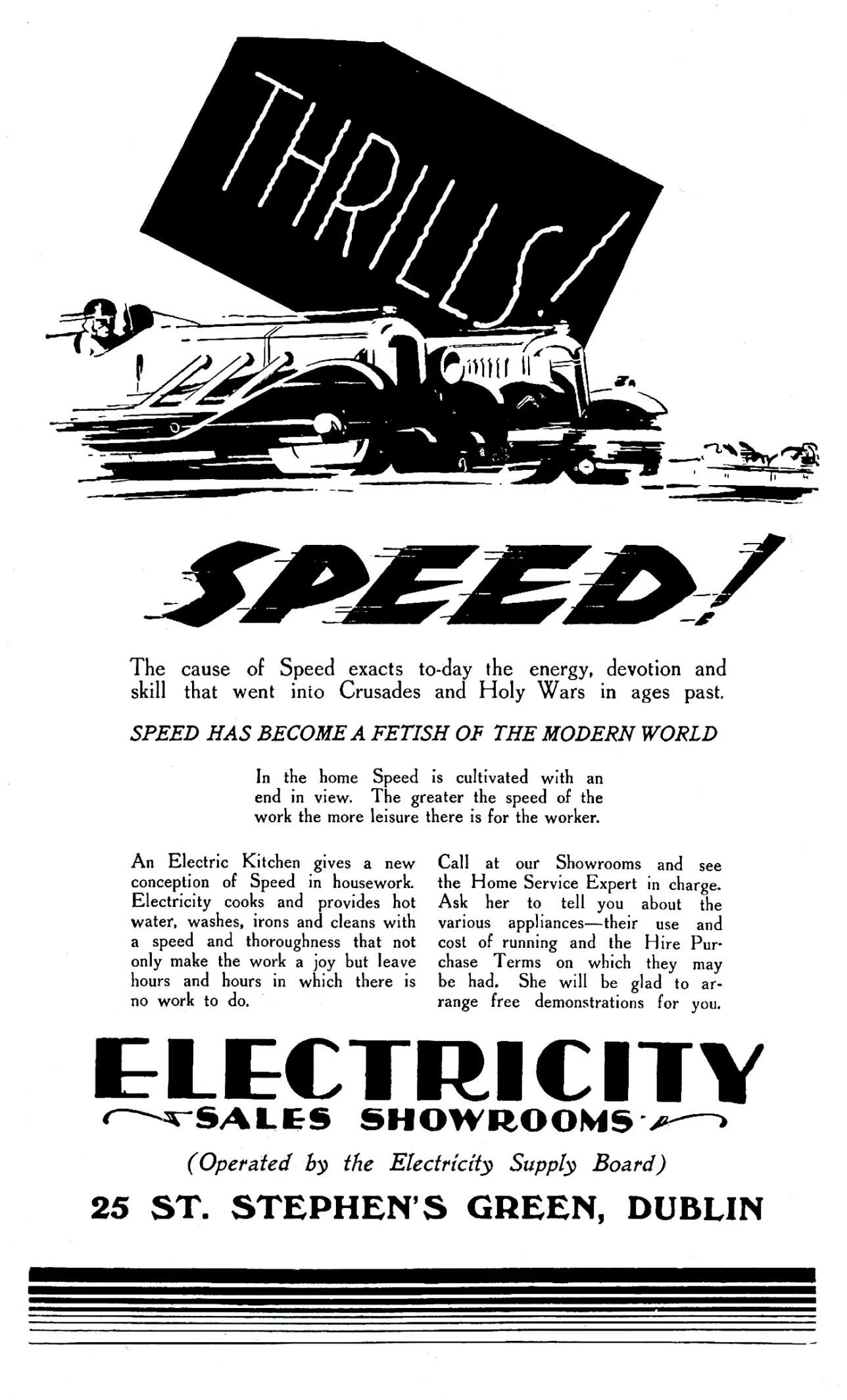
Advertising messages were direct and effective – allaying fear of electricity, ‘A child can do it’; the extent of the Shannon Scheme in manufacturing ’90, 000 Horse Power’ and convincing consumers to furnish their homes with domestic electric appliances , ‘Electricity Lights, Cooks, Washes... ‘.
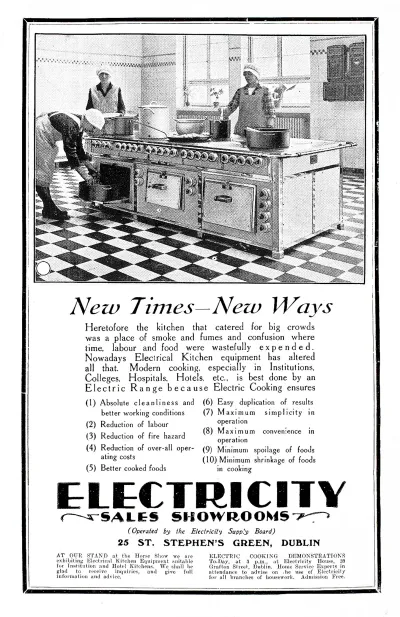
In 1931 ESB opened their first electricity sales showroom on St. Stephen’s Green in Dublin. The style of advertising focused on the futurist movement with its emphasis on technology and speed.
1940s
When World War Two broke out, no one believed it would last for very long but as things progressed rationing of all consumer goods was introduced. The biggest problem for Ireland was the fact that the surrounding sea was, literally, a mine-field, and a playground for German U-boats. Imported goods like tea (one ounce had to last a week) became scarce and essentials like oil and coal for our power stations were especially precious.
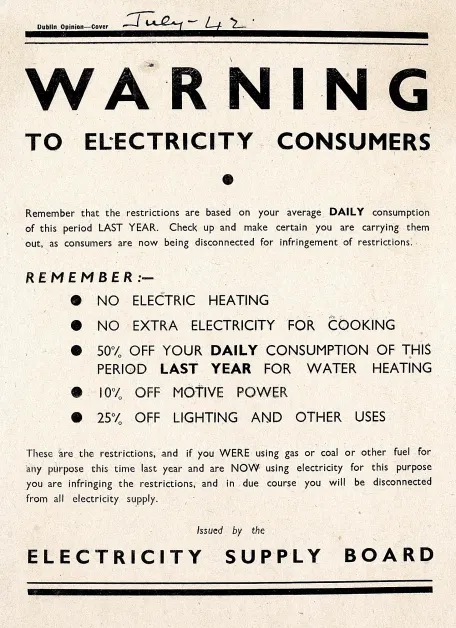
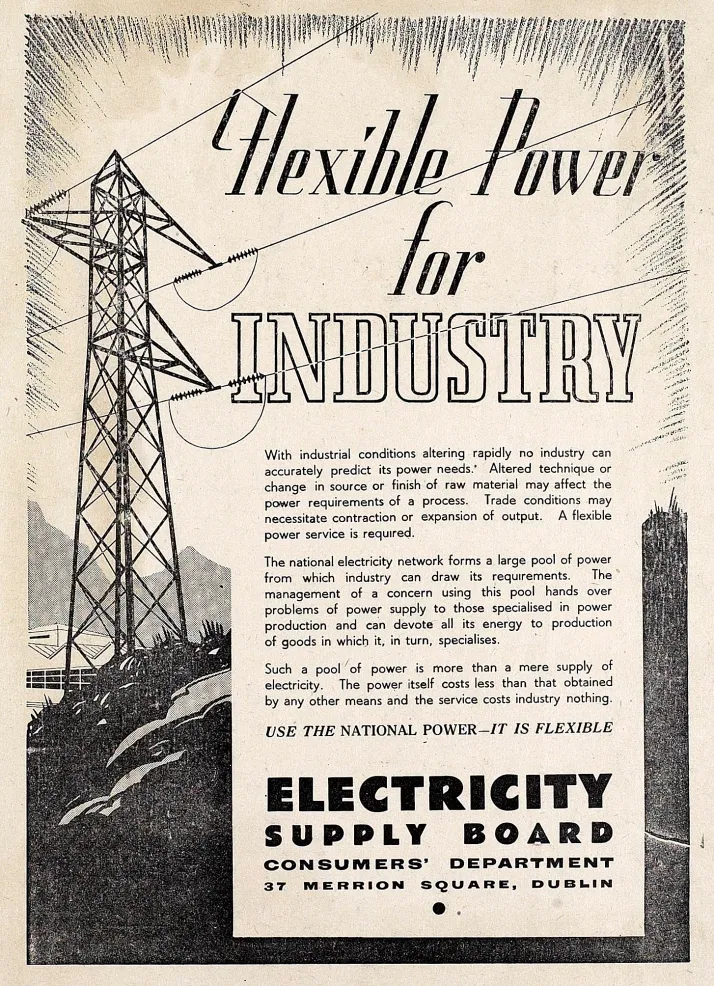
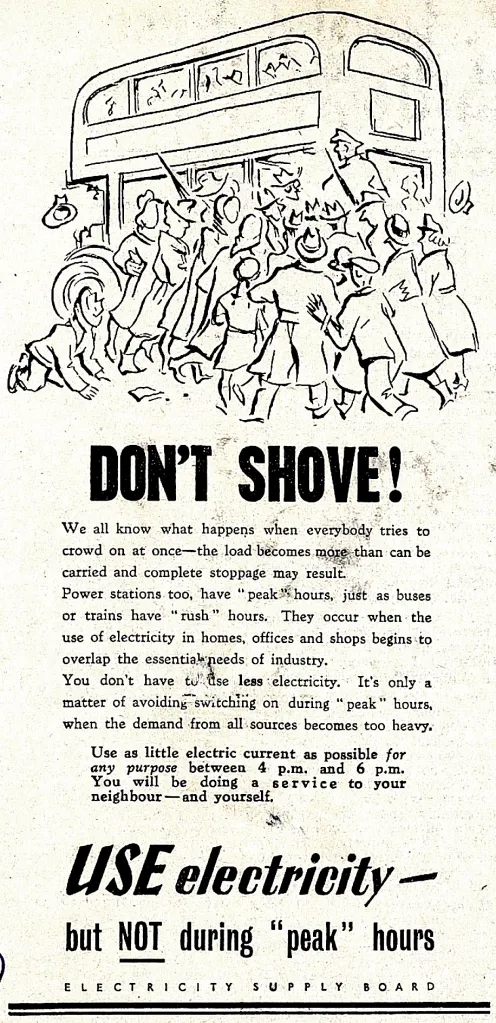
In 1940 ESB was still promoting ‘Happy Thoughts’ with electrical appliances in the showroom and encouraging industry to switch to electricity. However, due to war time rations coal and oil imports were severely restricted. In addition successive dry summers left water levels low for generation at Ardnacrusha. All of ESB’s advertising moved away from promotion and into conservation. Consumers were asked to switch off during peak hours – ‘If you waste now you will want later’ was the message. Consumers going over their ration of power were disconnected. Spare parts for appliances were unavailable and for a time you could only purchase a new electric fire if you took along the older, less efficient model for replacement – along with your ration book. Paper was rationed during the war years and this was reflected in the advertising with the absence of any unnecessary illustrations.
However despite the economic conditions, the 1940s also saw the beginnings of the ‘Quiet Revolution’, the electrification of rural Ireland. The first pole of the Rural Electrification Scheme was erected in Co. Dublin on 5th November 1946 and the first tentative steps to bringing electricity to the farmer and rural dweller were taken.
1950s
In the 1950s, electricity generation resumed as normal and there was an expansion of the national grid. Seven more peat-burning stations were planned around the country bringing not only more electricity to more homes and businesses but more employment. To raise the funds necessary for this expansion , ESB issued ‘guaranteed stock at 6%’. Our advertising reflected this development and focussed on the benefits of rural electrification.
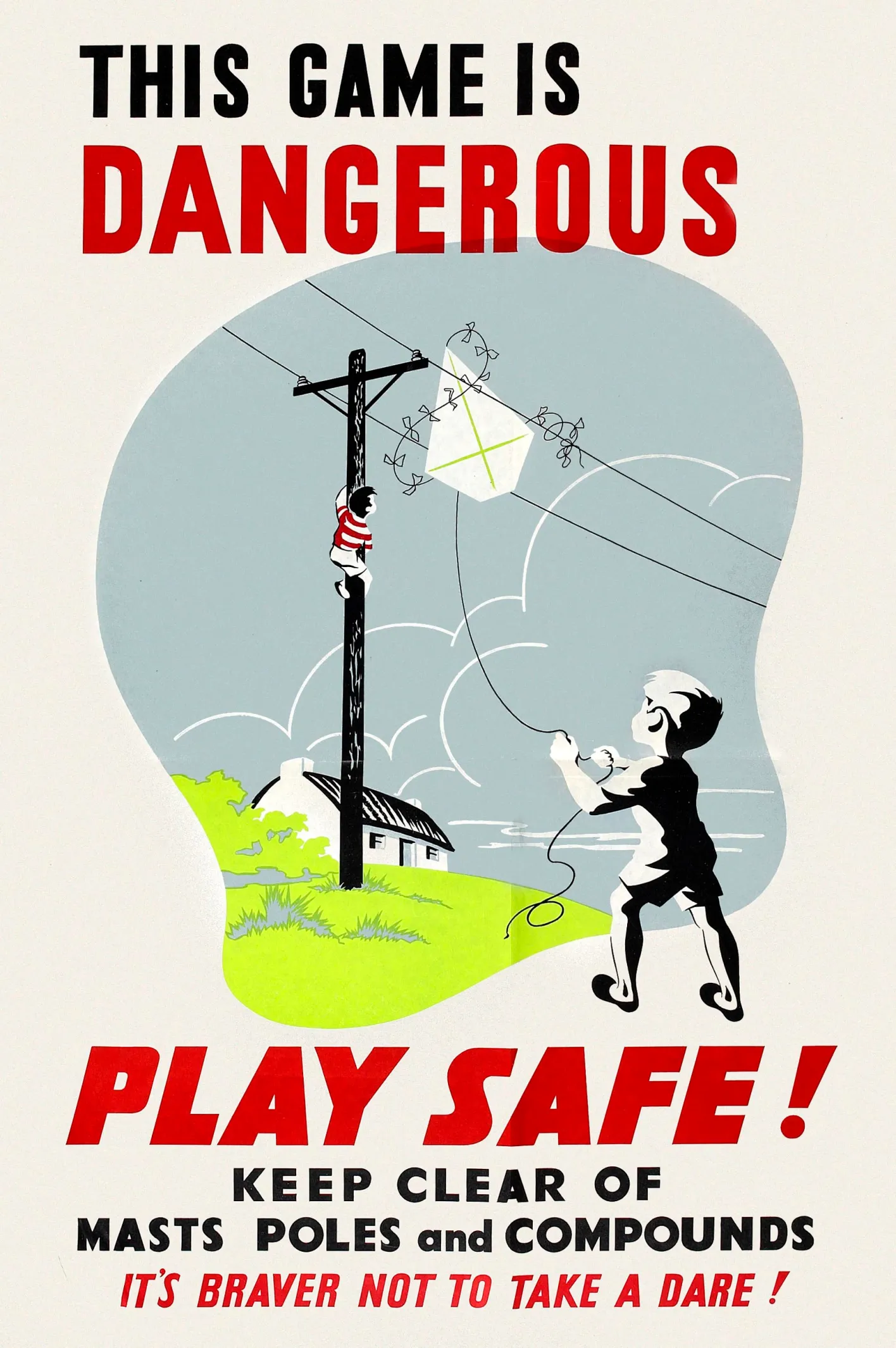
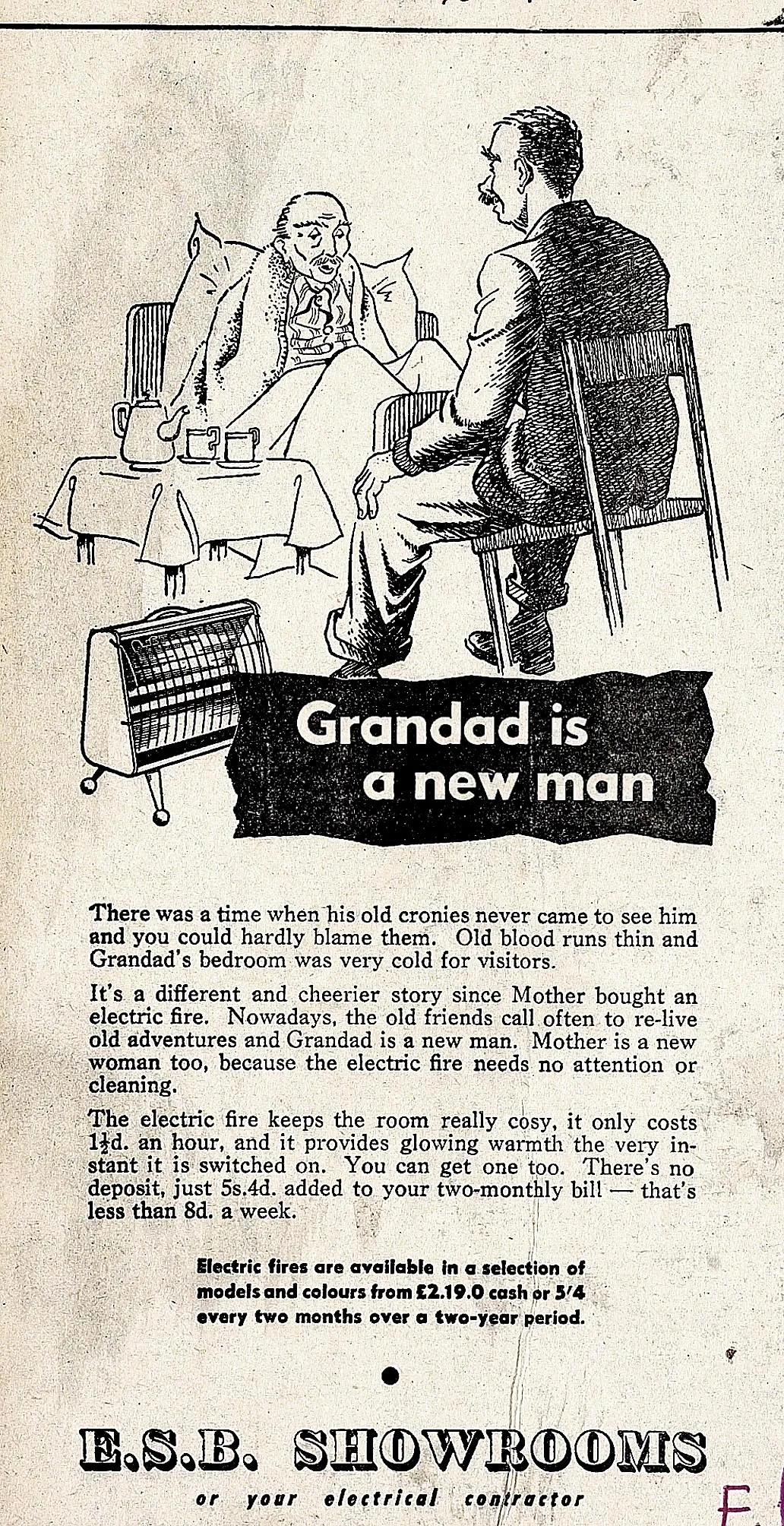
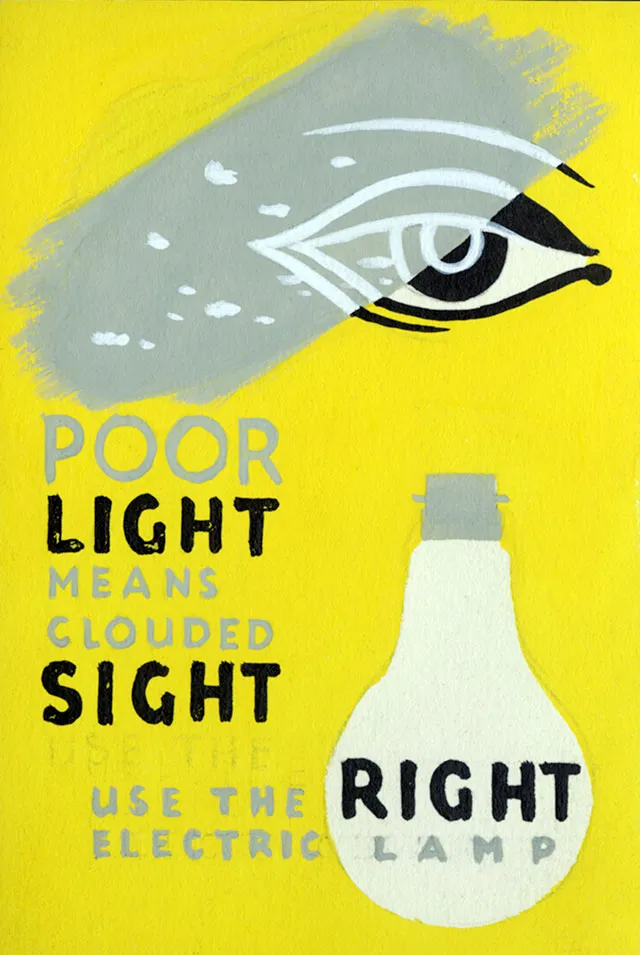
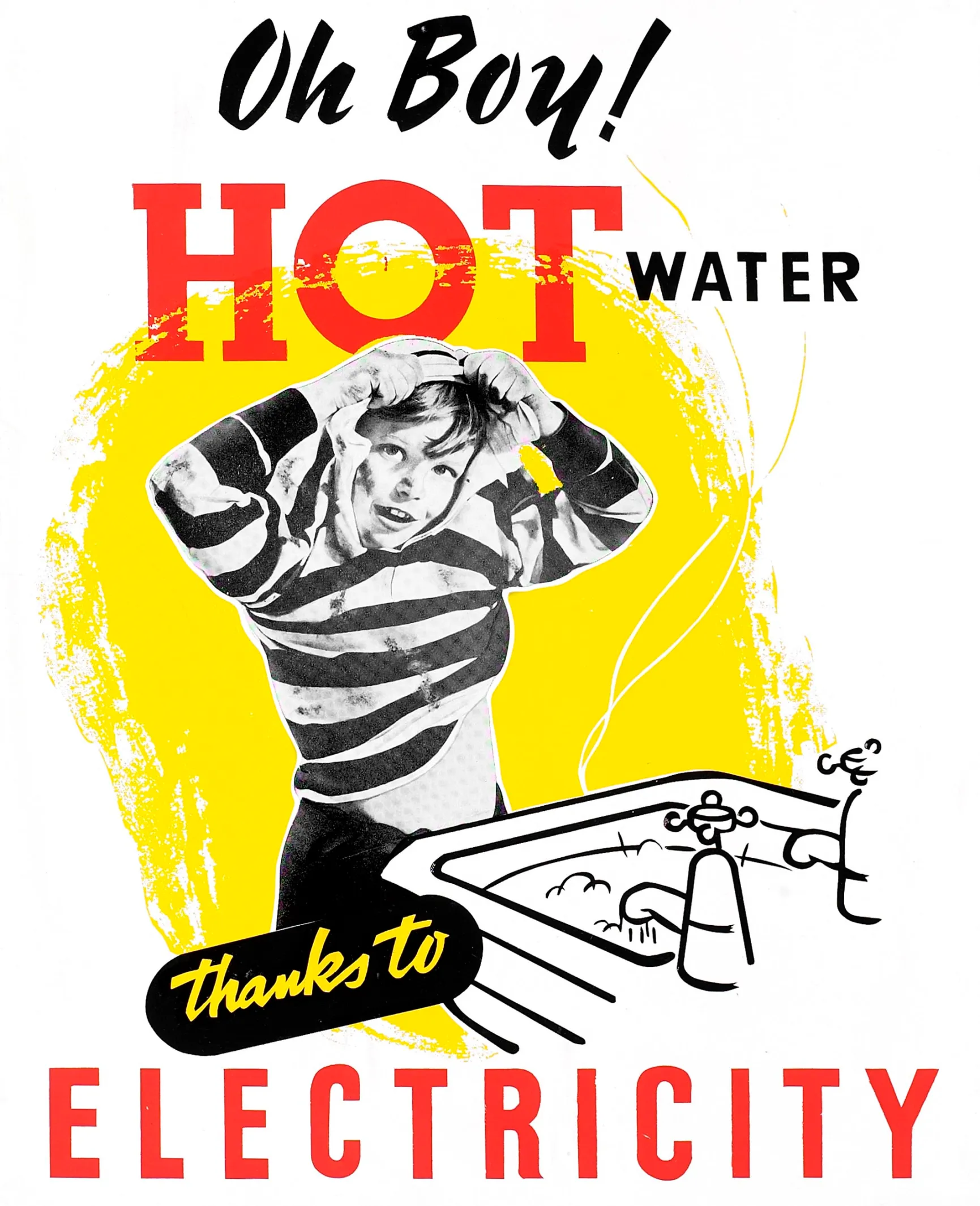
‘Look out for this Van’ was a message that preceded the arrival of the rural canvassers and demonstrators. The main advertising messages centred around what electricity could do on the farm and appealed on two fronts – ‘Electricity in the Home’ and ‘Electricity in the Farmyard’. Advertising messages were directed to the rural housewives focusing on labour-saving qualities and to the male population relating the moneysaving properties – the ready availability of hot water being the big selling point. Following war time restrictions, colourful illustrations were once again returned to advertise the benefits of electrical equipment. Advances in technology ensured that advertisements began to feature colour and photographs instead of hand drawn illustrations.
1960s
The 1960s was a decade full of optimism. Thousands of Irish people returned home, following the mass emigration from the recession of the late 1950s. Employment figures increased and take-home pay was on the rise. The Rural Electrification Scheme had installed the electricity infrastructure through most of the country bringing more than 300,000 additional rural consumers into the system by 1967.
Although print advertising still had a significant role in advertising and radio was firmly established, there was a new medium of advertising in Ireland, the television. In 1961 the new technology that was to change Irish culture was launched with the establishment of Telefis Eireann and ESB began advertising on this new medium. Advertising messages on television relayed the virtues of instant hot water, electric heating and cooking were promoted as a necessity to modern life. To convince the housewife to part with her gas cooker or traditional fuel-burning range and ‘switch to electric cooking’, ESB emphasised the cleanliness, the modern, space age, stainless steel convenience of electric cooking and all for a mere 5 shillings for 6 people for 7 days.
Cookery demonstrations and competitions carried ESB’s sponsorship with one of our first forays into the National Ploughing Championships taking place in 1961. A film was also made by ESB called Liquid Asset, promoting the use of electric pumps to bring running water into thousands of rural homes – this was as recently as 1967. It was also the beginning of the big push for electric heating and all-electric homes.
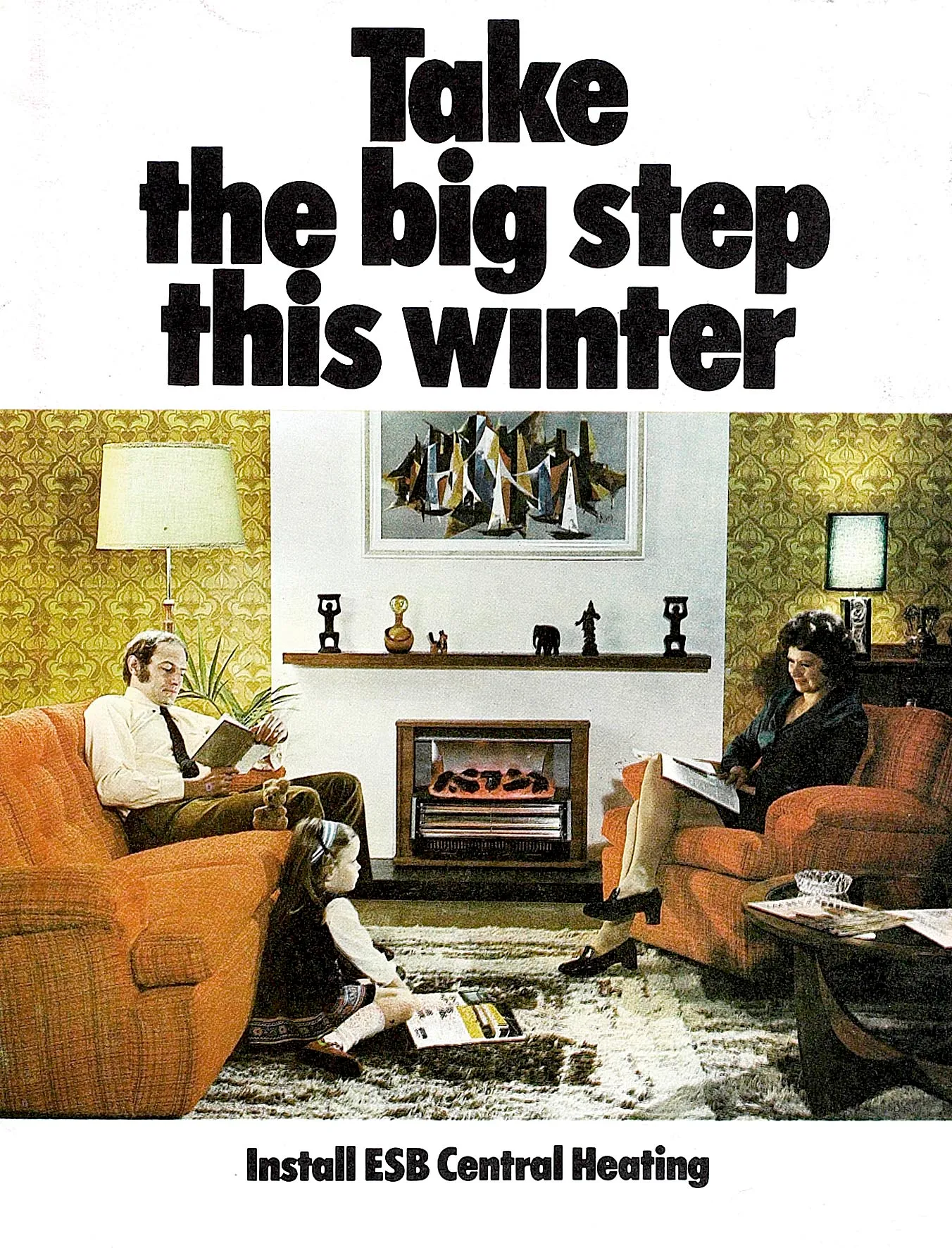
Towards the end of the decade the style of advertising began to move away from the text-heavy commercials to full colour pictures with few words and the strapline was born.
1970s
In Ireland we voted to join the EEC, adopted decimal currency and watched colour television for the first time. The early 1970s saw a continuation of the boom times of the late 1960s. Business and industry were flourishing, rural electrification was virtually complete and oil was cheap. ESB was pushing for a growth in load demand. The all-electric house was actively promoted as the way to go.
In 1974 however, everything almost ground to a halt with the first global oil crisis and the quadrupling of oil prices. Growth in electricity demand collapsed as the price of oil rocketed . Petrol was rationed, there were power cuts and discussions surrounding nuclear power. There was a brief recovery in 1976 and the discovery of natural gas off Kinsale. But, later in the decade another more serious oil crisis loomed . ESB was no longer promoting growth in demand but instead switched, almost overnight, to energy saving. Consumers were asked to turn down and switch off, to insulate, buy lagging jackets. Once again, text concentrated on offering information as opposed to bright colours and snappy slogans.
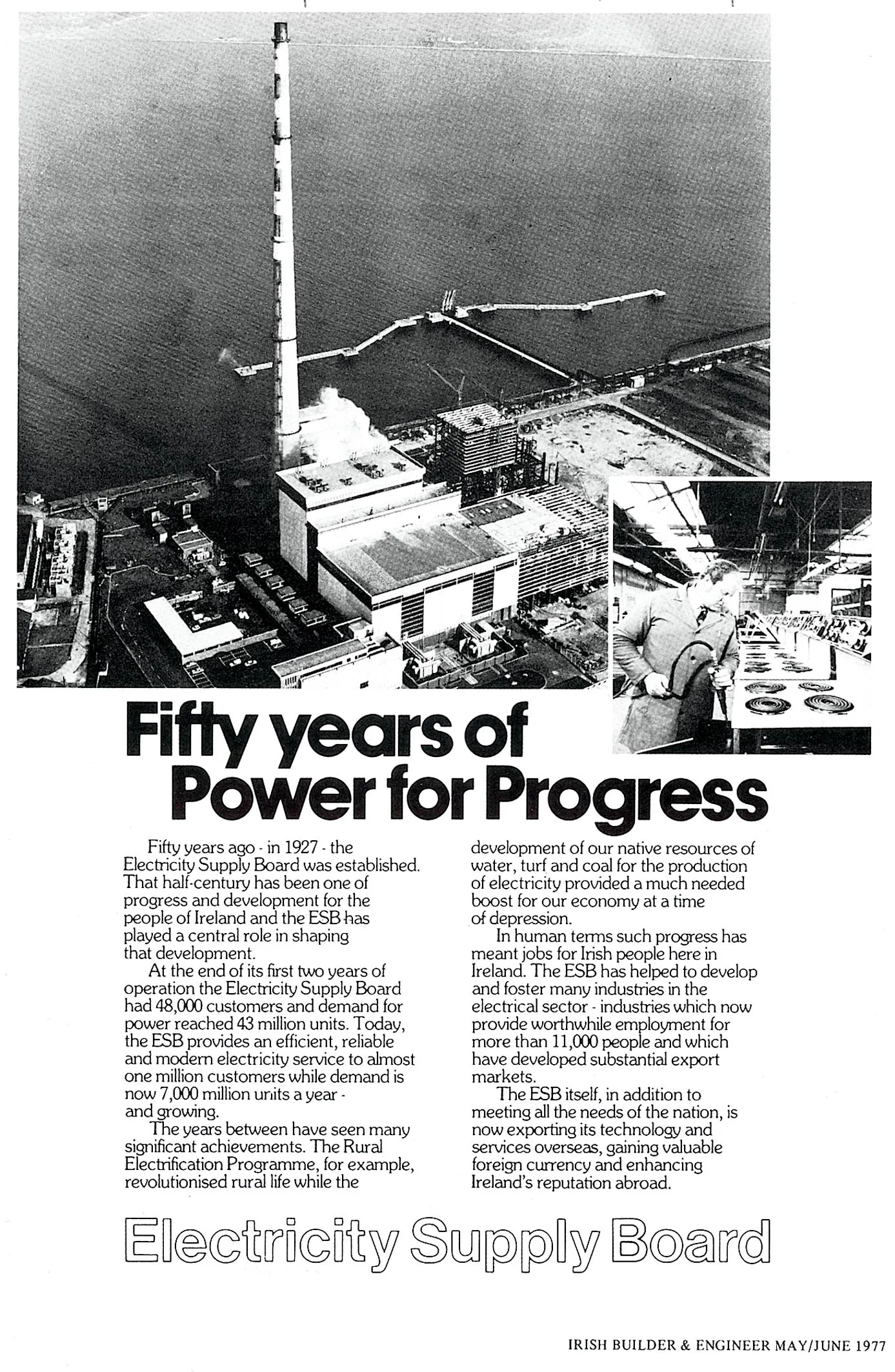
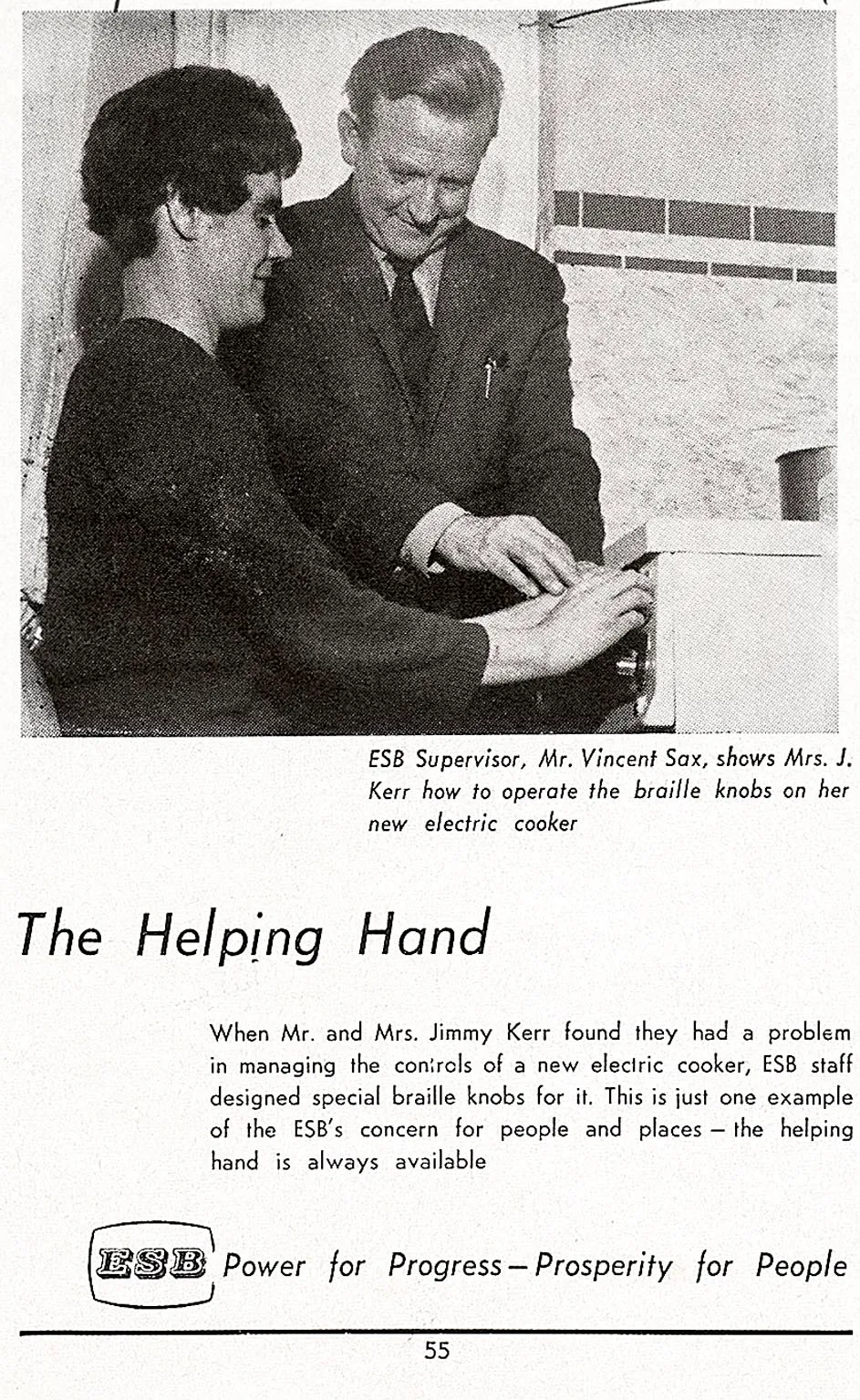
In 1977, crises aside, ESB celebrated 50 years of progress and development, achievements in helping industry and creating employment. The company established a new business venture – overseas consultancy work. Adverts were now taking on a more public relations flavour and customers were reminded how much everyday life depended on ESB electricity. ESB designed and supplied special braille knobs for cookers and widely promoted electrical safety.
Thankfully the industrial unrest, power cuts and oil crises passed and, as we moved out of the 1970s ESB was once again moving back into load promotion and launching the new “Night and Day” tariff.
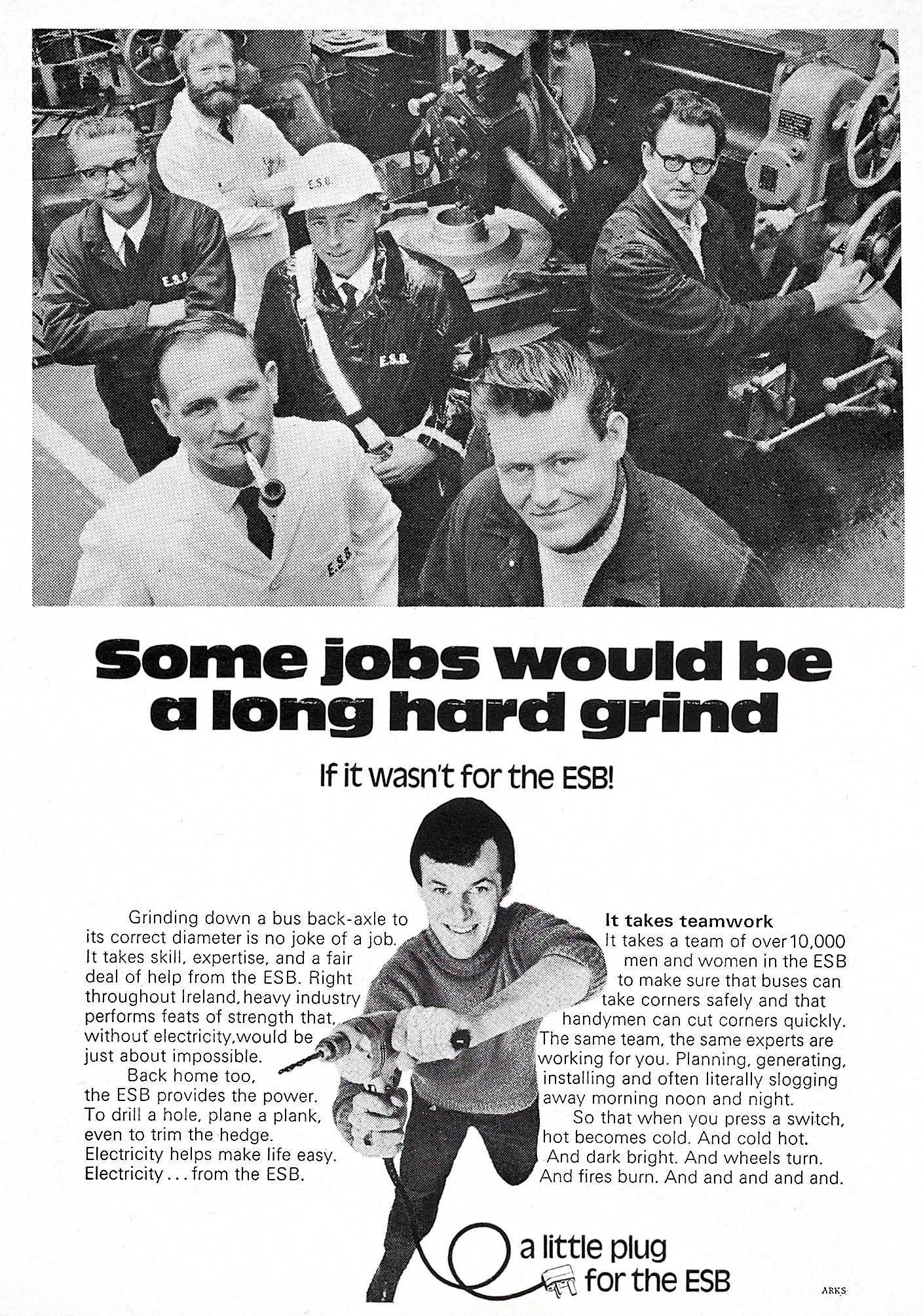
1980s
The 1980s saw such a growth rate in demand that generation and transmission resources were stretched. The arrival of Kinsale gas into Dublin and Cork brought strong competition in the home heating and cooking markets. A new approach to advertising was needed. Advertising in general was becoming more sophisticated and the biggest change was noticeable in television advertising. It was no longer enough to merely promote the product , television adverts now had to tell a story. The basic principal was to promote a brand image, sublimate a connection in the consumer’s mind with the product and your brand.
ESB’s advertising contract moved from O’Keeffe’s to Peter Owens Ltd. in 1986 and the Agency created some of the most memorable ESB television adverts ever made – ‘Father and Baby’, ‘Deb’s Dance’ and ‘Going Home’. The theme was one ESB was to use again and again – the invisible, always available, energy – electricity – echoed in the end-line ‘Electricity brings living to life’. New and vigorous advertising campaigns promoted everything from electric storage heating to tumble driers, cookers and hot water . Tag lines were used extensively – THINKELECTRIC, PLANELECTRIC, HEATELECTRIC, COOKELECTRIC to emphasise the all-embracing qualities of the electric option.
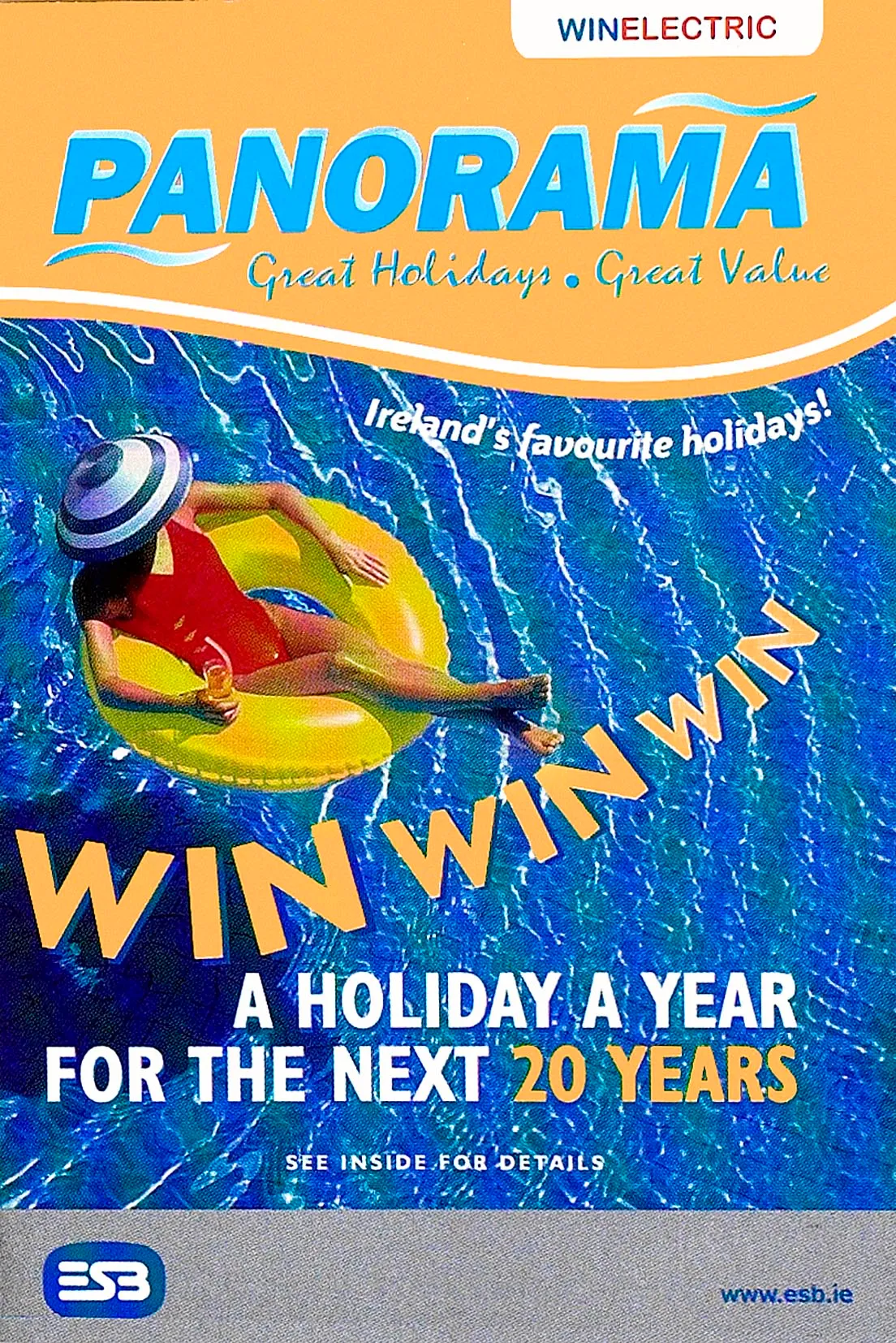
New into ESB portfolio was the branded NightSaver concept to put a keener marketing edge to lower priced night-time electricity. In order to encourage prompt payment the WINELECTRIC draw was introduced.
The mid 1980’s also saw a new approach to shop advertising . Hard hitting highly competitive advertising was prepared ESB for the competition from the electrical superstore and entry into the brown goods market.
As the 1980s drew to a close, energy efficiency was with us once again and a combination of environmental concerns and shrinking capacity was to colour the advertising campaigns in the early years of the following decade . And a new approach in ESB advertising and public relations came into being – sponsorship .
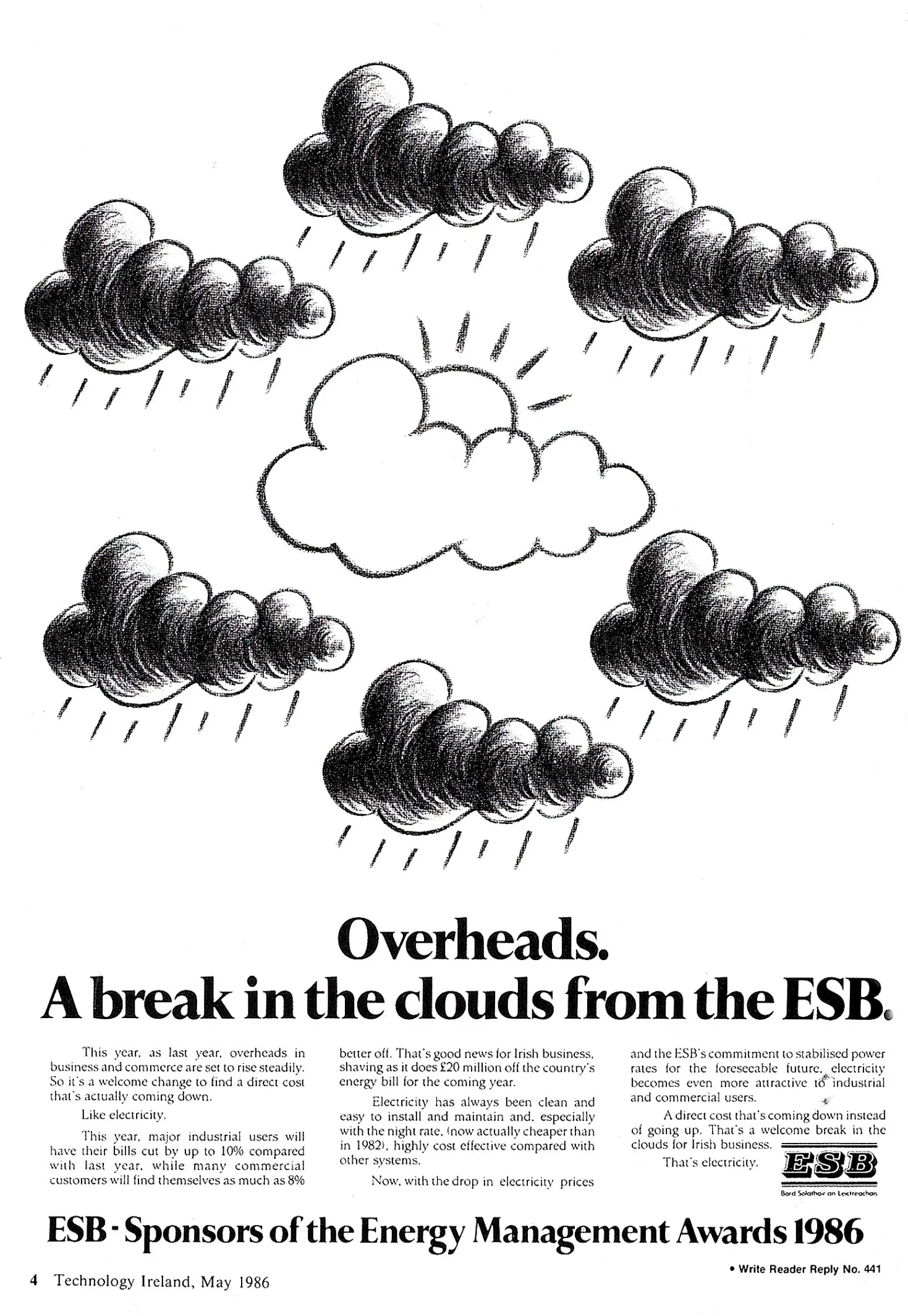
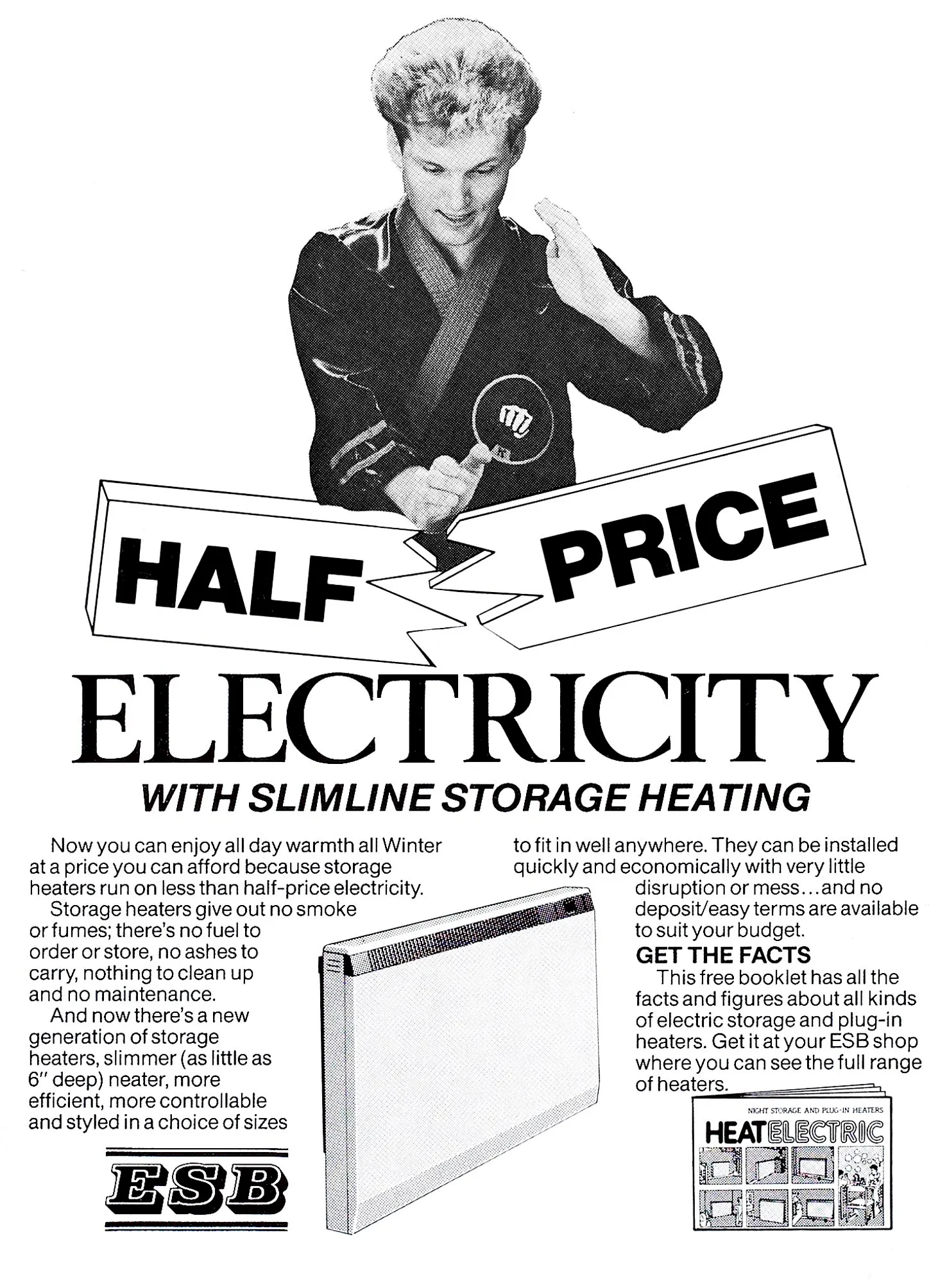
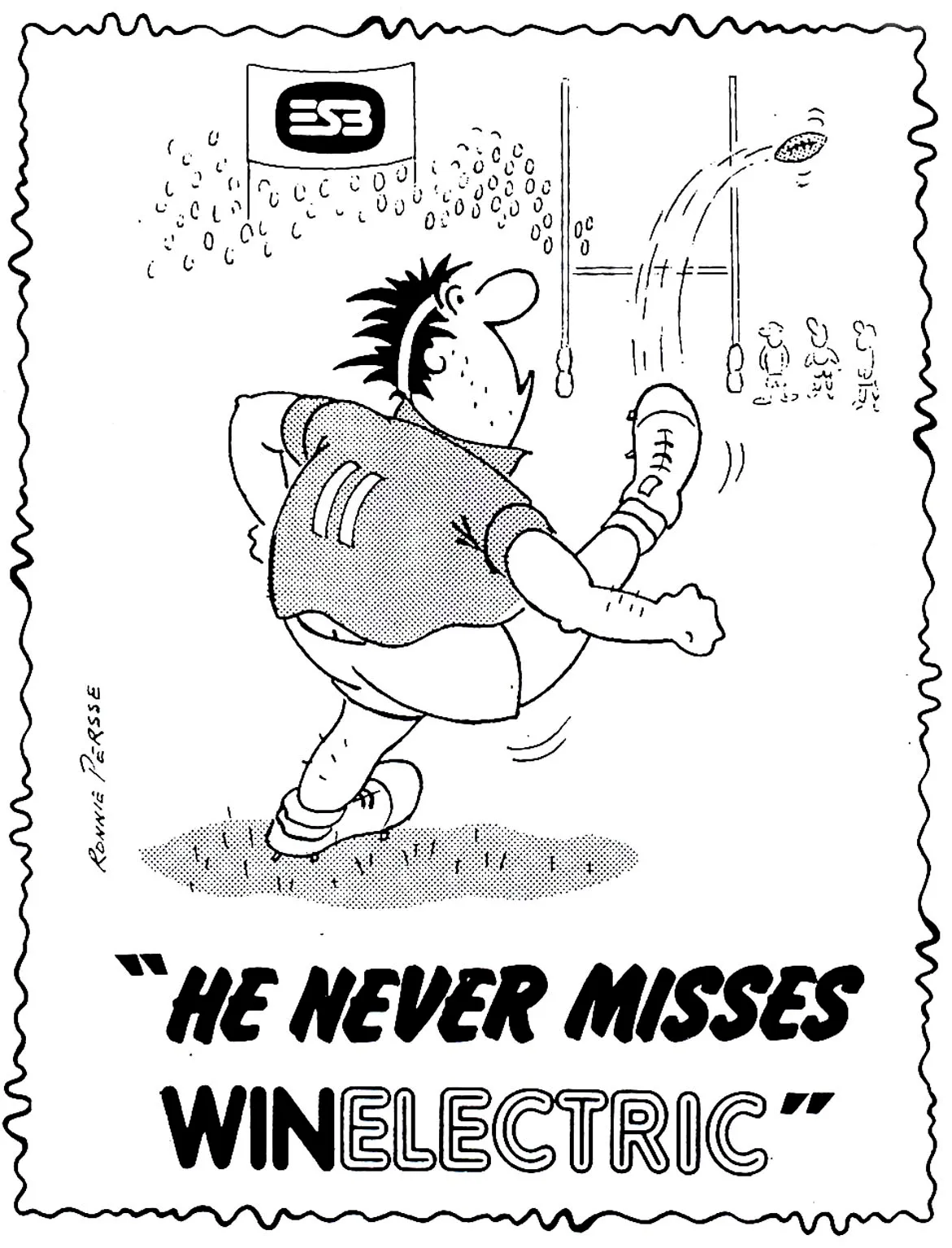
1990s
The beginnings of the 1990s were still lean times economically and unemployment was high. In the energy world there were worries about oil supplies as the first Gulf War took place and ESB faced a crisis with generating capacity being outstripped by demand. Huge capital investments were considered risky and Demand Side Management was adopted by many electricity utilities, including ESB, as a means of controlling the rate of growth in demand.
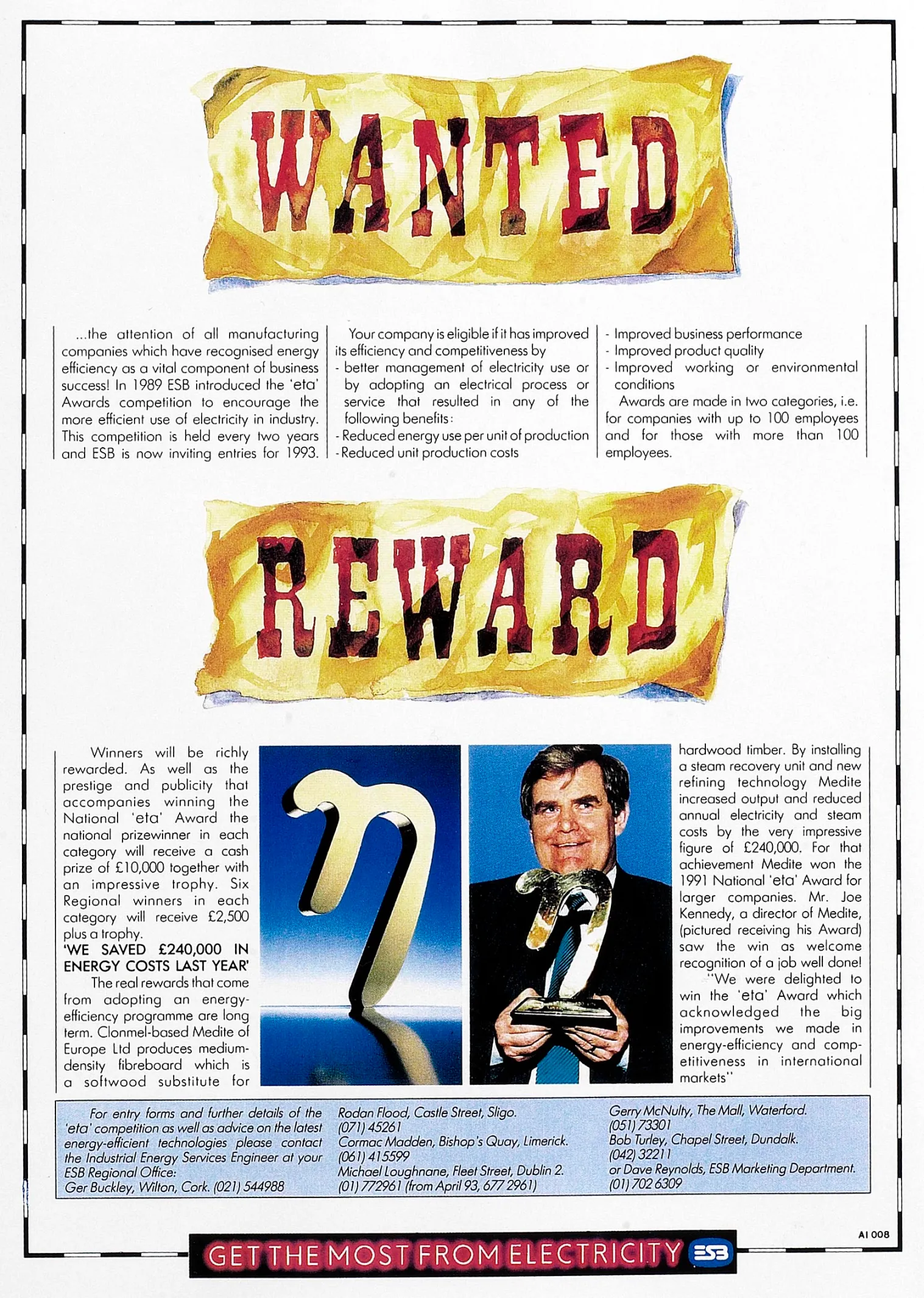
The big issue of the decade was environmental awareness and especially, energy conservation. Ireland was hurtling towards the new Millennium and ESB was bracing itself for de-regulation. Our advertising was faced with the dilemma of promoting the benefits of our product while encouraging people to use less of it. The advertising produced for these early campaigns was simple and to the point with vivid images used to get the message across. ‘Get the most from electricity’ was the strap-line employed across all sectors to focus on more efficient use.
CDP Associates Ltd took over the advertising contract for ESB in 1996 and, laying the ground work for a competitive era, adopted the strap-line for all ESB advertising “Where do they get their energy.” This line was adapted for energy efficiency promotions also – Where does water heating get the energy to save? Customers were encouraged to save both energy and money on all kinds of energy efficient products – CFLs, A-rated kitchen appliances.
The business of ESB sponsorship was established on an organised and commercially focussed basis. It associated ESB branding with support for the arts, sports and environmental issues. It constituted a big part of ESB’s corporate public relations media presence.
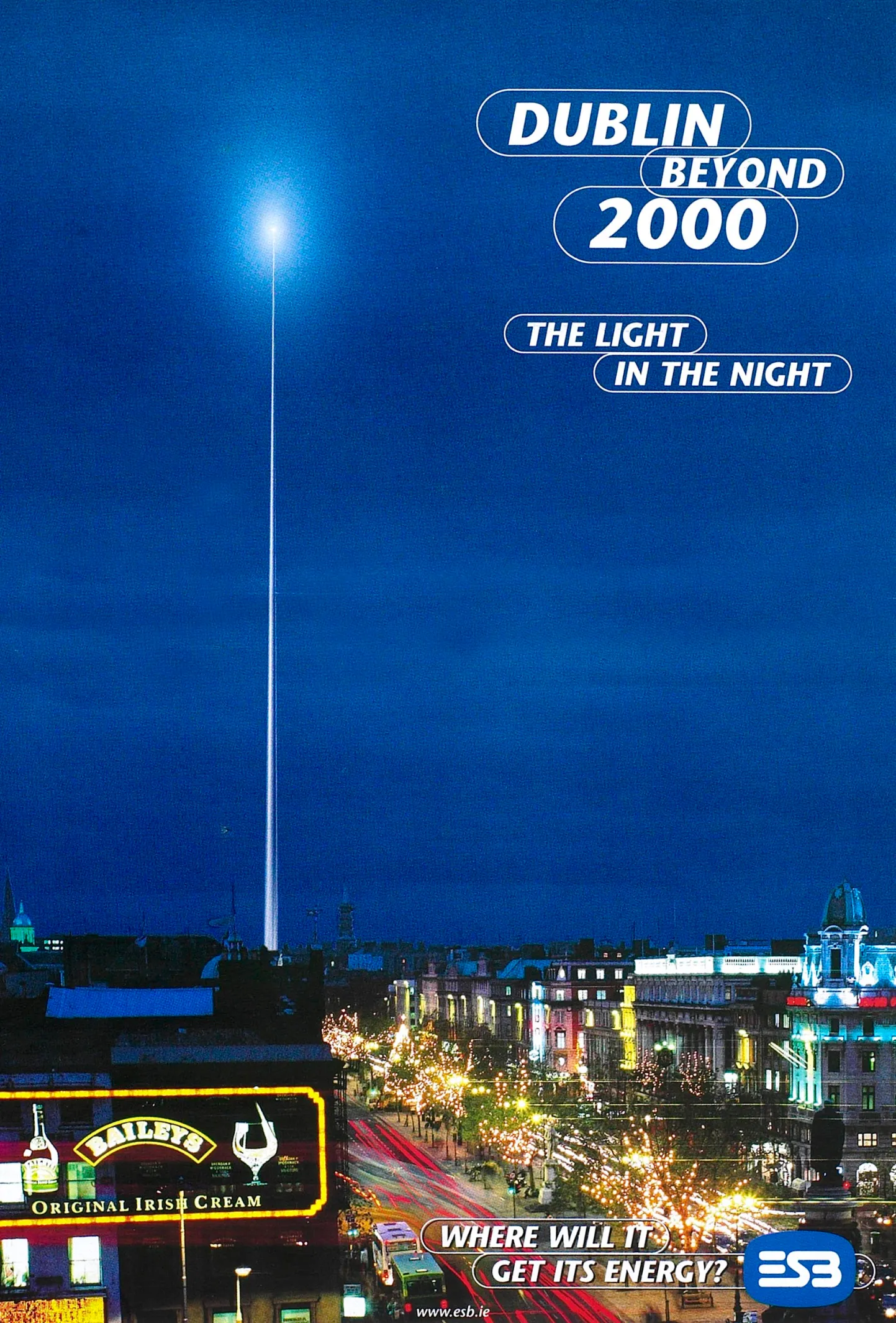
In 1996 we celebrated another 50th anniversary – the beginning of Rural Electrification. A year long round of roadshows, television and radio programmes, reunions and historical publications reminded everyone of the importance of ESB in Irish society – Where does the country get its energy? Looking to the future we also wondered where Dublin Beyond 2000 would get its energy? One of the biggest campaigns each year in the 90s was Energy Awareness Week. This involved the whole of ESB on a grand scale with competitions, street theatre, road shows, direct mailing, and major advertising using every medium. Dustin the Turkey was employed on a short-term contract basis!
ESB also made its first move into the newly opened electricity market in Northern Ireland. The print adverts produced by CDP were unique and created using a 360° panoramic camera to give eye-catching views of urban landmarks in Northern Ireland. As we hurtled towards the new Millennium ESB was facing a new energy industry structure with changes and challenges aplenty ahead.
2000s
The biggest change for ESB since its foundation occurred in February 2000 when the first phase of the opening of the electricity supply market to competition took place. A total restructuring of the company to prepare for the new industry structure was initiated. The content of our advertising had to reflect the regulatory climate.
In keeping with global trends and environmental protection protocols, active promotion of products that result in high electricity usage was curtailed. Product advertising was more focussed on energy efficiency.
Our contract with CDP Associates ended and, in 2002, for the first time, ESB engaged separate Creative and Media agencies – McConnells and Universal McCann. Early work from McConnells for ESB Customer Supply included business markets, sponsorships, an innovative schools project and Energy Awareness Week.
ESB Networks commissioned new TV and Print advertising for network safety with the theme focussing on electricity as a great “force of nature” . ESB Independent Energy Ltd advertised in the open competitive markets