The requirement set out by the Fianna Fáil government of the 30s and 40s, in which Seán Lemass was to play a leading role as Minister for Industry and Commerce, that the country become self sufficient and reduce the balance of payments deficit was a driving force that resulted in ESB being exhorted to develop both turf and hydro programmes in the 1950s.
The first peat-burning station, Portarlington using sod peat, was eventually commissioned in 1950. There followed the social experiment of using hand-won turf in small power stations near the Western seaboard at Cahirciveen, Screeb, Gweedore and Miltown Malbay.
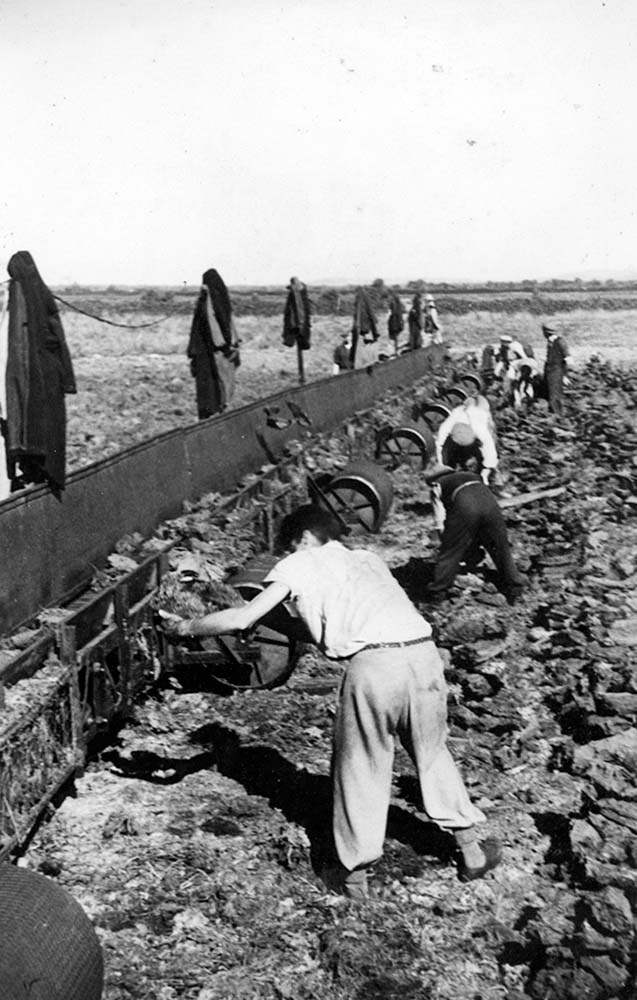 Harvesting machine, c.1950s
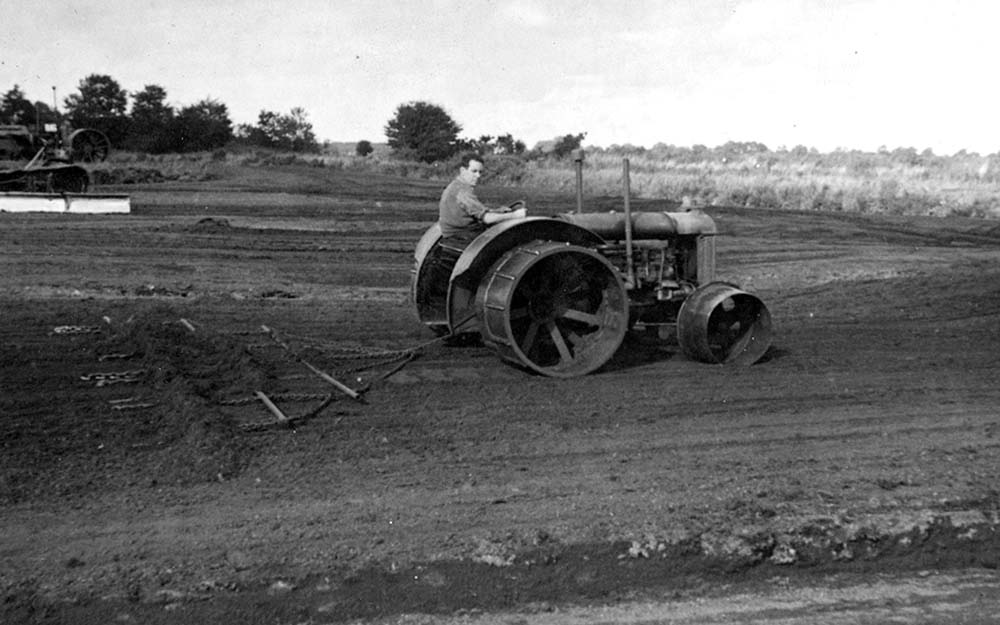 Bog surface being milled
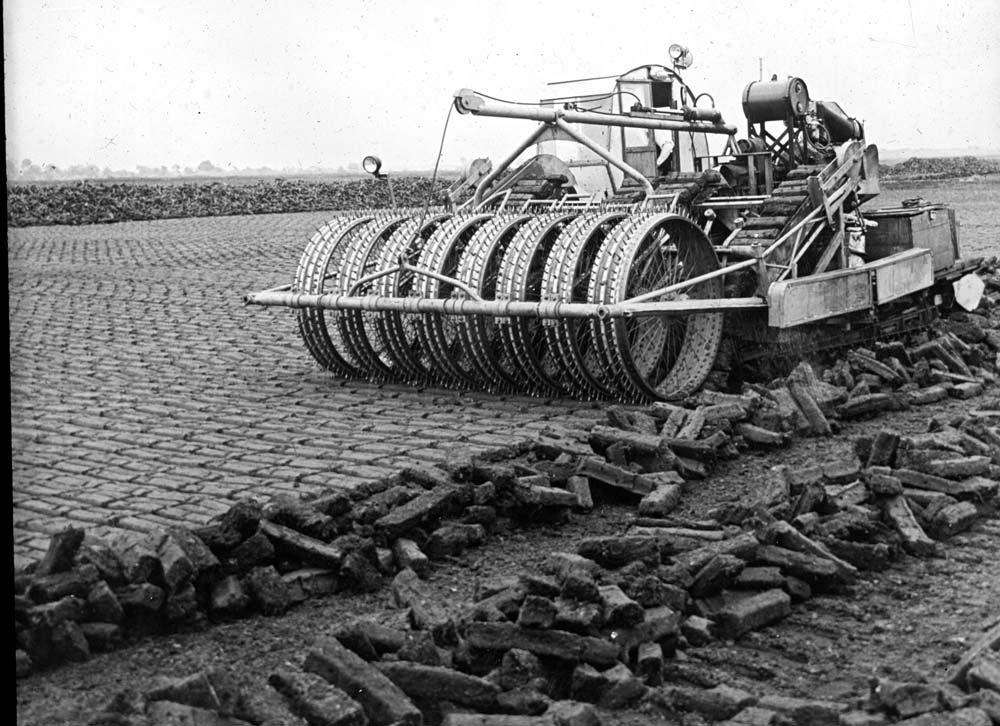 Peat collector
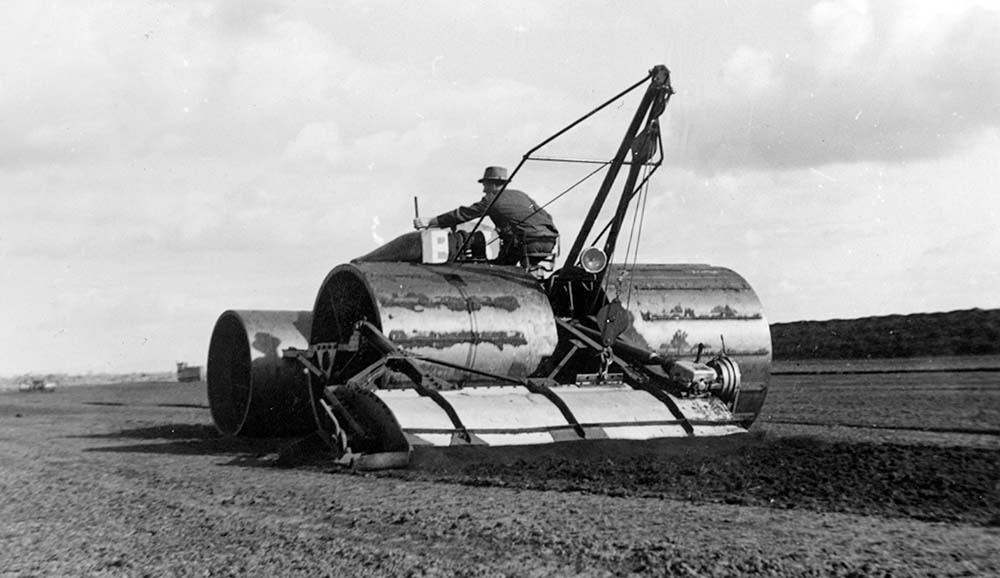 Levelling the bog
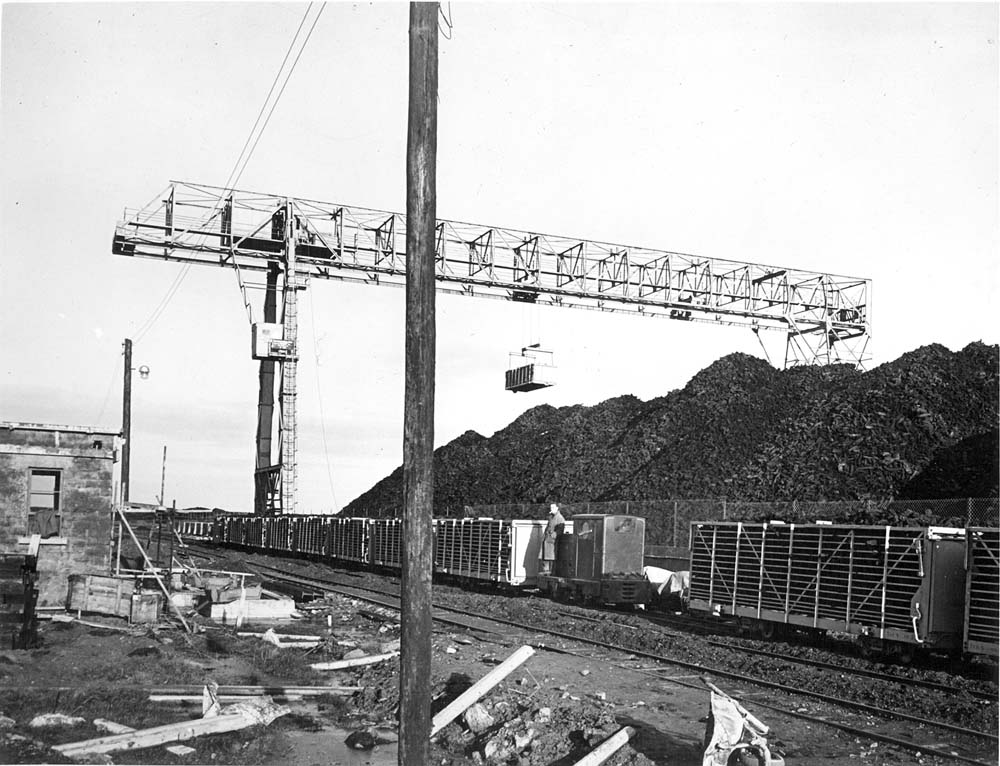 Transport and unloading of turf
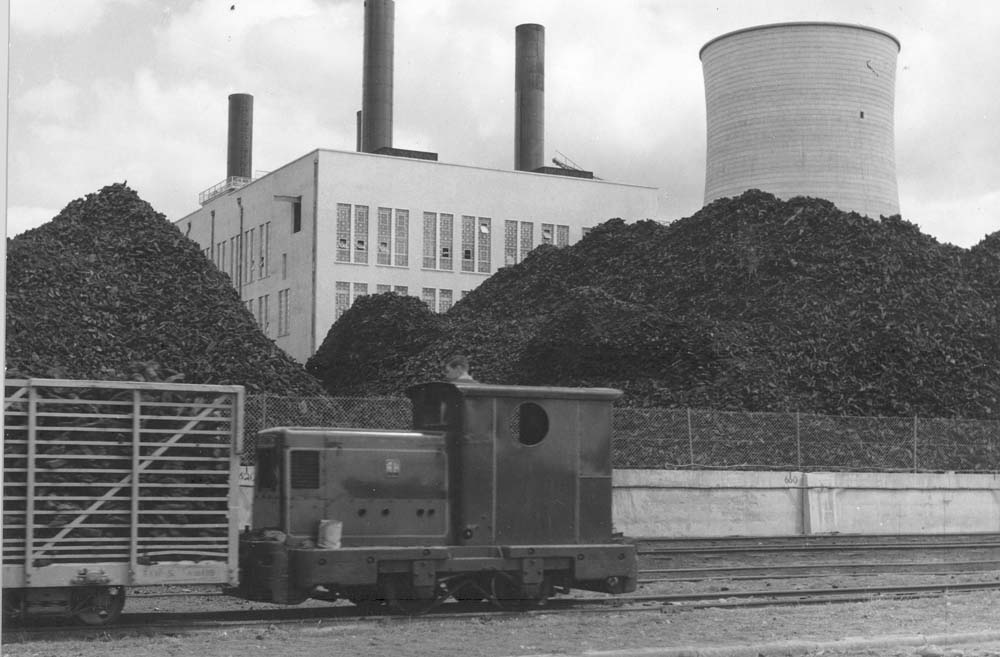 Turf piles at Portarlington
Between the early 1950s and the late 1960s the ESB installed a total of 407.5 MW of generating capacity based on turf. Other turf stations built included Allenwood, Ferbane, Shannonbridge, Lanesboro, Rhode and Belacorrick.
In 2004, two new stations were commissioned at Lanesborough (Lough Ree Power), Co Longford, and Shannonbridge (West Offaly Power), Co. Offaly. The current planning permissions for these two stations expired at the end of 2020 and both ceased generation at the end of December 2020.
Turf was a deliberate policy of diversity of fuel source. On at least three occasions, the presence of a diversified fuel source, through the availability of turf, enabled ESB to maintain output or to moderate price increases. These were the Suez crisis of 1956, the Six Days War in 1967 and in 1973-74 after the Yom Kippur War. Electricity production from turf peaked at a little over one third of output in the late 60s and dropped to about a quarter in the 70s.
Technology changes saw stations become more efficient over time. Power Stations also have limited lifecycles so they need to be replaced with more modern plant. ESB tries to optimise the mix of plant that they use to lessen dependence on a single source of fuel so the portfolio of plant in use at any point in time reflects these decisions.
View details on all turf/peat stations.
View ESB documentary on Portarlington Peat Station
View a joint ESB/Bord na Móna PR pamphlet from the 1980s titled 'Power from Peat'.