Implementation
First phase: 1946-1965
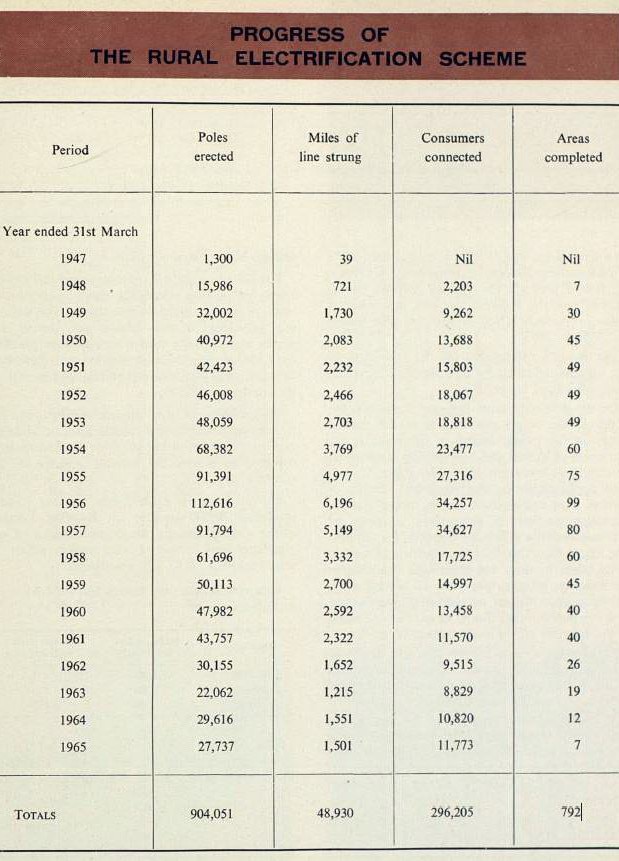
The sheer scale of the rural electrification project can be gauged from early estimates of the materials needed for its completion, namely: 1 million poles; 100,000 transformers; and 75,000 miles of line.The first phase of the Rural Electrification Scheme was implemented between 1946 and 1965.
Every county was divided into ‘rural areas’ of about 25 square miles, which were typically based on Parish boundaries, rather than geographic location. The 26 counties of rural Ireland were divided into a total of 792 rural areas, in ten districts.
Initially, one area in each county was chosen for connection, with priority given to those areas which yielded the highest revenue in relation to the capital cost of the supply network.
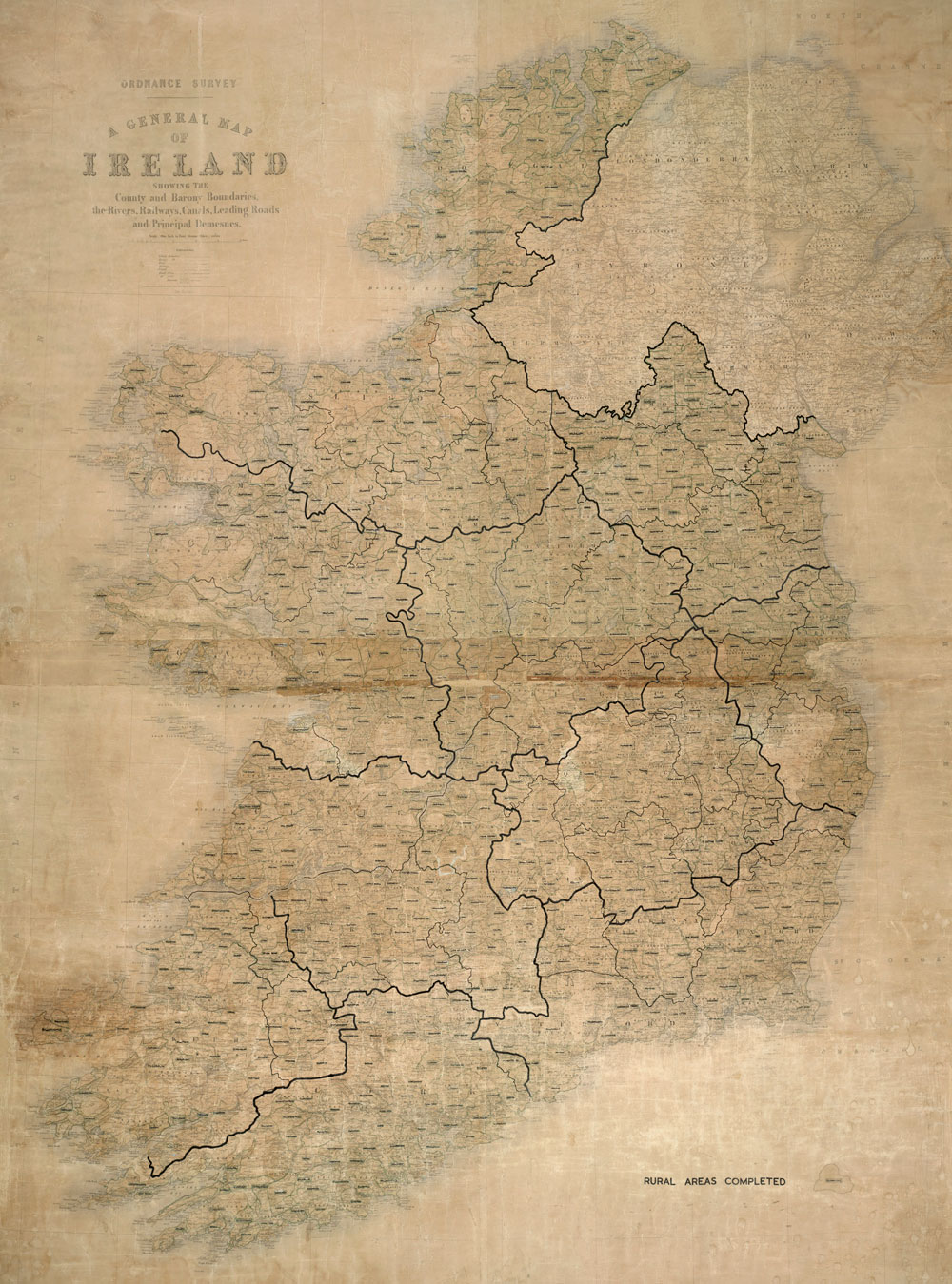
Connecting rural Ireland
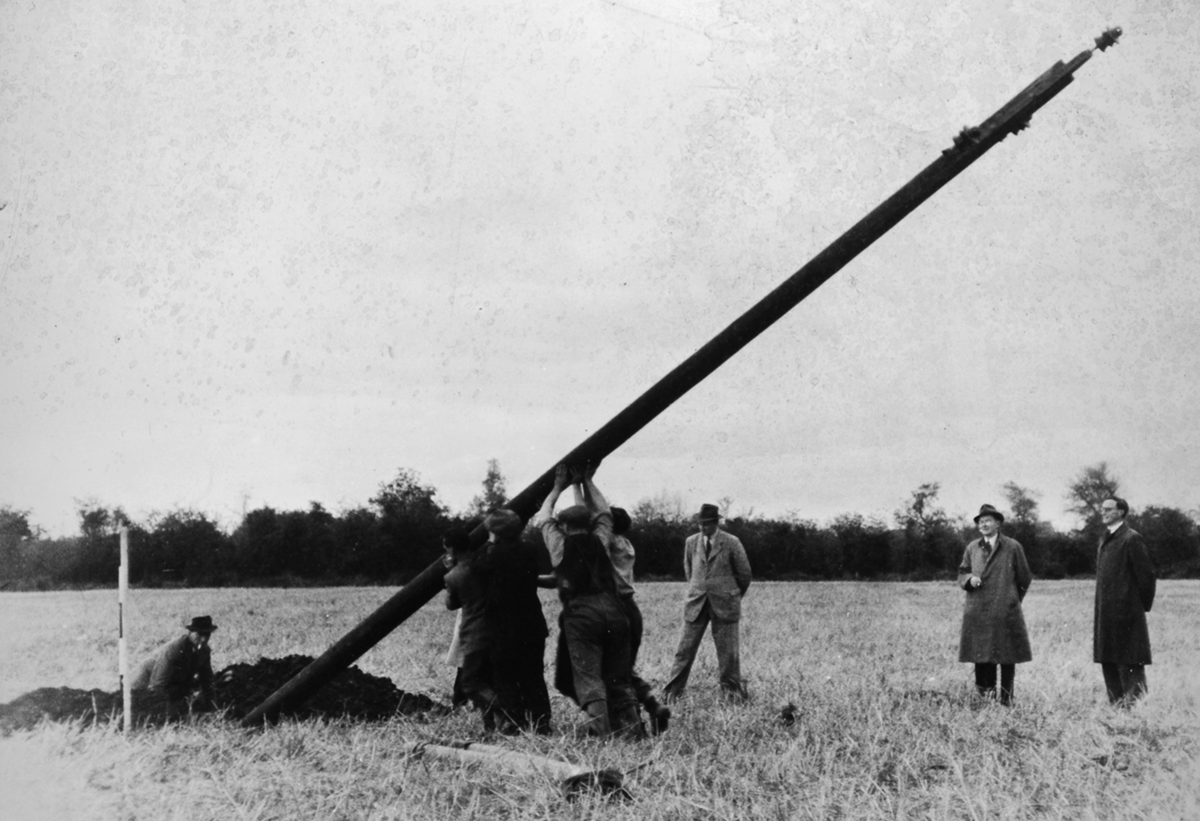
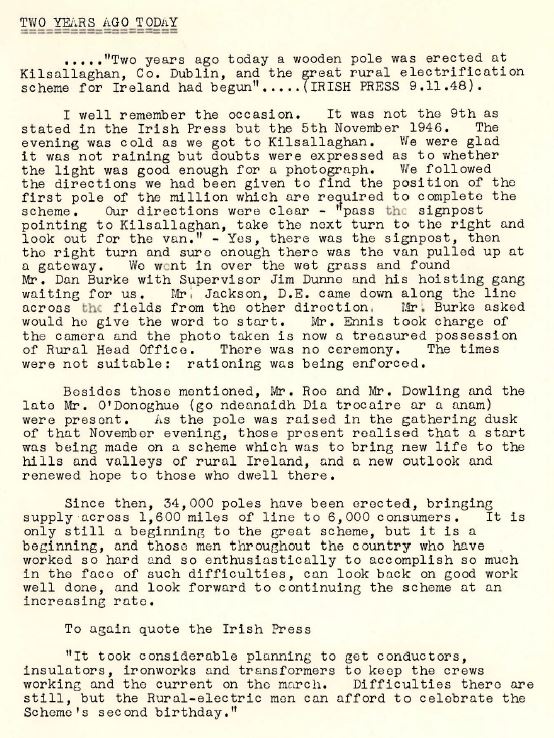
The first pole of rural electrification was erected at Kilsallaghan, North Co. Dublin, on 5 November 1946, and the first switch-on of a rural area took place the following January nearby in the village of Oldtown.
Changing times
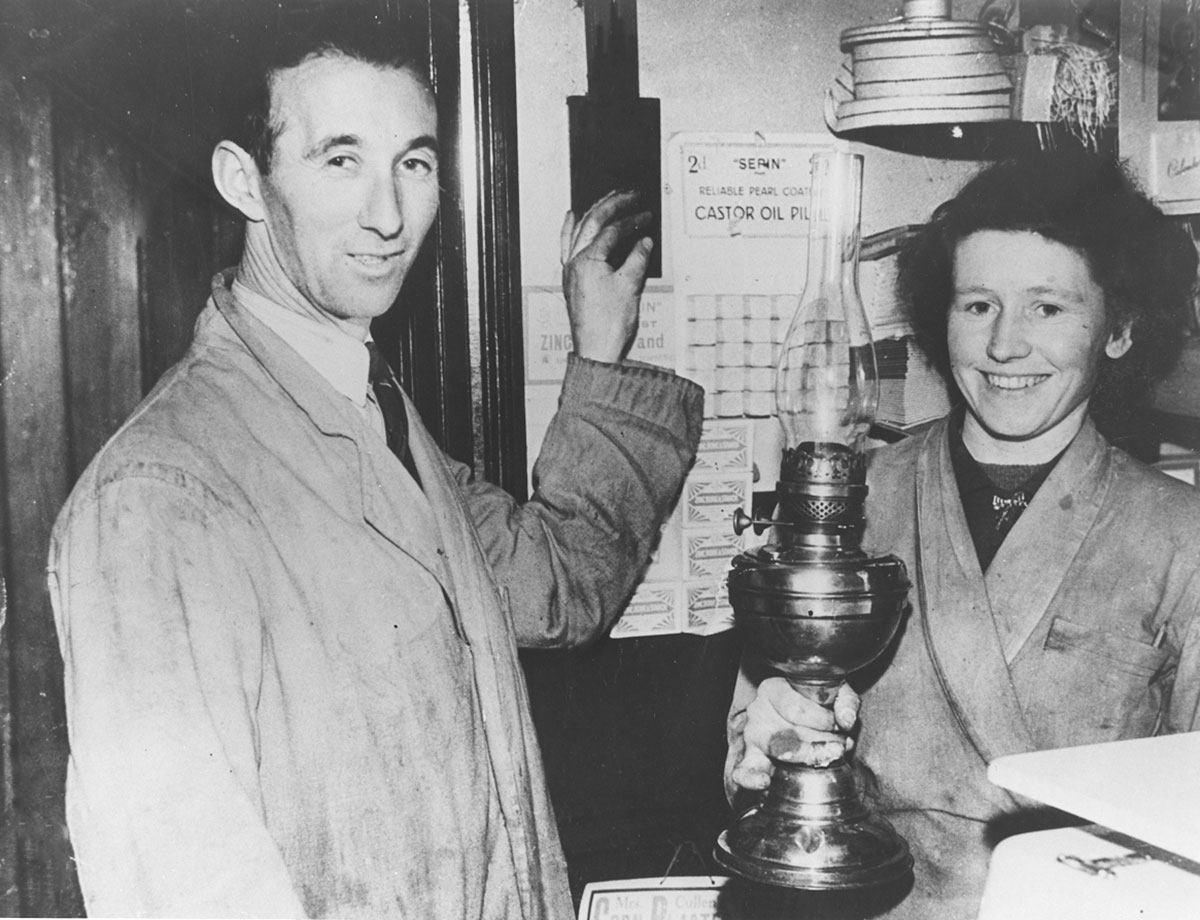
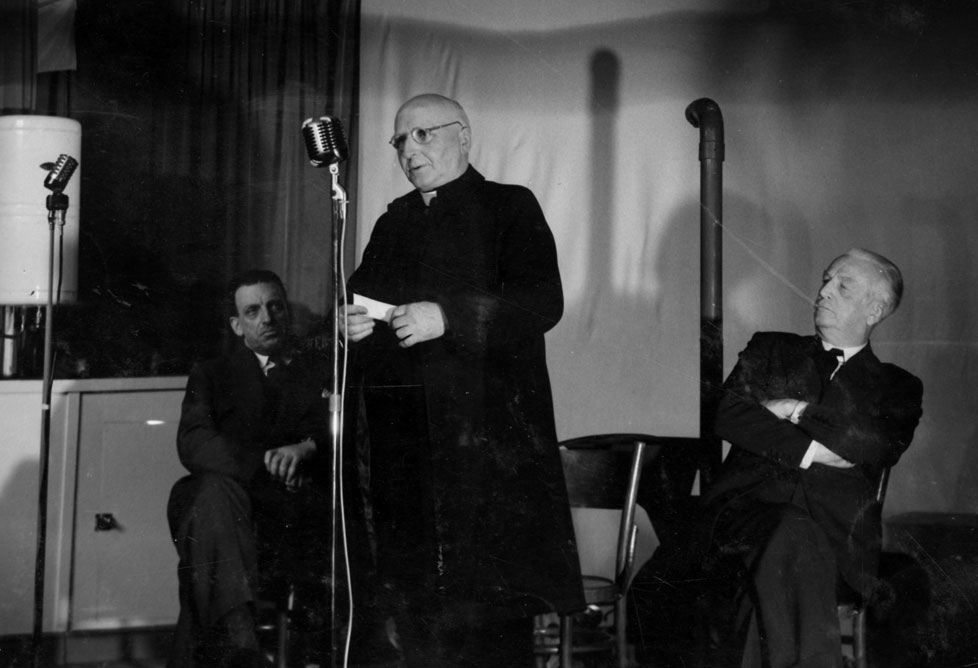
During a debate in the Senate on 7 March 1945, Minister for Industry and Commerce Seán Lemass remarked:
"I hope to see the day when a girl gets a proposal from a farmer she will enquire not so much about the number of cows but… the electrical appliances she will require…"
Post-Development: 1965-1975
The rapid economic developments of the 1960s created such a surge in demand for new connections in rural areas that by 1970, it had become evident the completion date for the Rural Scheme as a whole was a receding target.
The Board took the initiative in formulating new proposals aimed at completing the Scheme by 1975, and the post-development plan was extended. The designated date for the final closure of the overall Rural Electrification Programme was set at 31st March, 1975.
By this time, there were 382,420 consumers on the rural network representing 99% of rural households, and the total cost of the scheme totalled about £140 million. The last area to receive electricity was remote Blackvalley, Co. Kerry, in 1978.
Network Renewal Plan (NRP)
In the late 1990s and early 2000s, ESB rolled out its Network Renewal Plan (NRP), upgrading and extending the electricity supply to meet the demands of modern Ireland.
NRP built on the foundations laid by the Rural Electrification Scheme 50 years before, bringing the scheme into the twenty-first century.