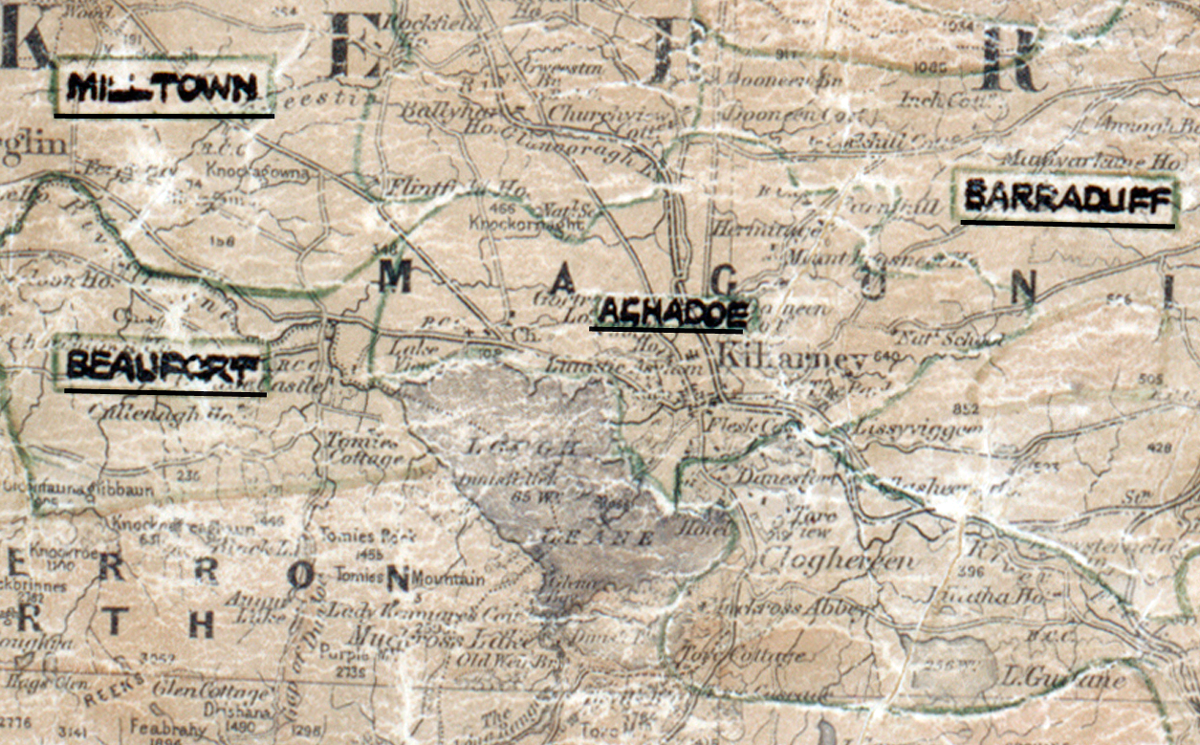
 Area: Aghadoe
Started: September 1954
Finished: June 1955
Poles used: 1120
Line used (km): 91
Premises connected: 23
The figures above were sourced from our REO News magazine, to learn more about what these figures mean, visit our interactive map. The map above shows the area boundary and is from a digitised version of the original map used during the scheme.
The REO News from January 1956 wondered what tourists thought of the construction of a modern rural network in Aghadoe.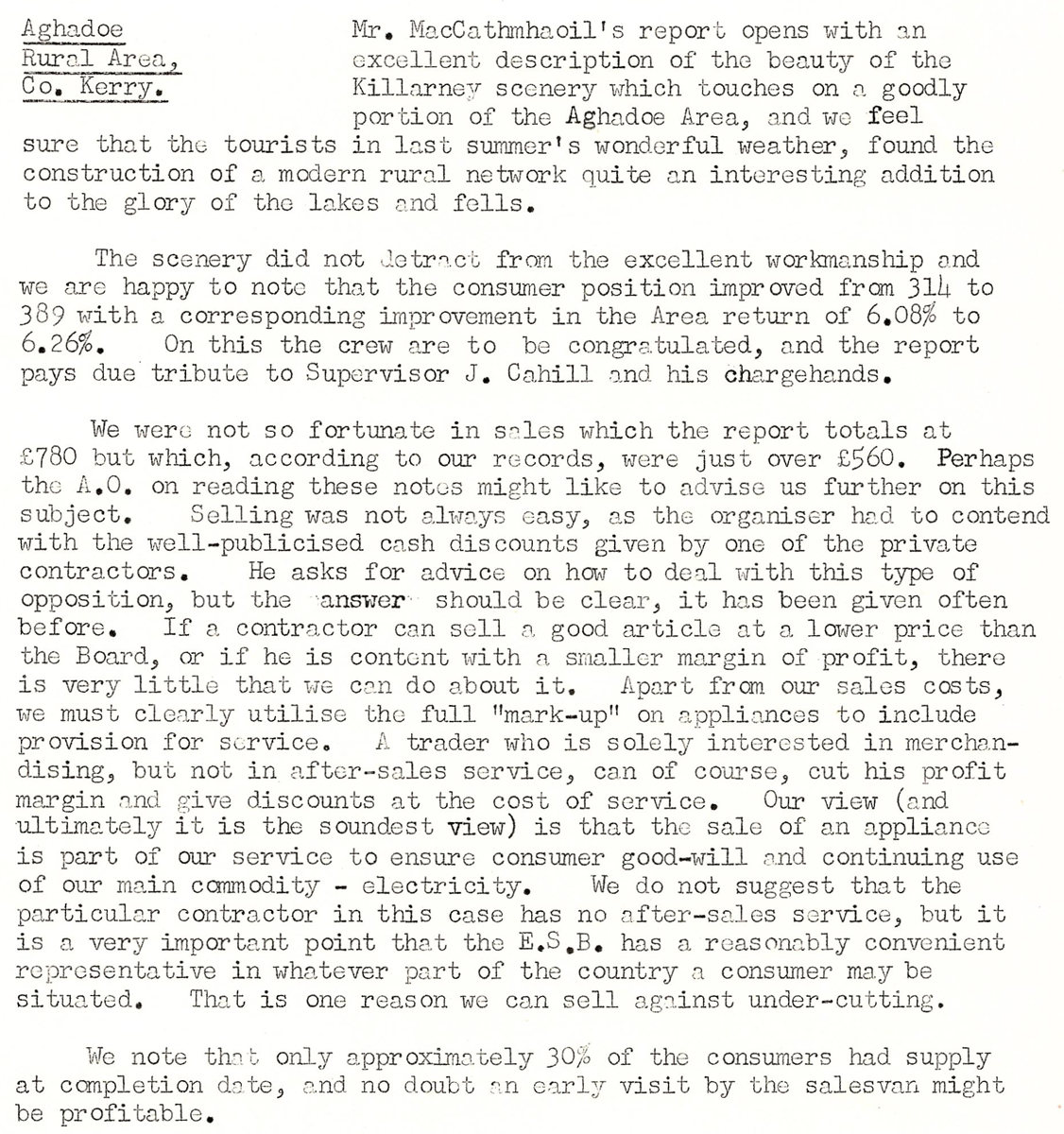 This digital scan from the REO News displays the following text:
"Aghadoe Rural Area, Co. Kerry: Mr. MacCathmhoil's report opens with an excellent description of the beauty of the Killarney scenery which touches on a goodly portion of the Aghadoe Area, and we feel sure that the tourists in last summer's wonderful weather, found the construction of a modern rural network quite an interesting addition to the glory of the lakes and fells.
The scenery did not detract from the excellent workmanship and we are happy to note that the consumer position improved from 311 to 389 with a corresponding improvement in the Area return of 6.08% to 6.26%. On this the crew are to be congratulated, and the report pays due tribute to Supervisor J. Cahill and his chargehands.
We were not so fortunate in sales which the report totals at £780 but which, according to our records, were just over £560. Perhaps the A.O. on reading these notes might like to advise us further on this subject. Selling was not always easy, as the organiser had to contend with the well-publicised cash discounts given by one of the private contractors. He asks for advice on how to deal with this type of opposition, but the answer should be clear; it has been given often before. If a contractor can sell a good article at a lower price than the Board, or if he is content with a smaller margin of profit, there is very little that we can do about it. Apart from our sales costs, we must clearly utilise the full “mark-up” of appliances to include provision for service. A trader who is solely interested in merchandising, but not in after-sales service, can of course, cut his profit margin and give discounts at the cost of service. Our view (and ultimately it is the sound view) is that the sale of an appliance is part of our service to ensure consumer good-will and continuing use of our main commodity—electricity. We do not desire that the electrical contractor in this area should lose his after-sales service, but it is obvious from the reports of the S.E.Bs, as in recent years that our success in whatever part of the country a consumer may be situated, is the one reason we can sell appliances.
We note that only approximately 30% of the consumers had supply at completion date, and no doubt an early visit by the salesman might be profitable."