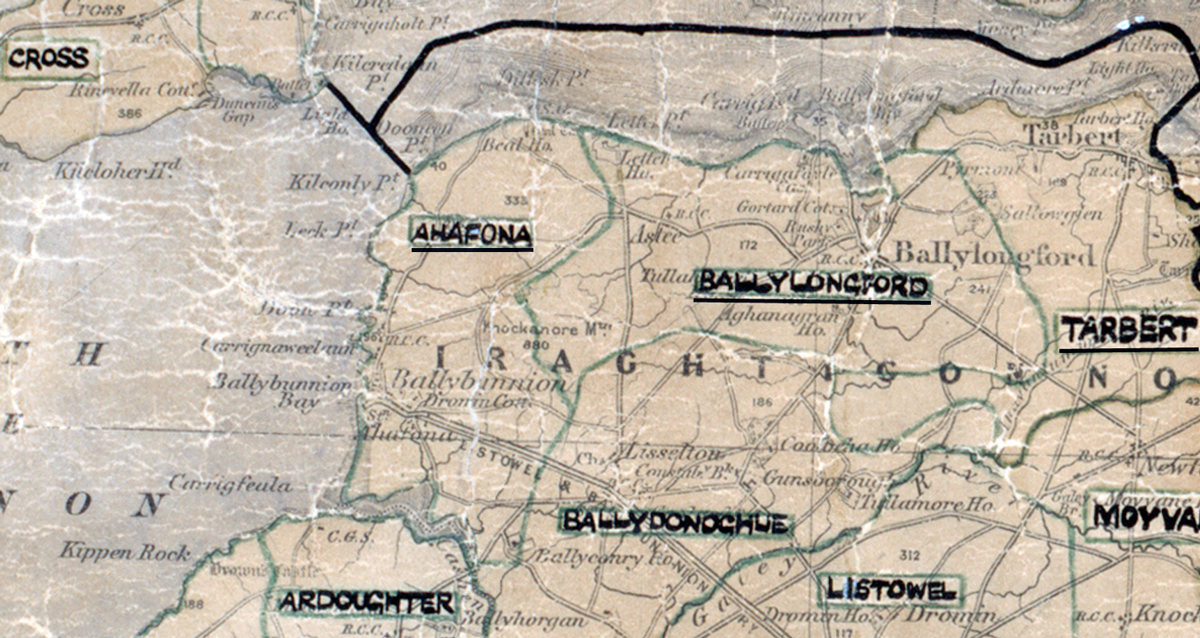
 Area: Ahafona
Started: April 1951
Finished: February 1952
Poles used: 846
Line used (km): 74
Premises connected: 173
The figures above were sourced from our REO News magazine, to learn more about what these figures mean, visit our interactive map. The map above shows the area boundary and is from a digitised version of the original map used during the scheme.
The REO News from May 1952 reports that rationing and restrictions affected sales in Ahafona.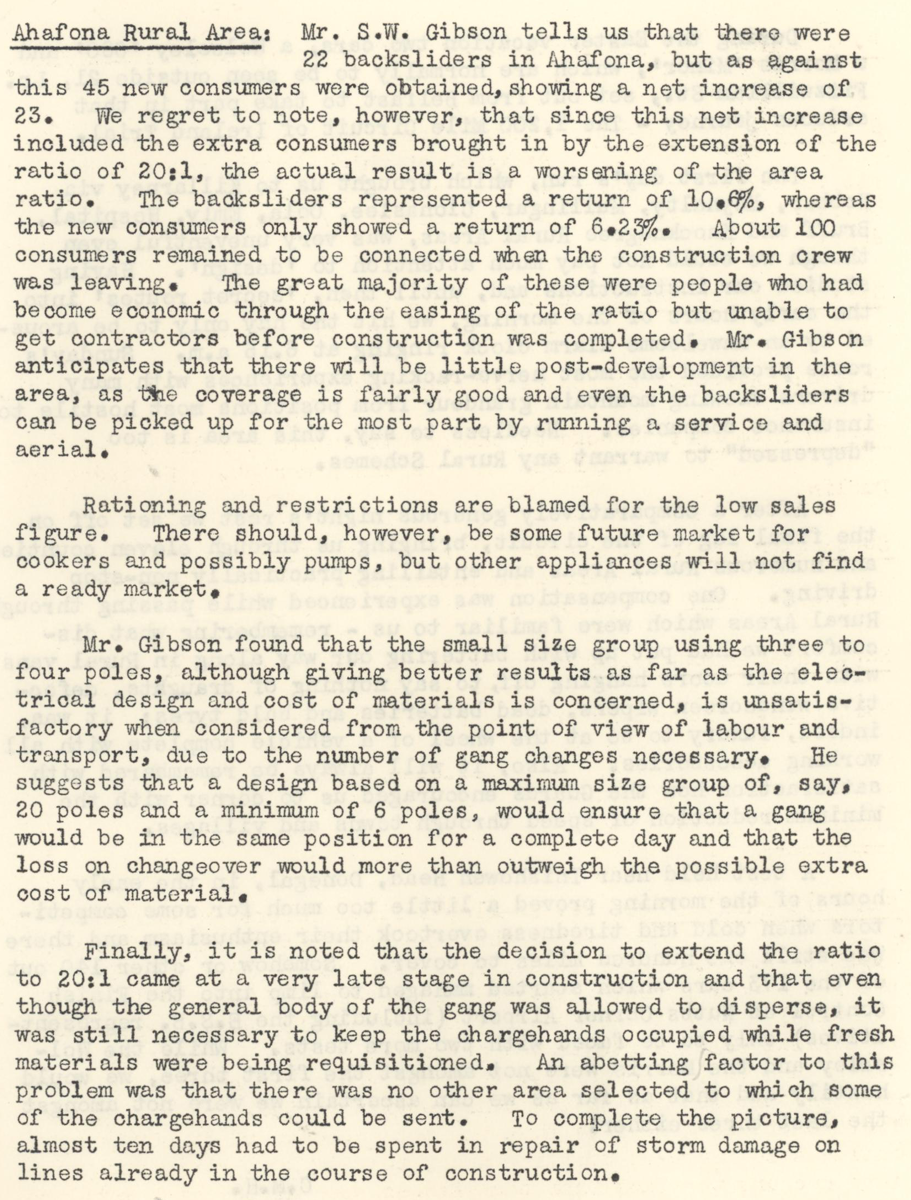 This digital scan from the REO News displays the following text:
"Ahafona Rural Area: Mr. S. W. Gibson tells us that there were 22 backsliders in Ahafona, but as against this 45 new consumers were obtained, showing a net increase of 23. We regret to note, however, that since this net increase included the extra consumers brought in by the extension of the ratio of 20:1, the actual result is a worsening of the area ratio. The backsliders represented a return of 10.6%, whereas the new consumers only showed a return of 6.3%. About 100 consumers remained to be connected when the construction crew was leaving. The great majority of these were people who had become economic through the easing of the ratio but unable to get contractors before construction was completed. Mr. Gibson anticipates that there will be little post-development in the area, as the coverage is fairly good and even the backsliders can be picked up for the most part by running a service and aerial.
Rationing and restrictions are blamed for the low sales figure. There should, however, be some future market for cookers and possibly pumps, but other appliances will not find a ready market.
Mr. Gibson found that the small size group using three to four poles, although giving better results as far as the electrical design and cost of materials is concerned, is unsatisfactory when considered from the point of view of labour and rationing. It often made more men on the job unnecessary. He suggests that a design based on a maximum size group of, say, 200 spans and a minimum of 6 poles would ensure that a gang would be in the same position for a complete day and that the loss on changeover would more than outweigh the possible extra cost of material.
Finally, it is noted that the decision to extend the ratio to 20:1 came at a very late stage in construction at a time when the general body of the gang was allowed to disperse, it being thought at the time that the charges and distribution of materials were being re–estimated. An abstracting of work to those men not on the higher grades might perhaps account for some of the charges which could be seen. To complete the picture, mention was made of the present repair of storm damage to lines already in the course of construction."