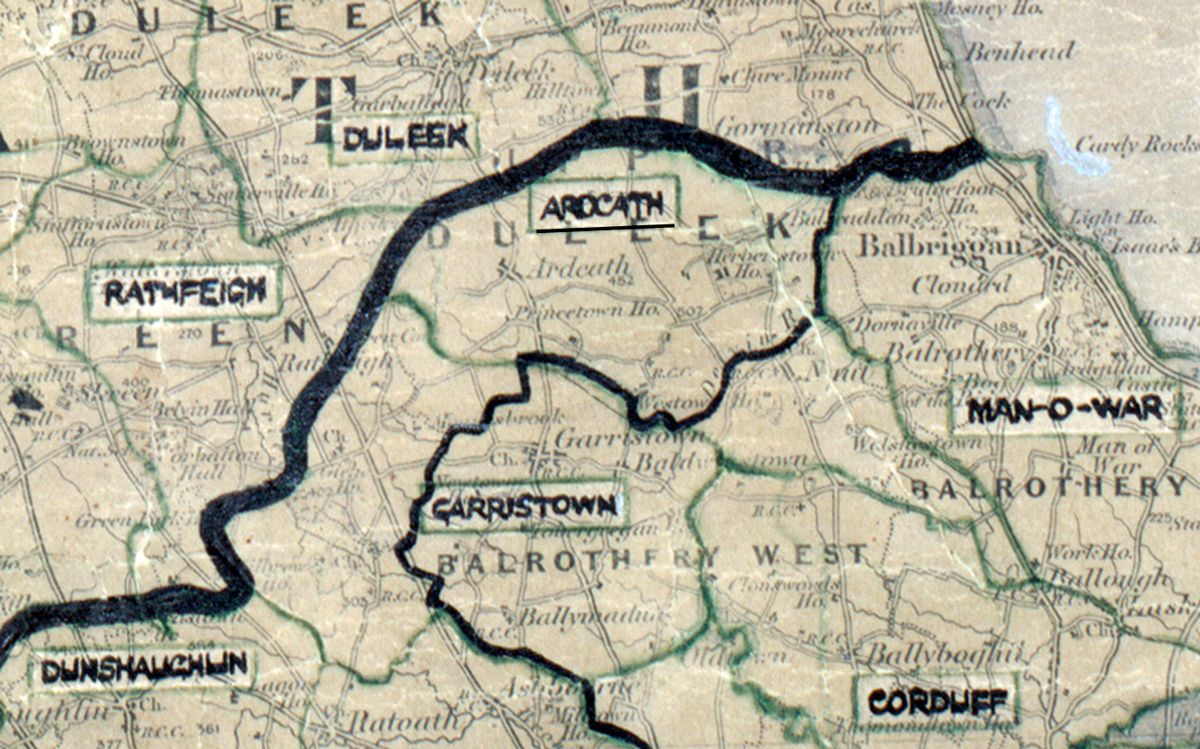
 Area: Ardcath
Started: June 1953
Finished: March 1954
Poles used: 1023
Line used (km): 94
Premises connected: 250
The figures above were sourced from our REO News magazine, to learn more about what these figures mean, visit our interactive map. The map above shows the area boundary and is from a digitised version of the original map used during the scheme.The REO News from April 1954 reports that the use of electricity in Ardcath had reached a very satisfactory level.
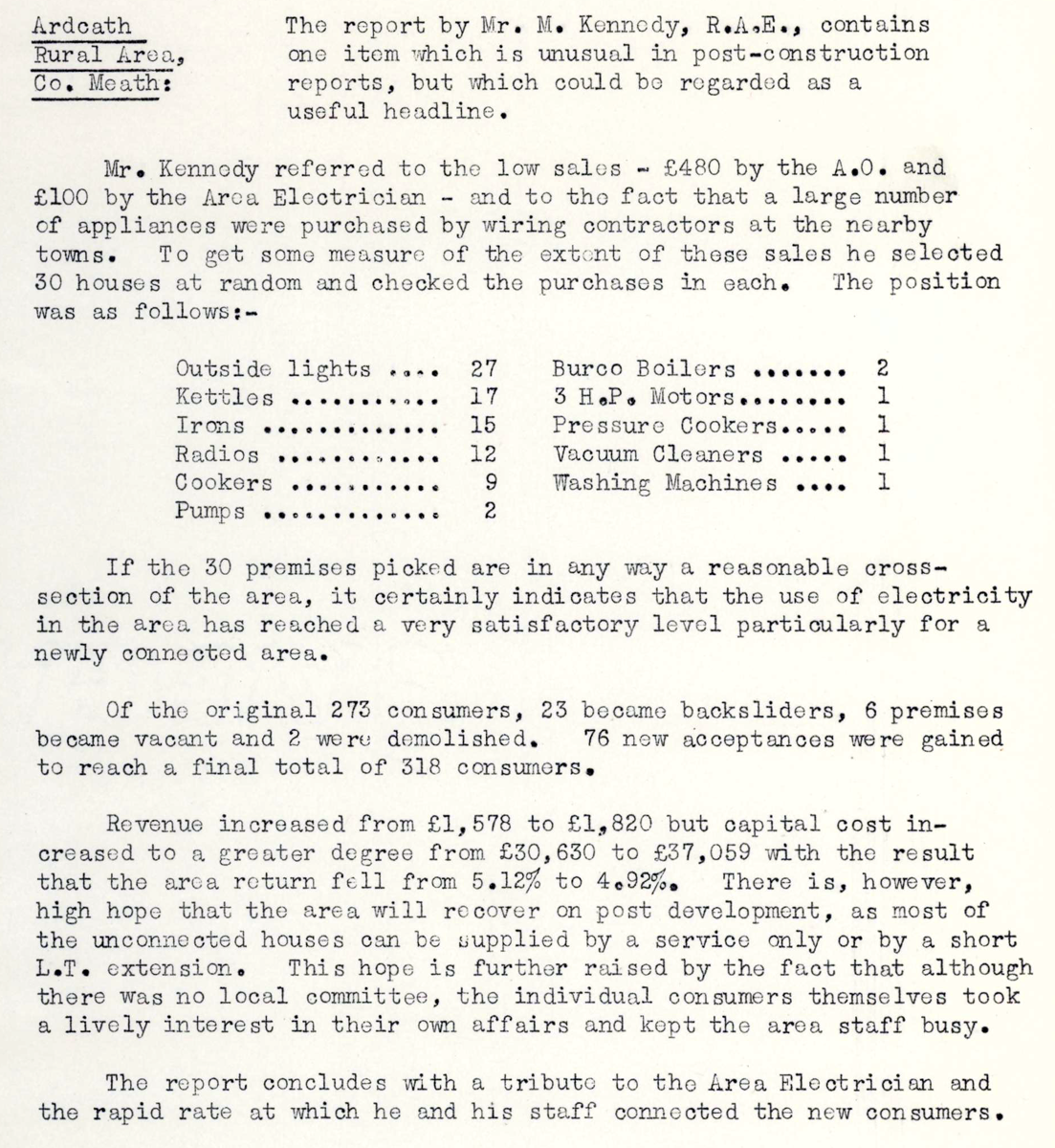 This digital scan from the REO news displays the following text:
"Ardcath Rural Area, Co. Meath: The report by Mr. M. Kennedy, R.A.E., contains one item which is unusual in post-construction reports, but which could be regarded as a useful headline.
Mr. Kennedy referred to the low sales – £480 by the A.O. and £100 by the Area Electrician – and to the fact that a large number of appliances were purchased by wiring contractors at the nearby towns. To get some measure of the extent of those sales he selected 30 houses at random and checked the purchases in each. The position was as follows:–
Outside lights .... 27
Kettles ............ 17
Irons .............. 15
Radios ............. 12
Cookers ............ 2
Pumps .............. 2
Burco Boilers ...... 2
3 H.P. Motors ...... 2
Pressure Cookers ... 1
Vacuum Cleaners .... 1
Washing Machines ... 1
If the 30 premises picked are in any way a reasonable cross‑section of the area, it certainly indicates that the use of electricity in the area has reached a very satisfactory level particularly for a newly connected area.
Of the original 273 consumers, 23 became backsliders, 6 premises became vacant and 2 were demolished. 76 new acceptances were gained to reach a final total of 318 consumers.
Revenue increased from £1,578 to £1,820 but capital cost increased to a greater degree from £30,630 to £37,059 with the result that the area return fell from 5.12% to 4.29%. There is, however, every indication that the area will recover post development, as most of the unconnected houses can be supplied by a service only or by a short L.T. extension. This hope is further backed by the fact that though there was no local committee, the individual consumers themselves took a lively interest in the wiring of the area which kept the area staff busy.
The report concludes with a tribute to the Area Electrician and the rapid rate at which he and his staff connected the new consumers."