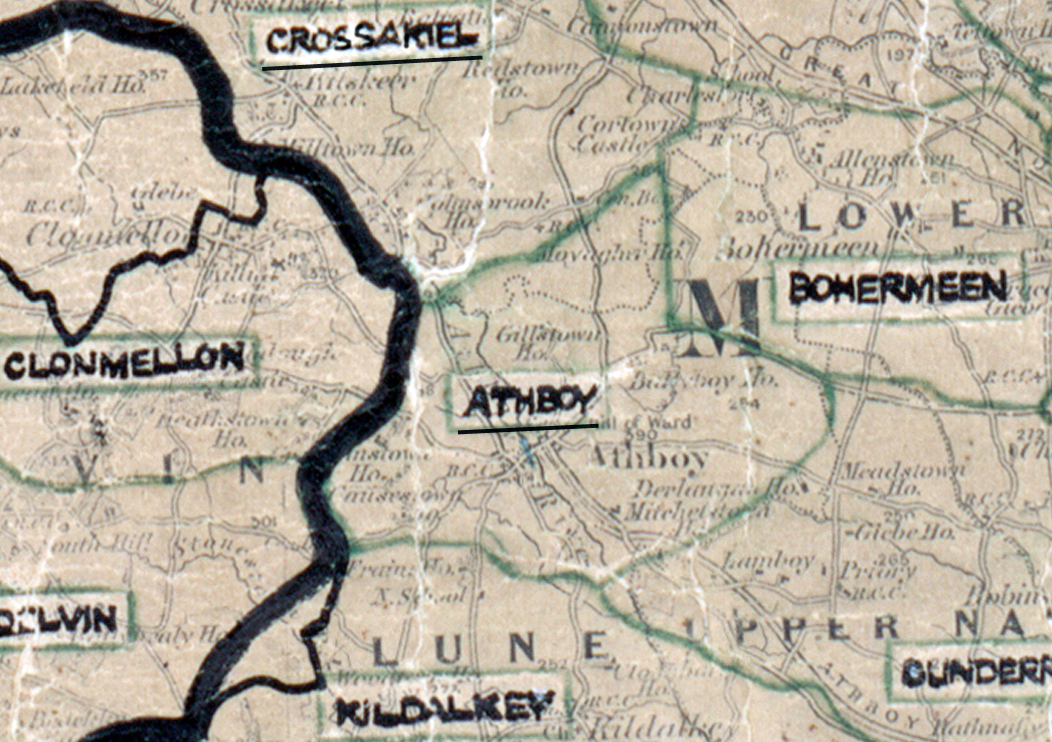
 Area: Athboy
Started: December 1953
Finished: May 1954
Poles used: 855
Line used (km): 74
Premises connected: 144
The figures above were sourced from our REO News magazine, to learn more about what these figures mean, visit our interactive map. The map above shows the area boundary and is from a digitised version of the original map used during the scheme.
The REO News from July 1954 featured a report on Athboy.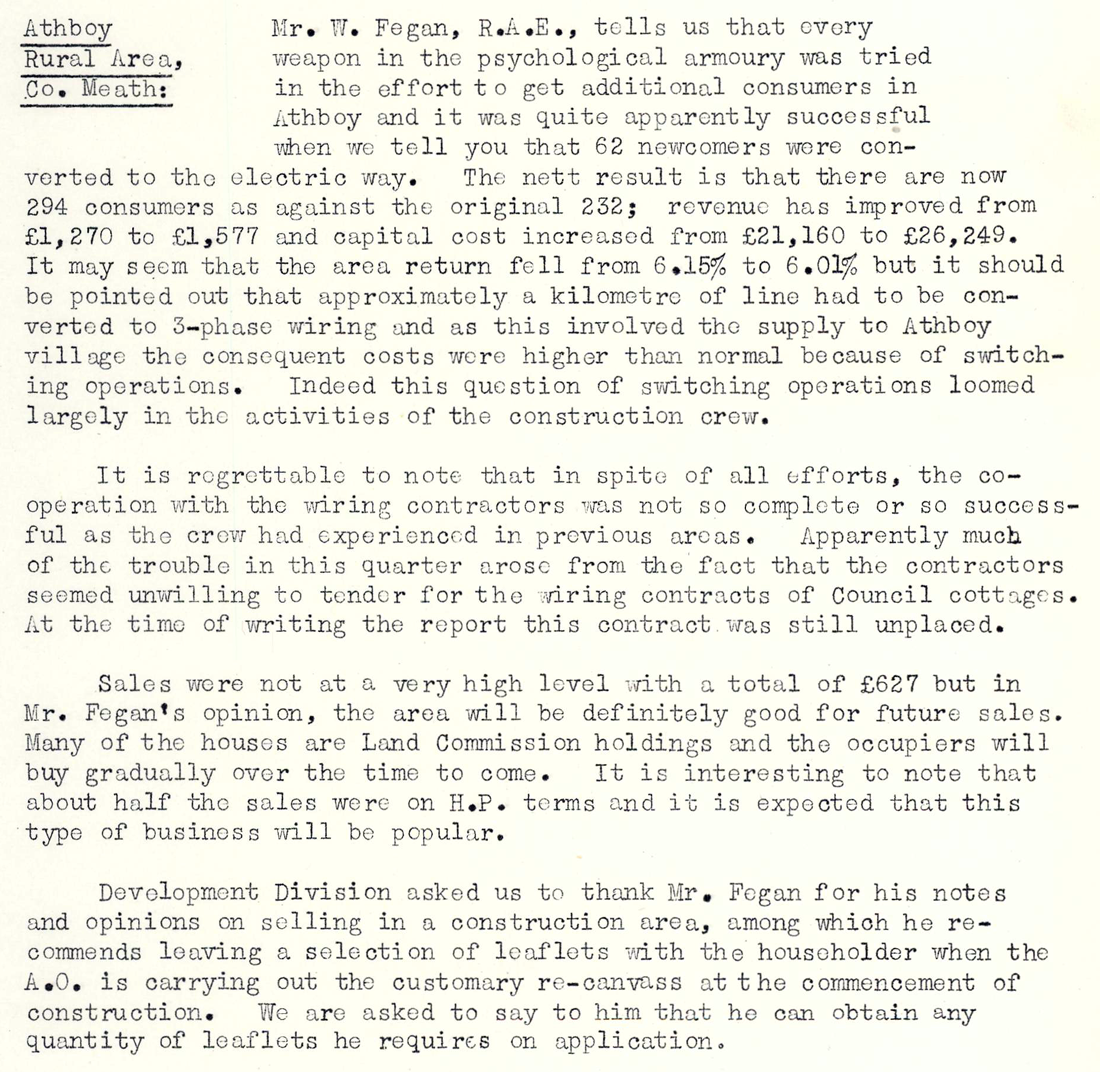 This digital scan from the REO News displays the following text:
"Athboy Rural Area, Co. Meath: Mr. W. Fegan, R.A.E., tells us that every weapon in the psychological armoury was tried in the effort to get additional consumers in Athboy and it was quite apparently successful when we tell you that 62 newcomers were converted to the electric way. The nett result is that there are now 294 consumers as against the original 232; revenue has improved from £1,270 to £1,577 and capital cost increased from £21,160 to £26,249. It may seem that the area return fell from 6.15% to 6.04% but it should be pointed out that approximately a kilometre of line had to be converted to 3-phase wiring and as this involved the supply to Athboy village the consequent costs were higher than normal because of switching operations. Indeed this question of switching operations loomed largely in the activities of the construction crew.
It is regrettable to note that in spite of all efforts, the cooperation with the wiring contractors was not so complete or so successful as the crew had experienced in previous areas. Apparently much of the trouble in this quarter arose from the fact that the contractors seemed unwilling to tender for the wiring contracts of Council cottages. At the time of writing the report this contract was still unplaced.
Sales were not at a very high level with a total of £627 but in Mr. Fegan’s opinion, the area will be definitely good for future sales. Many of the houses are Land Commission holdings and the occupiers will buy gradually over the time to come. It is interesting to note that about half the sales were on H.P. terms and it is expected that this type of business will be popular.
Development Division asked us to thank Mr. Fegan for his notes and opinions on selling in a construction area, among which he recommends leaving the sale of leaflets to a householder when the A.O. is carrying out the customary re-canvass of an uneconomic consumer. We were asked to remind the A.O. that he can obtain any quantity of leaflets he requires on application."