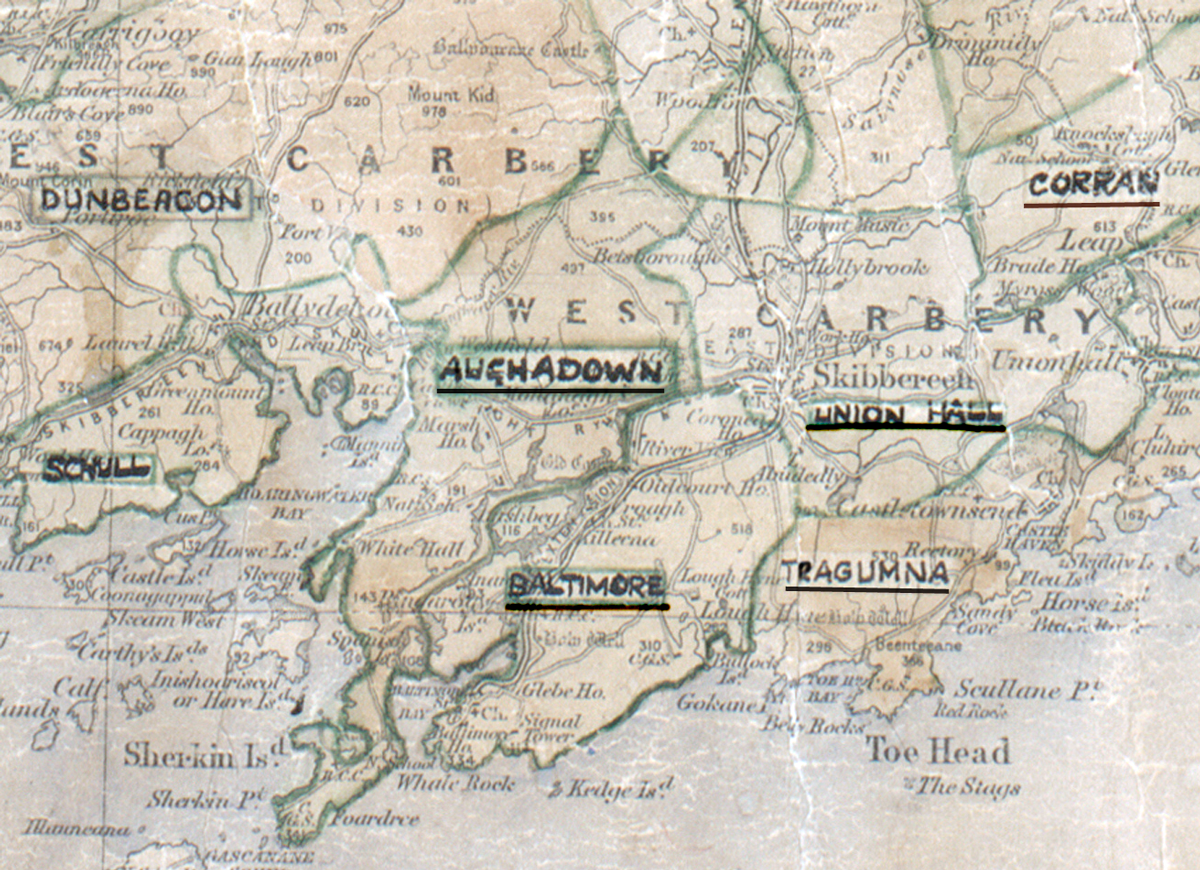
 Area: Aughadown
Started: September 1960
Finished: March 1961
Poles used: 1078
Line used (km): 75
Premises connected: 116
The figures above were sourced from our REO News magazine, to learn more about what these figures mean, visit our interactive map. The map above shows the area boundary and is from a digitised version of the original map used during the scheme.
A change in rates caused some dissatisfaction in Aughadown according to The REO News from April 1961.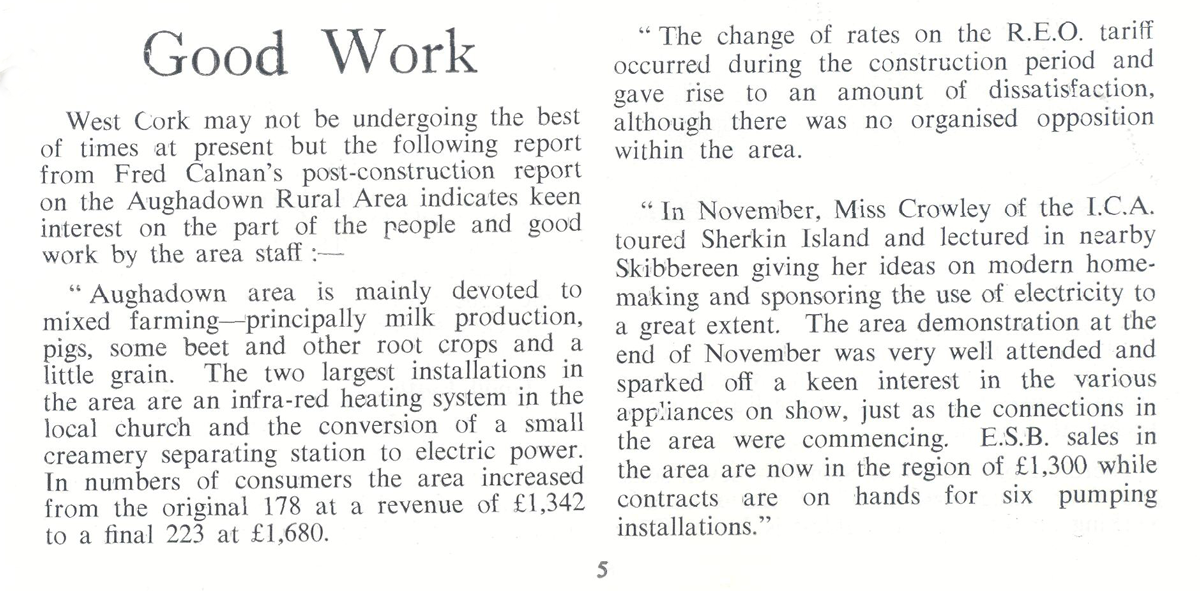 This digital scan from the REO News displays the following text:
"Good Work
West Cork may not be undergoing the best of times at present but the following report from Fred Calnan’s post-construction report on the Aughadown Rural Area indicates keen interest on the part of the people and good work by the area staff:—
“Aughadown area is mainly devoted to mixed farming—principally milk production, pigs, some beet and other root crops and a little grain. The two largest installations in the area are an infra-red heating system in the local church and the conversion of a small creamery separating station to electric power. In numbers of consumers the area increased from the original 178 at a revenue of £1,342 to a final 223 at £1,680.
“The change of rates on the R.E.O. tariff occurred during the construction period and gave rise to an amount of dissatisfaction, although there was no organised opposition within the area.
“In November, Miss Crowley of the I.C.A. toured Sherkin Island and lectured in nearby Skibbereen giving her ideas on modern home-making and sponsoring the use of electricity to a great extent. The area demonstration at the end of November was very well attended and sparked off a keen interest in the various appliances on show, just as the connections in the area were commencing. E.S.B. sales in the area are now in the region of £1,300 while contracts are on hands for six pumping installations.”