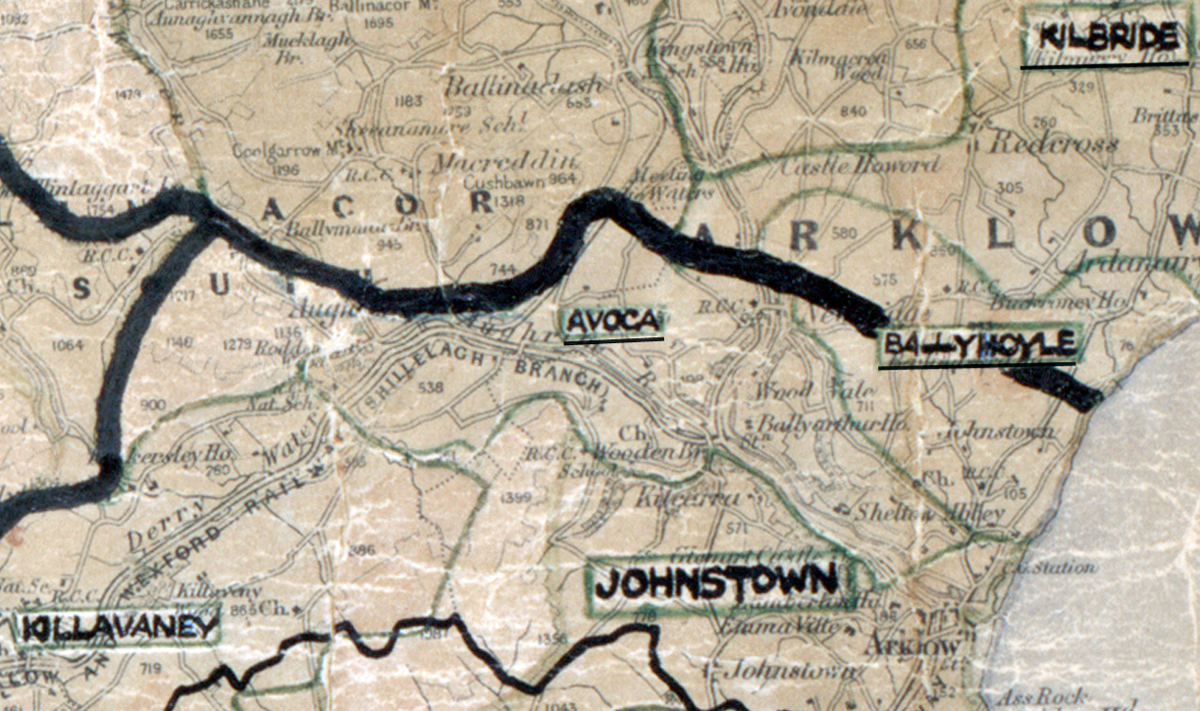
 Area: Avoca
Started: August 1950
Finished: April 1951
Poles used: 874
Line used (km): 75
Premises connected: 77
The figures above were sourced from our REO News magazine. Click interactive map to find out more on what the figures mean. The map above shows the area boundary and is from a digitised version of the original map used during the scheme.
Area Survey:
An initial survey was conducted in the Avoca rural area in Co Wicklow in 1950, which covered 19.5 sq miles. The estimated cost of implementing the scheme was recorded as £23,344.
From a total of 506 houses, there were: 363 acceptances of the scheme; 116 refusals; 3 ‘doubtfuls’; and 6 recorded as vacant.
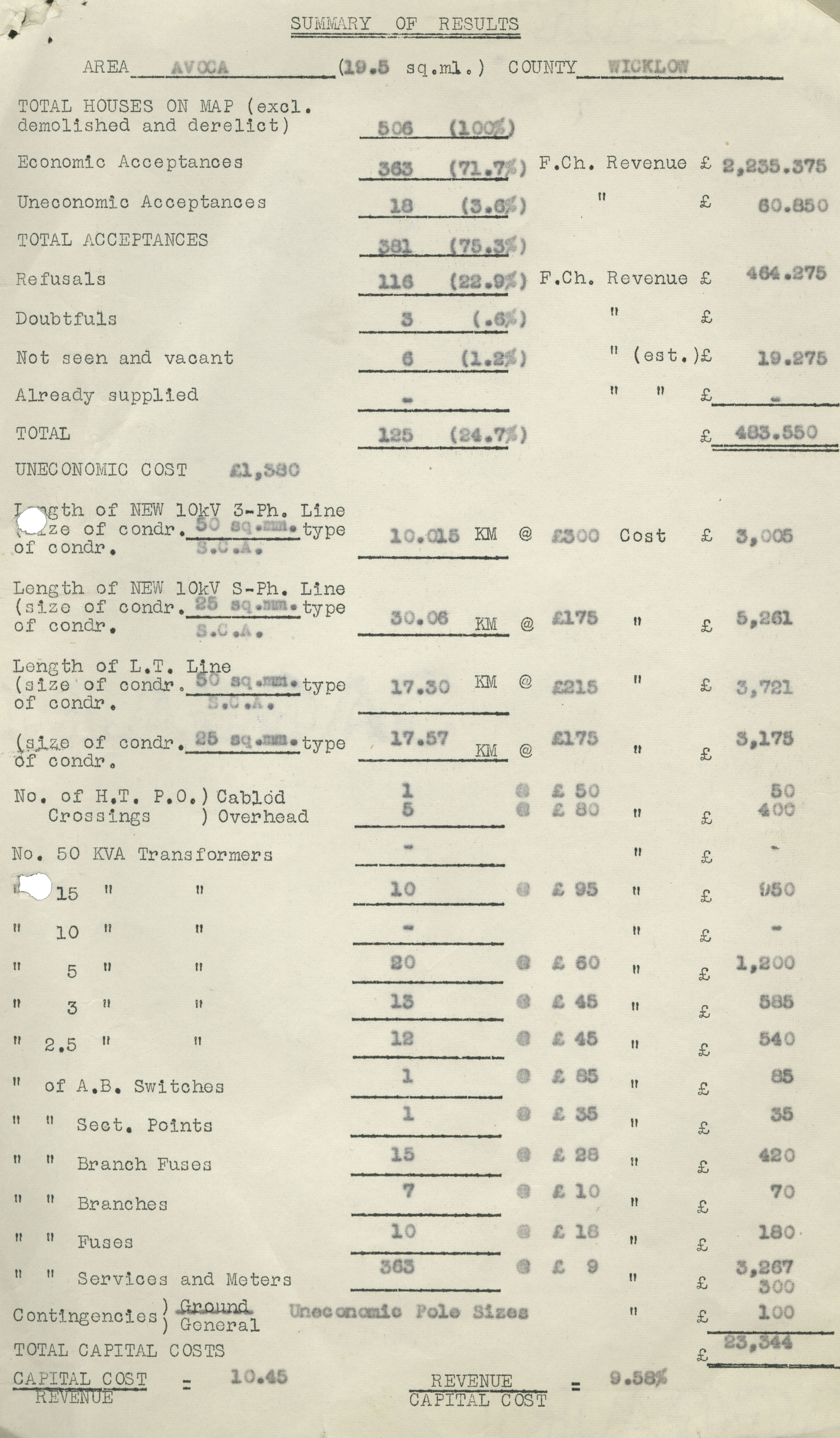 Avoca survey, c1950
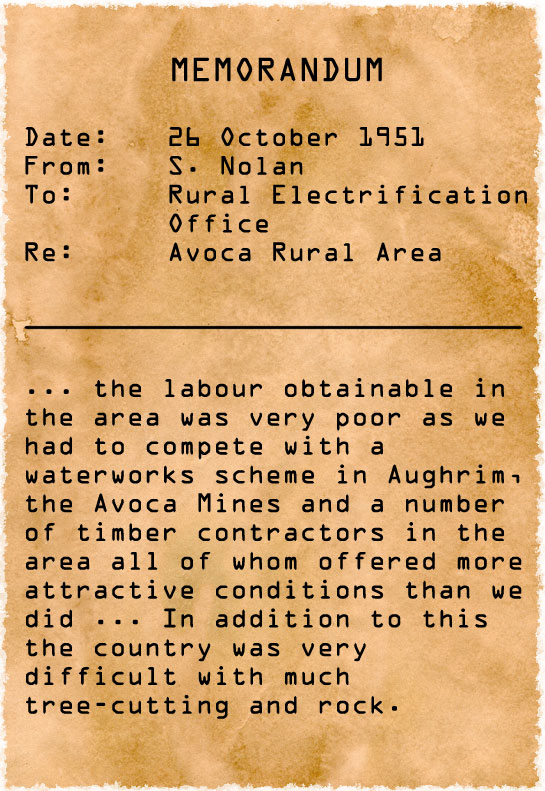 Memorandum, 26 October 1951
This digital scan from the memorandum displays the following text:
"Date: 26 October 1951
From: S. Nolan
To: Rural Electrification Office
Re: Avoca Rural Area
... the labour obtainable in the area was very poor as wehad to compete with a waterworks scheme in Aughrim, the Avoca Mines and a number of timber contractors in the area all of whom offered more attractive conditions than we did ... In addition to this the country was very difficult with much tree-cutting and rock."
Key crew members
J.F. Heslin and D.F. MacKenzie Rural Area Engineers
J.J. Ryan Area Clerk
S. Malone Engineer
St. Patrick’s Copper Mines
ESB agreed to supply electricity to St. Patrick’s Copper Mines Ltd. on 8 March 1956. At the time, ESB considered mining to be a risky enterprise. It was therefore necessary for the mines to make financial contributions towards the extension of the supply from Arklow and Carrickmines. The electricity supply was completed in September 1957.
Switching on Avoca
The highlight of rural electrification in each area was the switching on ceremony, attended by the local community. The Irish Independent reported on 2 April 1951: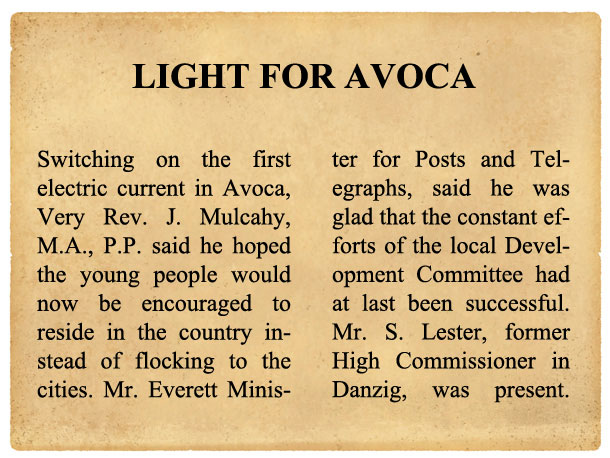 This digital scan from the newspaper cutting displays the following text:
Switching on the first electric current in Avoca, Very Rev. J. Mulcahy, M.A., P.P. said he hoped the young people would now be encouraged to reside in the country instead of flocking to the cities. Mr. Everett Minister for Posts and Telegraphs, said he was glad that the constant efforts of the local Development Committee had at last been successful. Mr. S. Lester, former High Commissioner in Danzig, was present."
On completion of the area in March 1952, a report on Avoca was submitted to the Rural Electrification Office (REO):
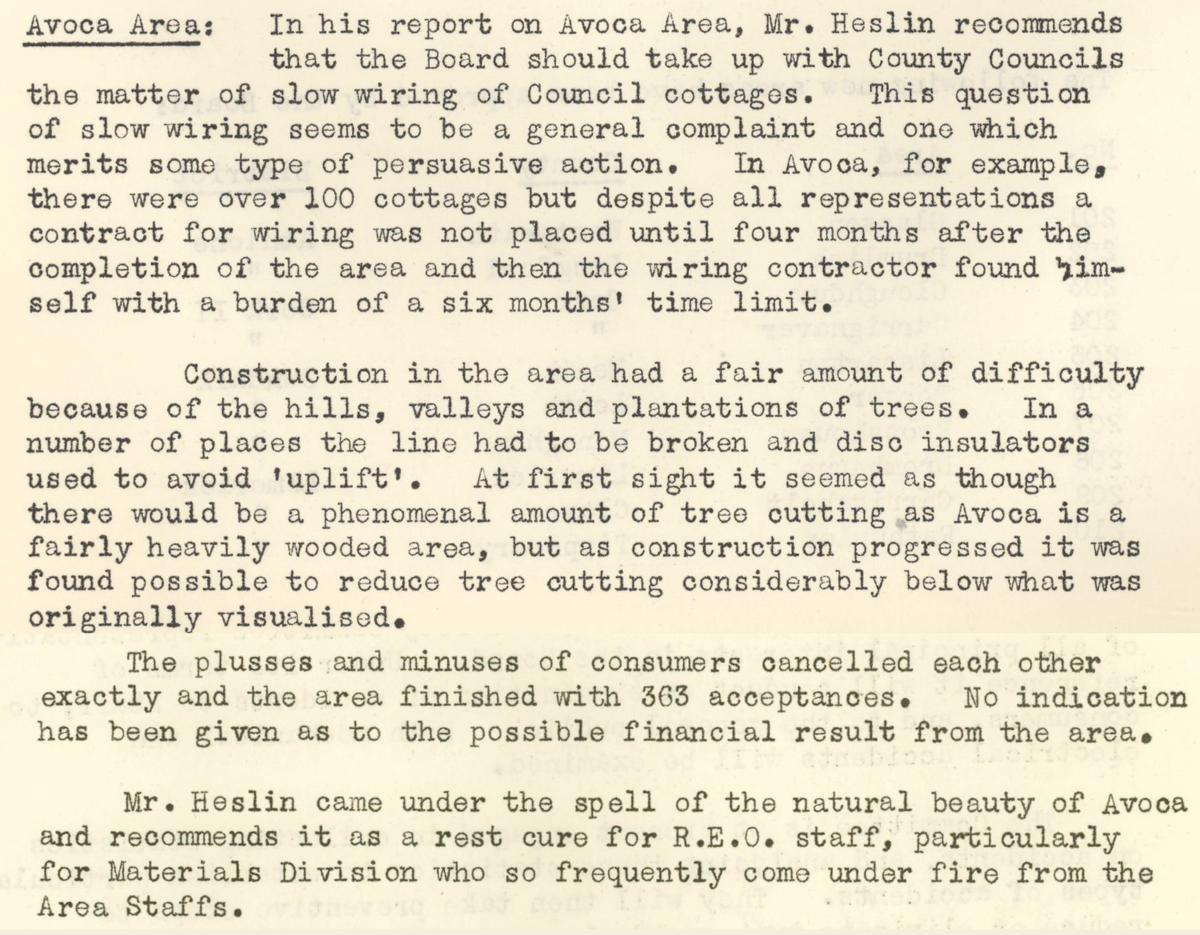 This digital scan from the REO News displays the following text: