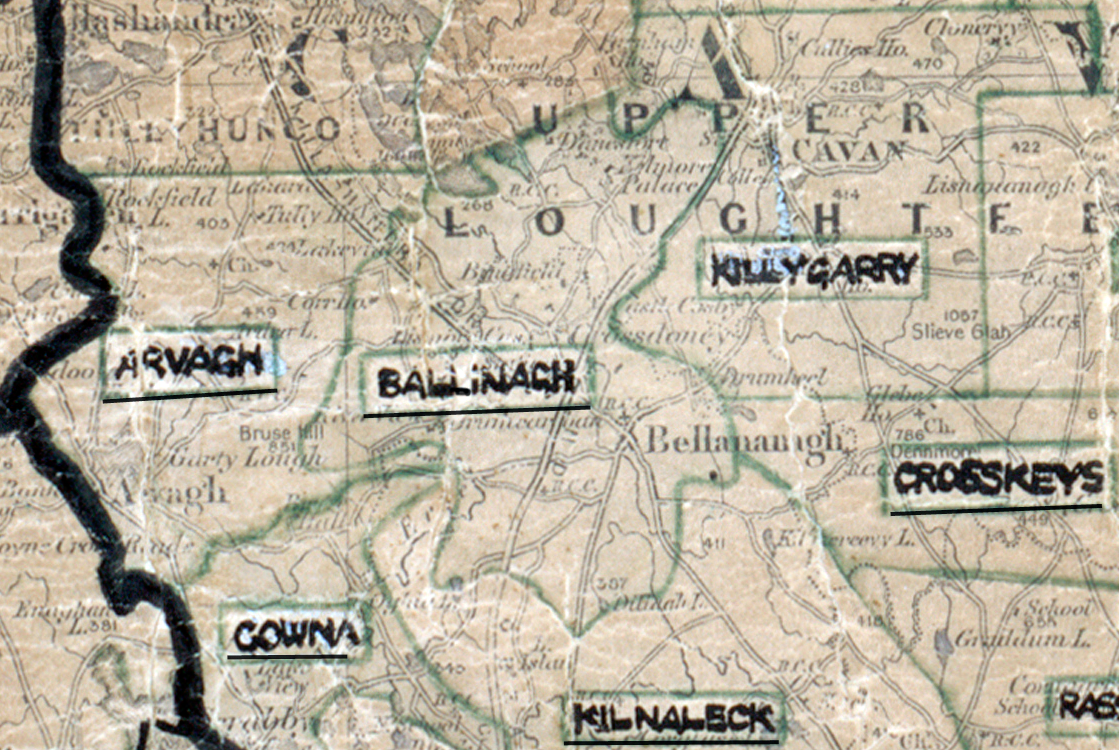
 Area: Ballinagh
Started: August 1954
Finished: July 1955
Poles used: 1187
Line used (km): 105
Premises connected: 316
The figures above were sourced from our REO News magazine, to learn more about what these figures mean, visit our interactive map page. The map above shows the area boundary and is from a digitised version of the original map used during the scheme.
Ballinagh is rich in historical association according to The REO News from August 1953.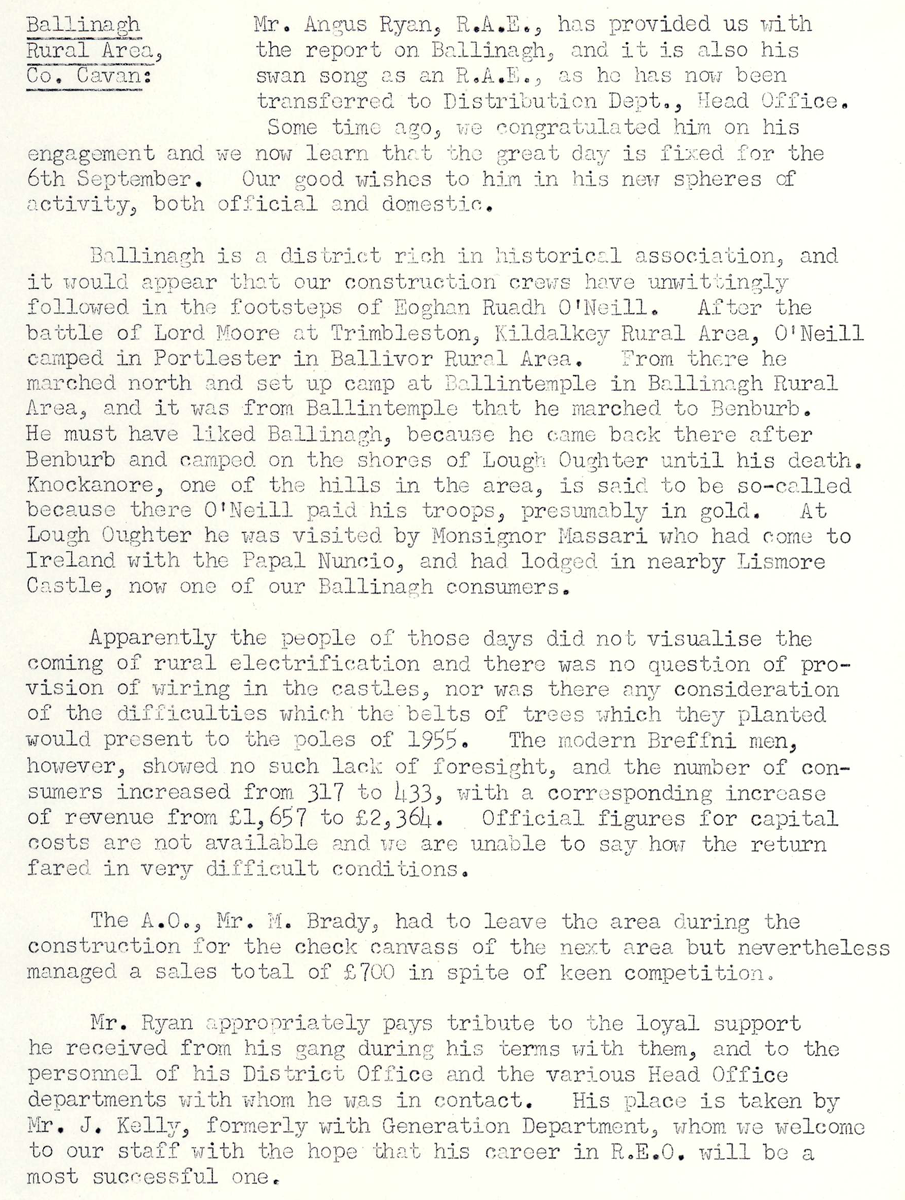
This digital scan from the REO News displays the following text:
"Ballinagh Rural Area, Co. Cavan: Mr. Angus Ryan, R.A.E., has provided us with the report on Ballinagh, and it is also his swan song as an R.A.E., as he has now been transferred to Distribution Dept., Head Office.
Some time ago, we congratulated him on his engagement and we now learn that the great day is fixed for the 6th September. Our good wishes to him in his new spheres of activity, both official and domestic.
Ballinagh is a district rich in historical association, and it would appear that our construction crews have unwittingly followed in the footsteps of Eoghan Ruadh O’Neill. After the battle of Lord Moore at Trimblestown, Kildakey Rural Area, O’Neill camped in Portlougher in Ballylvor Rural Area. From there he marched north and set up camp at Ballintemple in Ballinagh Rural Area, and it was from Ballintemple that he marched to Banbur. He must have liked Ballinagh, because he came back there after Banbur and camped on the shores of Lough Oughter until his death. Knocknacare, one of the hills in the area, is said to be so-called because there O’Neill paid his troops, presumably in gold. At Lough Oughter he was visited by Monsignor Massari who had come to Ireland with the Papal Nuncio, and had lodged in nearby Lismore Castle, now one of our Ballinagh consumers.
Apparently the people of those days did not visualise the coming of rural electrification and there was no question of provision of wiring in the castles, nor was there any consideration of the difficulties which the crews of 300 years later would face from the same rock. The construction gang at Ballinagh, however, showed no such lack of foresight and the number of consumers increased from 557 to 622. The resultant increase of revenue from £1,657 to £2,364. Official figures for capital cost are not available and we are unable to say how the return fared in very difficult conditions.
The A.O., Mr. Brady, had to leave the area during the construction for the check canvass of the next area but nevertheless managed a sales total of £653, an excellent completion.
Mr. Ryan appropriately pays tribute to the loyal support he received from his gang during his residence in the area and to the personnel of the Plant Offices and the Ordnance Survey Office departments with whom he was in contact. His place is taken by Mr. J. Kelly, formerly with Generation Department, whom we welcome to our staff with the hope that his career in R.E.B. will be a most successful one."