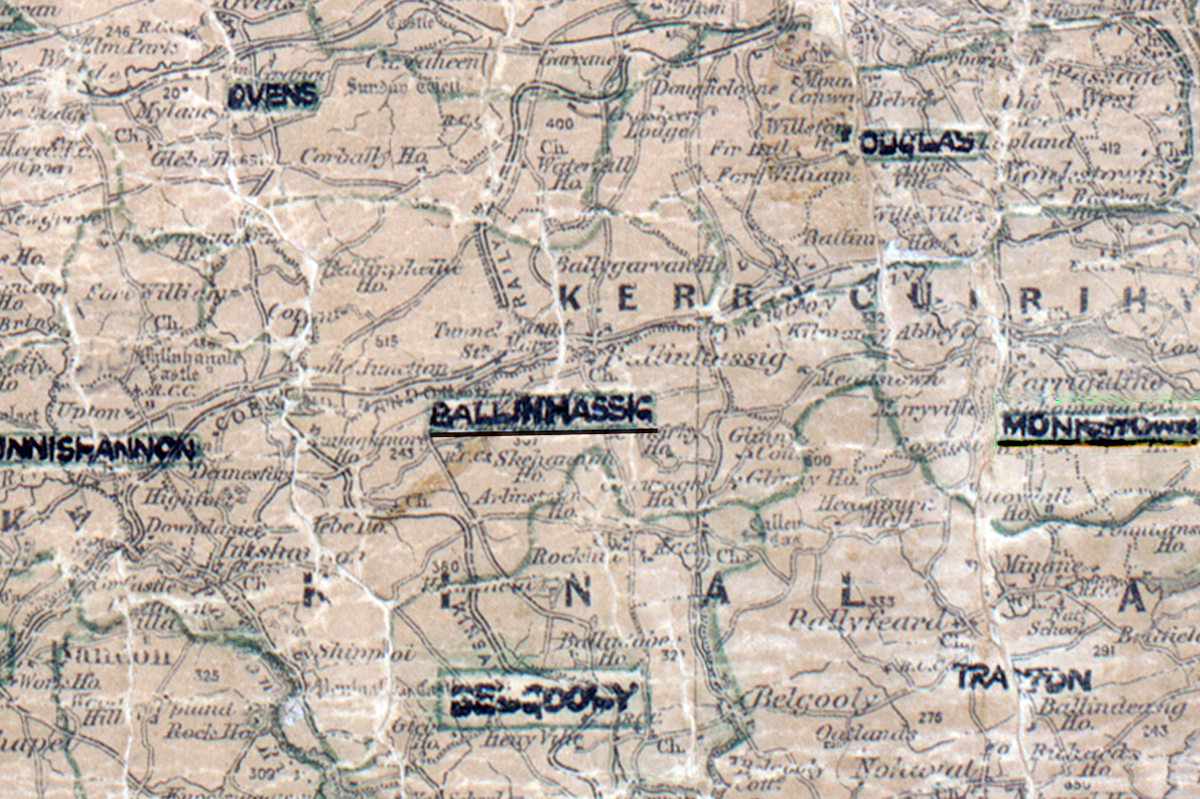
 Area: Ballinhassig
Started: June 1954
Finished: September 1954
Poles used: 1310
Line used (km): 120
Premises connected: 164
The figures above were sourced from our REO News magazine, to learn more about what these figures mean, visit our interactive map. The map above shows the area boundary and is from a digitised version of the original map used during the scheme.
The REO News from January 1955 reports that waterlogged holes were a problem in Ballinhassig.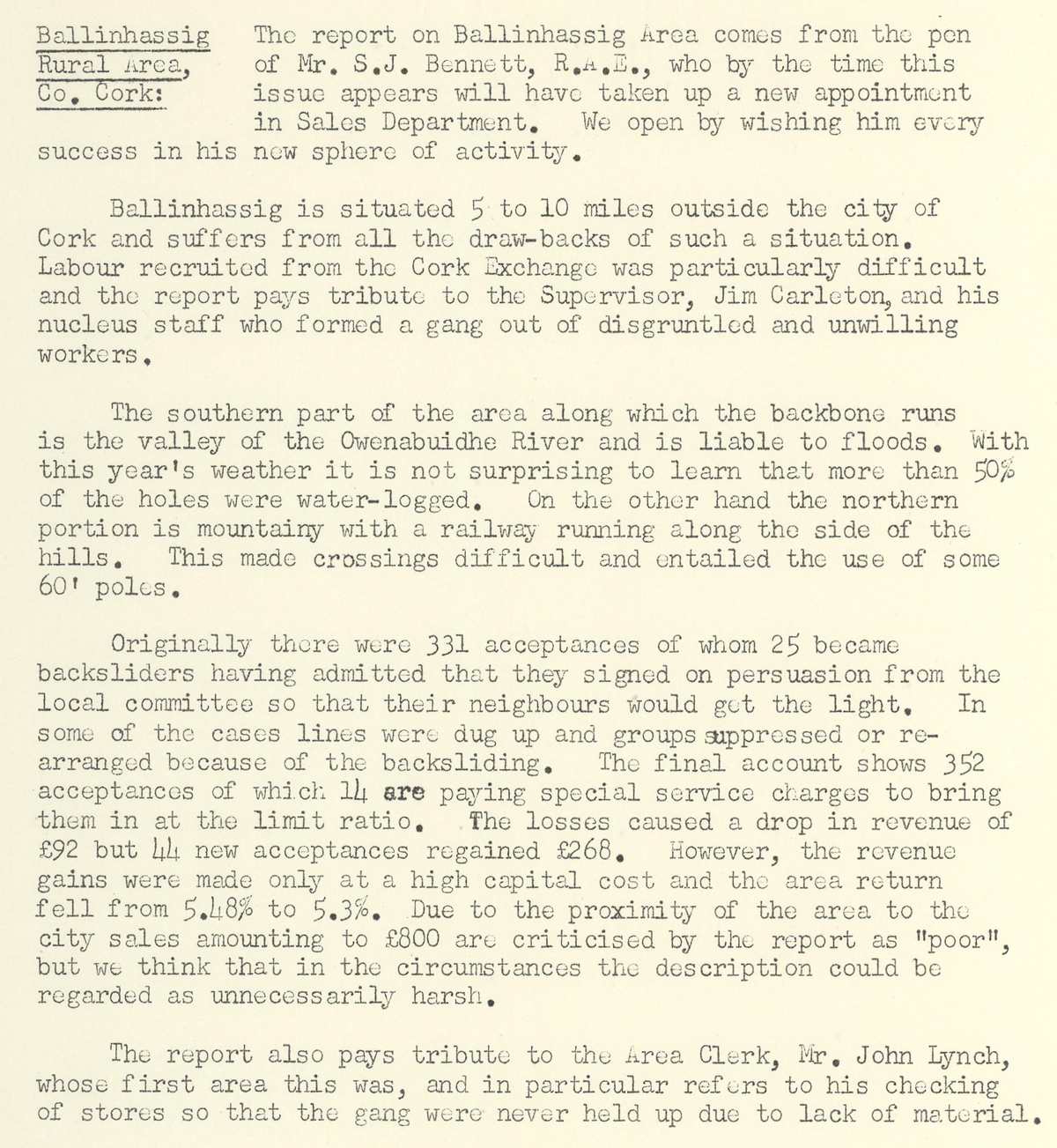 This digital scan from the REO News displays the following text:
"Ballinhassig Rural Area, Co. Cork: The report on Ballinhassig Area comes from the pen of Mr. S. J. Bennett, R.A.E., who by the time this issue appears will have taken up a new appointment in Sales Department. We open by wishing him every success in his new sphere of activity.
Ballinhassig is situated 5 to 10 miles outside the city of Cork and suffers from all the draw-backs of such a situation. Labour recruited from the Cork Exchange was particularly difficult and the report pays tribute to the Supervisor, Jim Carlton, and his nucleus staff who formed a gang out of disgruntled and unwilling workers.
The southern part of the area along which the backbone runs is the valley of the Owenabuidhe River and is liable to floods. With this year’s weather it is not surprising to learn that more than 50% of the holes were water-logged. On the other hand the northern portion is mountainy with a railway running along the side of the hills. This made crossings difficult and entailed the use of some 60' poles.
Originally there were 331 acceptances of whom 25 became backsliders having admitted that they signed on persuasion from the local committee so that their neighbours would get the light. In some of the cases lines were put up and groups scrapped or rearranged because of the backsliding. The final account shows 352 acceptances of which 81 are being placed as service charges to bring them in at the limit ratio. The losses caused a drop in revenue of £92 but new acceptances regained £62. However, the nett loss after gains were made good is £30 at which the report rather reluctantly states must be charged to the capital account of the city and amounting to £800. It is interesting that the report is “poor”, but in view of the exceptional difficulties this description could be considered unduly harsh.
The report also pays tribute to the Area Clerk, Mr. John Lynch, whose first area this was, and in particular refers to his checking of stores so that the gang were never held up due to lack of material."