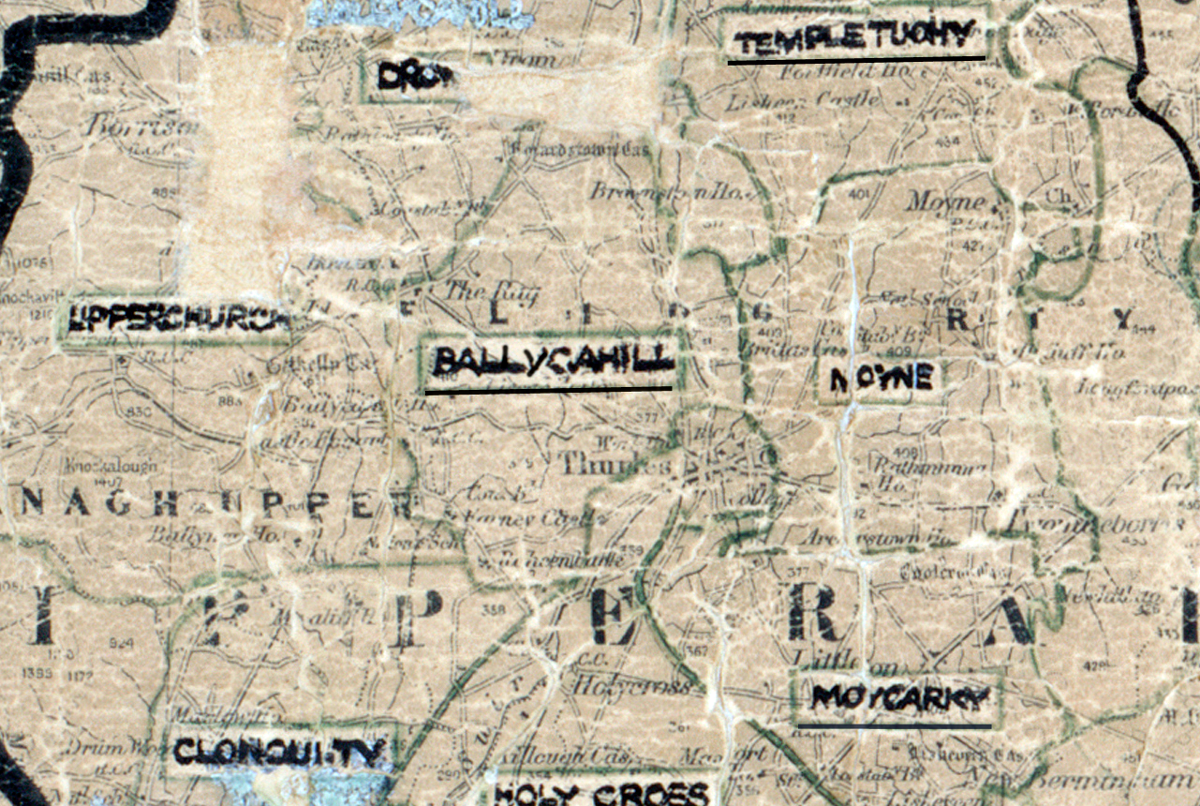
 Area: Ballycahill
Started: December 1955
Finished: September 1956
Poles used: 1058
Line used (km): 92
Premises connected: 1
The figures above were sourced from our REO News magazine, to learn more about what these figures mean, visit our interactive map. The map above shows the area boundary and is from a digitised version of the original map used during the scheme..
Construction was not very difficult in Ballycahill according to The REO News from November 1956.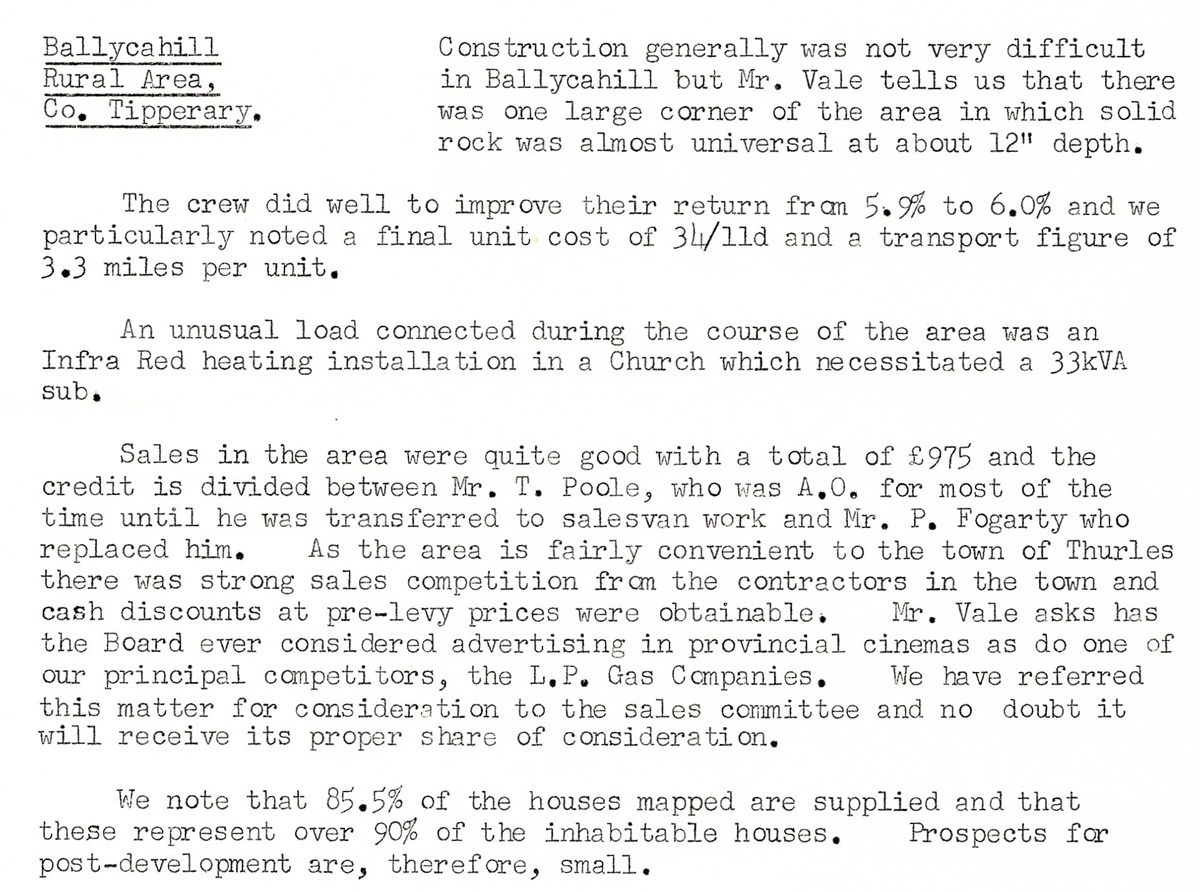 This digital scan from the REO News displays the following text:
"Ballycahill Rural Area, Co. Tipperary:
Construction generally was not very difficult in Ballycahill but Mr. Vale tells us that there was one large corner of the area in which solid rock was almost universal at about 12" depth.
The crew did well to improve their return from 5.7% to 6.0% and we particularly noted a final unit cost of 3¼ d/1d and a transport figure of 3.3 miles per unit.
An unusual load connected during the course of the area was an Infra Red heating installation in a Church which necessitated a 33 kVA sub.
Sales in the area were quite good with a total of £975 and the credit is divided between Mr. T. Poole, who was A.O. for most of the time until he was transferred to salesman work and Mr. P. Fogarty who replaced him. As the area is fairly convenient to the town of Thurles there was strong sales competition from the contractors in the town and cash discounts at pre-levy prices were obtainable. Mr. Vale asks has the Board ever considered advertising in provincial cinemas as do one of our principal competitors, the I.P. Gas Companies. We have referred this matter for consideration to the sales committee and no doubt it will receive its proper share of consideration.
We note that 85.5% of the houses mapped are supplied and that these represent over 90% of the inhabitable houses. Prospects for post-development are, therefore, small."