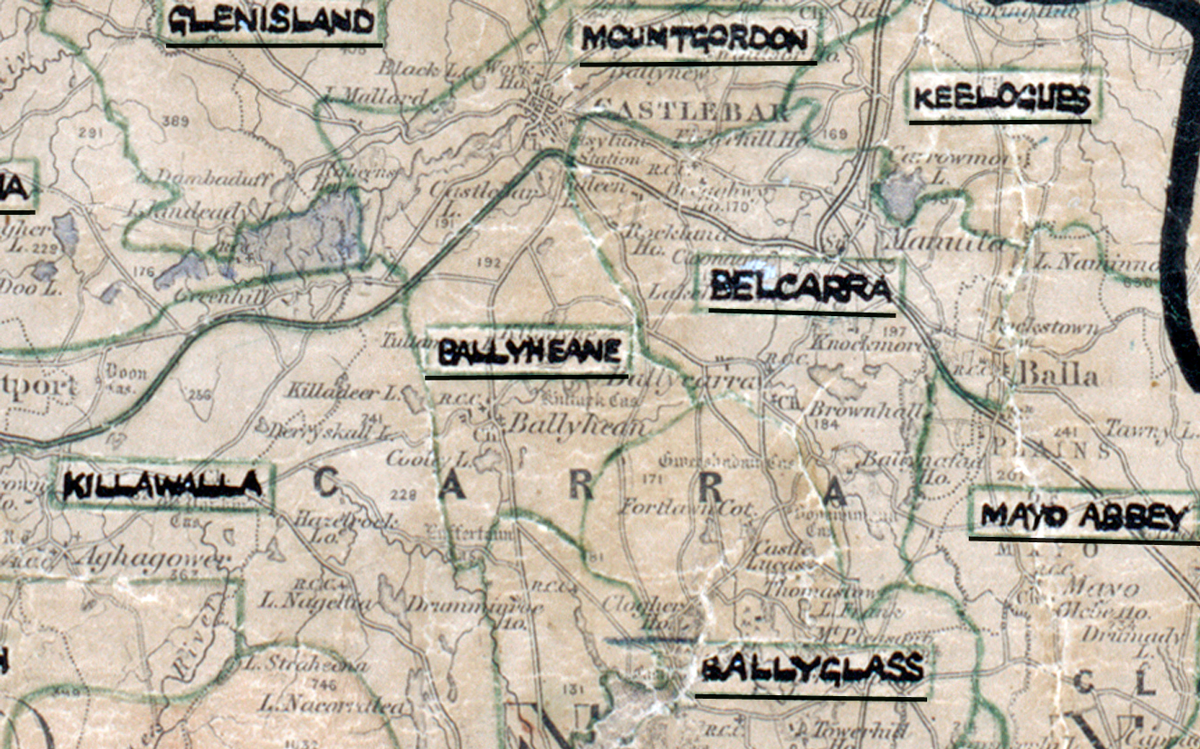
 Area: Ballyheane
Started: August 1953
Finished: January 1954
Poles used: 393
Line used (km): 35
Premises connected: 55
The figures above were sourced from our REO News magazine, to learn more about what these figures mean, visit our interactive map. The map above shows the area boundary and is from a digitised version of the original map used during the scheme.
Ballyheane is a region of small farms as reported in The REO News from March 1954.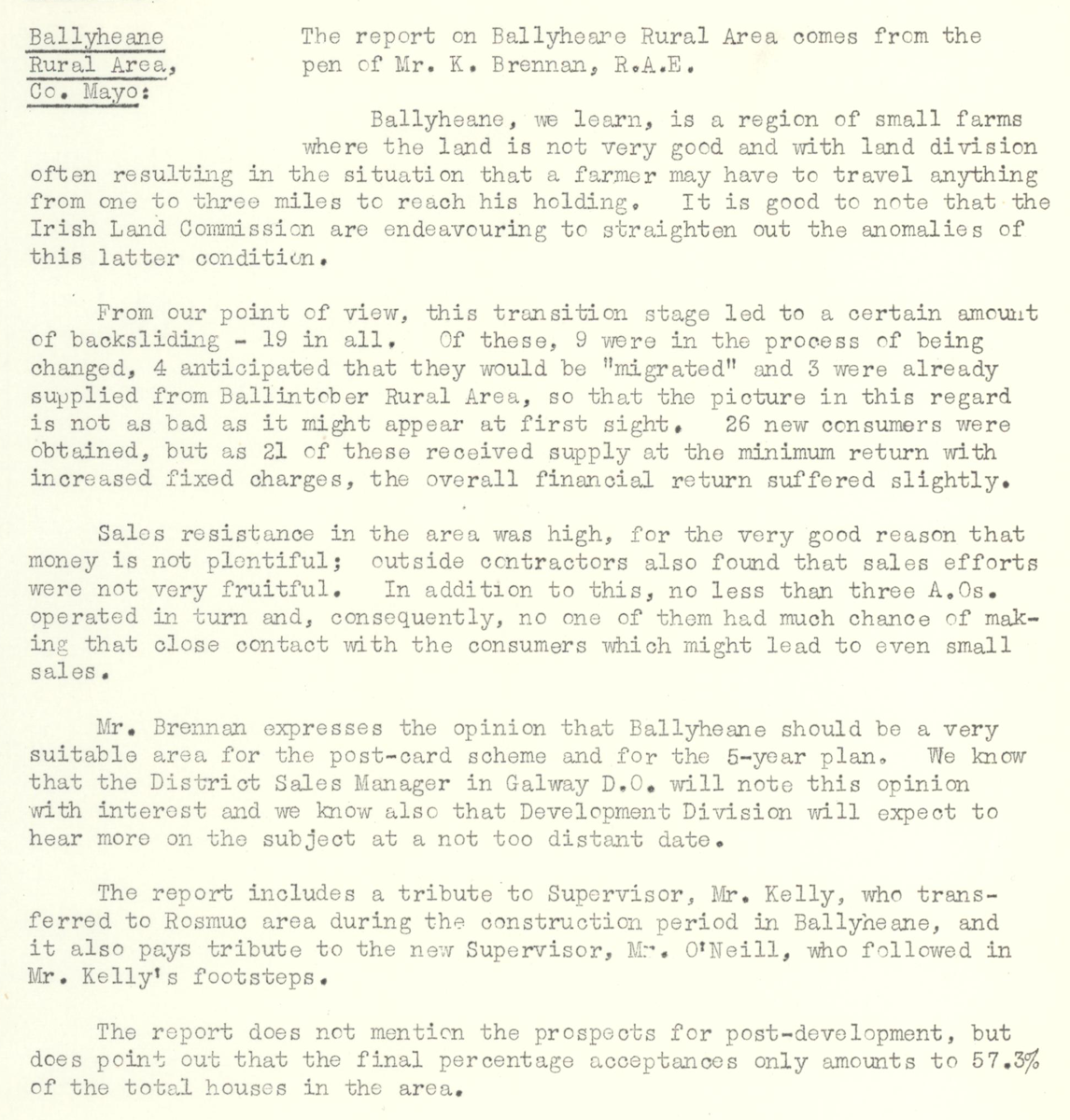 This digital scan from the REO News displays the following text:
“Ballyheane Rural Area, Co. Mayo: The report on Ballyheane Rural Area comes from the pen of Mr. K. Brennan, R.A.E.
Ballyheane, we learn, is a region of small farms where the land is not very good and with land division often resulting in the situation that a farmer may have to travel anything from one to three miles to reach his holding. It is good to note that the Irish Land Commission are endeavouring to straighten out the anomalies of this latter condition.
From our point of view, this transition stage led to a certain amount of backsliding – 19 in all. Of these, 9 were in the process of being changed, 4 anticipated that they would be ‘migrated’ and 3 were already supplied from Ballintubber Rural Area, so that the picture in this regard is not as bad as it may appear at first sight. 26 new consumers were obtained, but as 21 of these received supply at the minimum return with increased fixed charges, the overall financial return suffered slightly.
Sales resistance in the area was high, for the very good reason that money is not plentiful; outside contractors also found that sales efforts were not very fruitful. In addition to this, no less than three A.O.s operated in turn and, consequently, no one of them had much chance of making that close contact with the consumers which might lead to even small sales.
Mr. Brennan expresses the opinion that Ballyheane should be a very suitable area for the post‑development scheme and for the 5‑year plan. We know that the District Sales Manager in Galway D.O. will note this opinion with interest and we know also that Development Division will expect to hear more on the subject at a not too distant date.
The report includes a tribute to Supervisor, Mr. Kelly, who transferred to Rossmu area during the construction period in Ballyheane, and Mr. Brennan pays tribute to the new Supervisor, Mr. O’Neill, who followed in Mr. Kelly’s footsteps.
The report does not mention the prospects for post‑development, but does point out that the final percentage acceptances only amounts to 57.3% of the total houses in the area.”