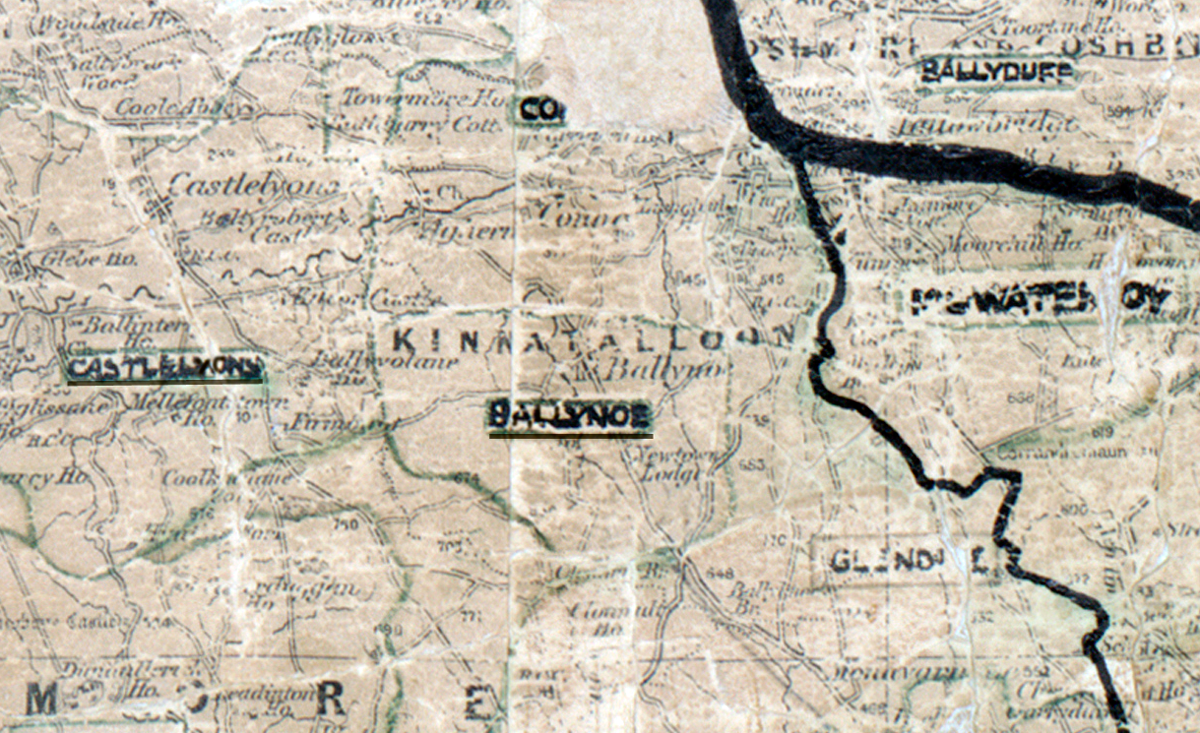
 Area: Ballynoe
Started: August 1953
Finished: June 1954
Poles used: 452
Line used (km): 45
Premises connected: 80
The figures above were sourced from our REO News magazine, to learn more about what these figures mean, visit our interactive map. The map above shows the area boundary and is from a digitised version of the original map used during the scheme.
There was a local legend about buried treasure in Ballynoe according to The REO News from August 1954.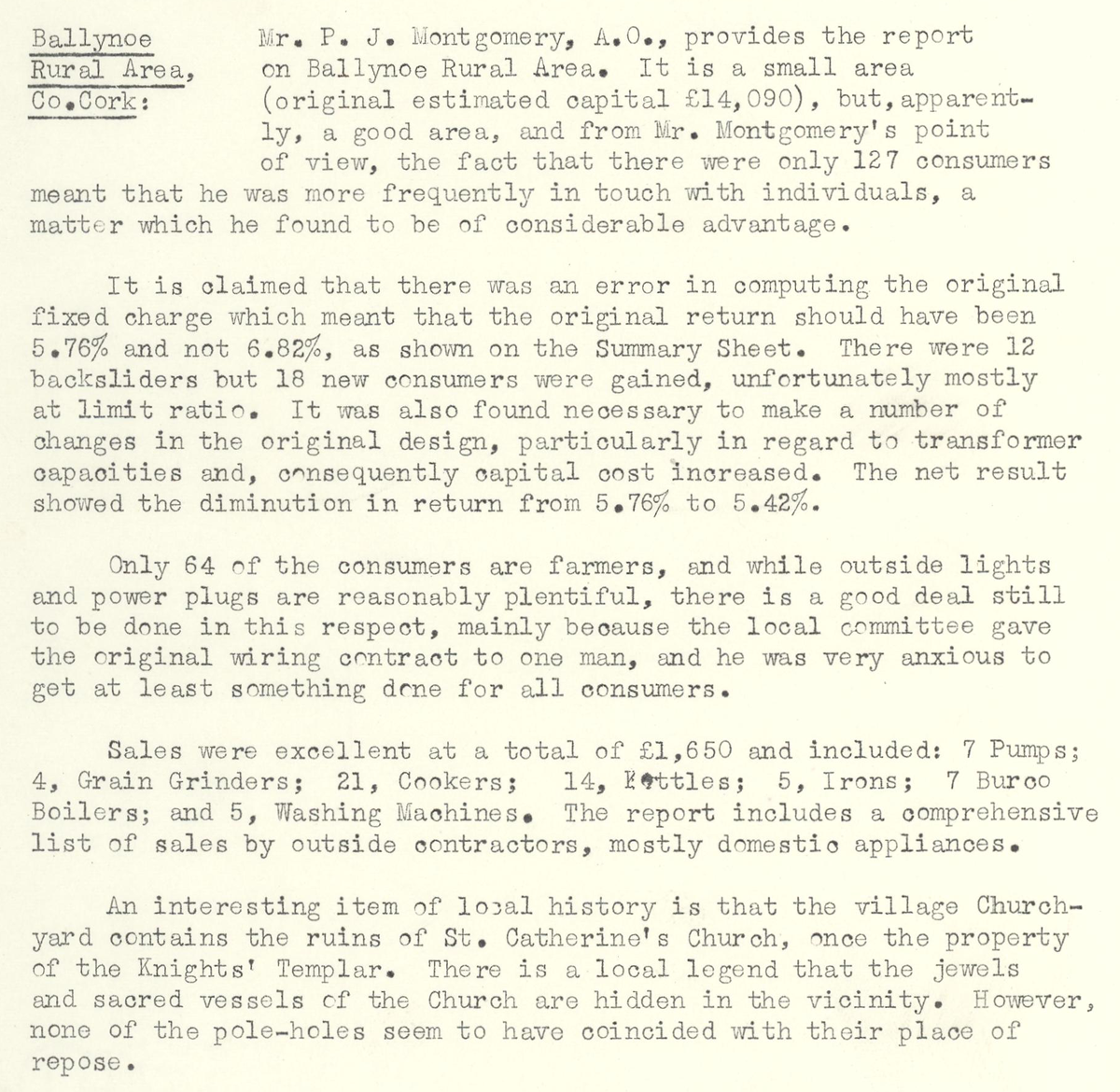 This digital scan from the REO News displays the following text:
"Ballynoe Rural Area, Co. Cork: Mr. P. J. Montgomery, A.O., provides the report on Ballynoe Rural Area. It is a small area (original estimated capital £14,090) but, apparently, a good area, and from Mr. Montgomery’s point of view, the fact that there were only 127 consumers meant that he was more frequently in touch with individuals, a matter which he found to be of considerable advantage.
It is claimed that there was an error in computing the original fixed charge which meant that the original return should have been 5.76% and not 6.82%, as shown on the Summary Sheet. There were 12 backsliders but 18 new consumers were gained, unfortunately mostly at limit ratio. It was also found necessary to make a number of changes in the original design, particularly in regard to transformer capacities and, consequently capital cost increased. The net result showed the diminution in return from 5.76% to 5.42%.
Only 64 of the consumers are farmers, and while outside lights and power plugs are reasonably plentiful, there is a good deal still to be done in this respect, mainly because the local committee gave the original wiring contract to one man, and he was very anxious to get at least something done for all consumers.
Sales were excellent at a total of £1,650 and included: 7 Pumps; 4 Grain Grinders; 21 Cookers; 14 Kettles; 5 Irons; 7 Burco Boilers; and 5 Washing Machines. The report includes a comprehensive list of sales by outside contractors of many domestic appliances.
An interesting item of local history is that the village Churchyard contains the ruins of St. Catherine’s Church on the property of the Knights Templars. The tradition is that the jewels and sacred vessels of the Church are buried in the vicinity. However, the pole-holes seem to have not coincided with their place of repose."