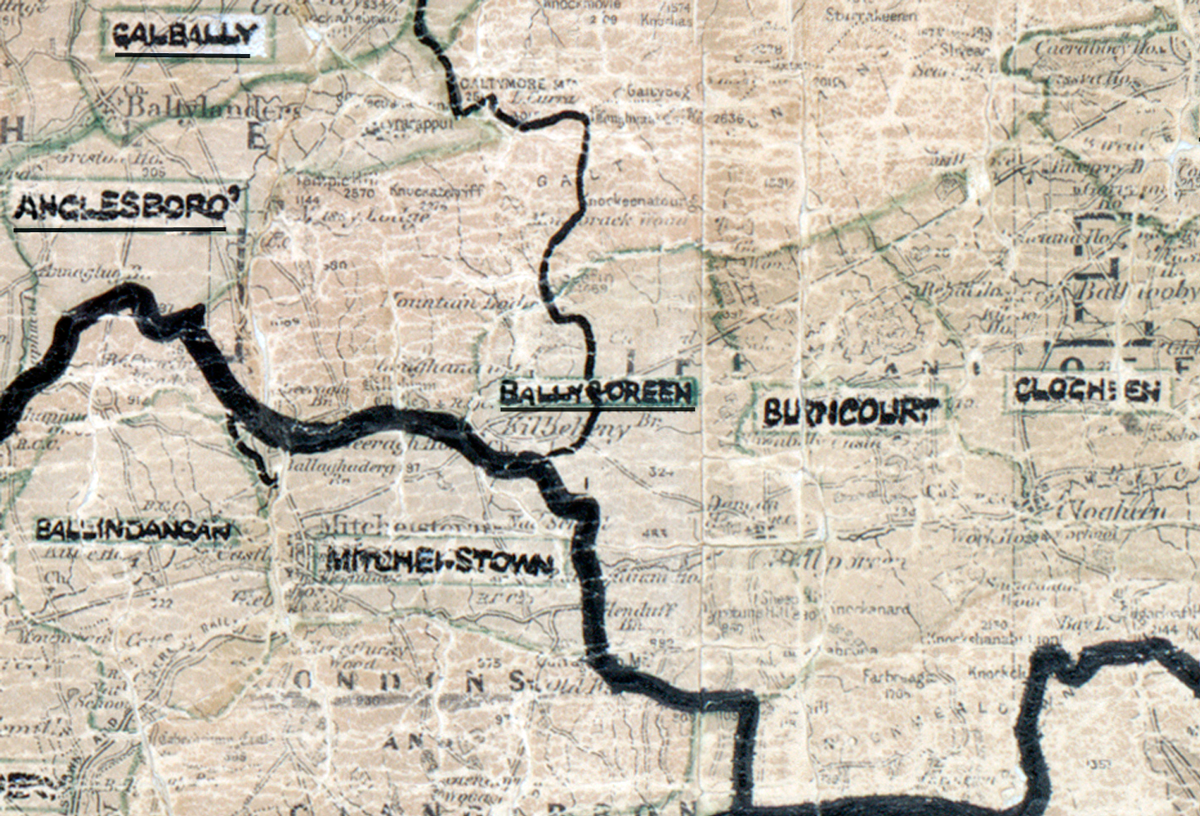
 Area: Ballyporeen
Started: August 1952
Finished: April 1953
Poles used: 812
Line used (km): 71
Premises connected: 197
The figures above were sourced from our REO News magazine, to learn more about what these figures mean, visit our interactive map. The map above shows the area boundary and is from a digitised version of the original map used during the scheme.
The REO News from June 1953 reports that economically Ballyporeen was a very successful area.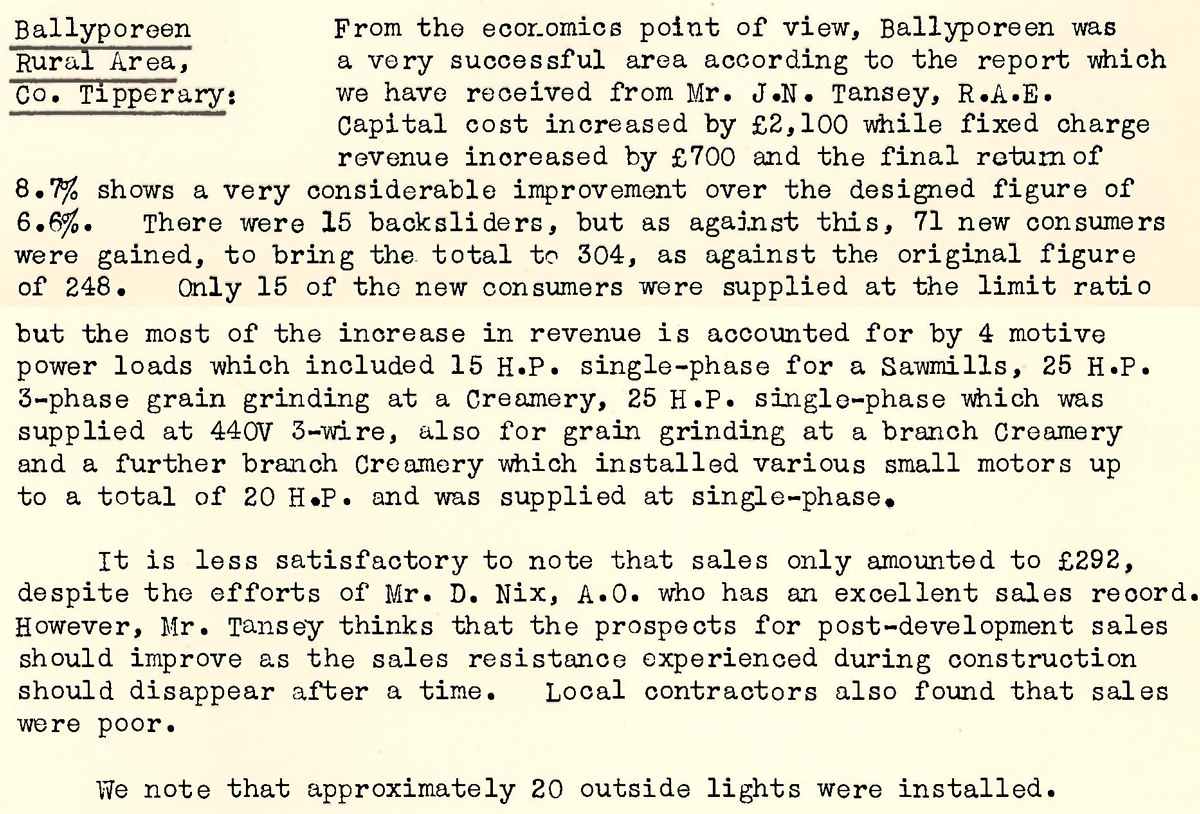 This digital scan from the REO News displays the following text:
“Ballyporeen Rural Area, Co. Tipperary: From the economics point of view, Ballyporeen was a very successful area according to the report which we have received from Mr. J. N. Tansey, R.A.E. Capital cost increased by £2,100 while fixed charge revenue increased by £700 and the final return of 8.7% shows a very considerable improvement over the designed figure of 6.6%. There were 15 backsliders, but as against this, 71 new consumers were gained, to bring the total to 304, as against the original figure of 248. Only 15 of the new consumers were supplied at the limit ratio but the most of the increase in revenue is accounted for by 4 motive power loads which include 15 H.P. single‑phase for a Sawmills, 25 H.P. 3‑phase grain grinding at a Creamery, 25 H.P. single‑phase which was supplied at 440V 3‑wire, also for grain grinding at a branch Creamery and a further branch Creamery which installed various small motors up to a total of 20 H.P. and was supplied at single‑phase.
It is less satisfactory to note that sales only amounted to £292, despite the efforts of Mr. D. Nix, A.O. who has an excellent sales record. However, Mr. Tansey thinks that the prospects for post‑development sales should improve as the sales resistance experienced during construction should disappear after a time. Local contractors also found that sales were poor.
We note that approximately 20 outside lights were installed.”