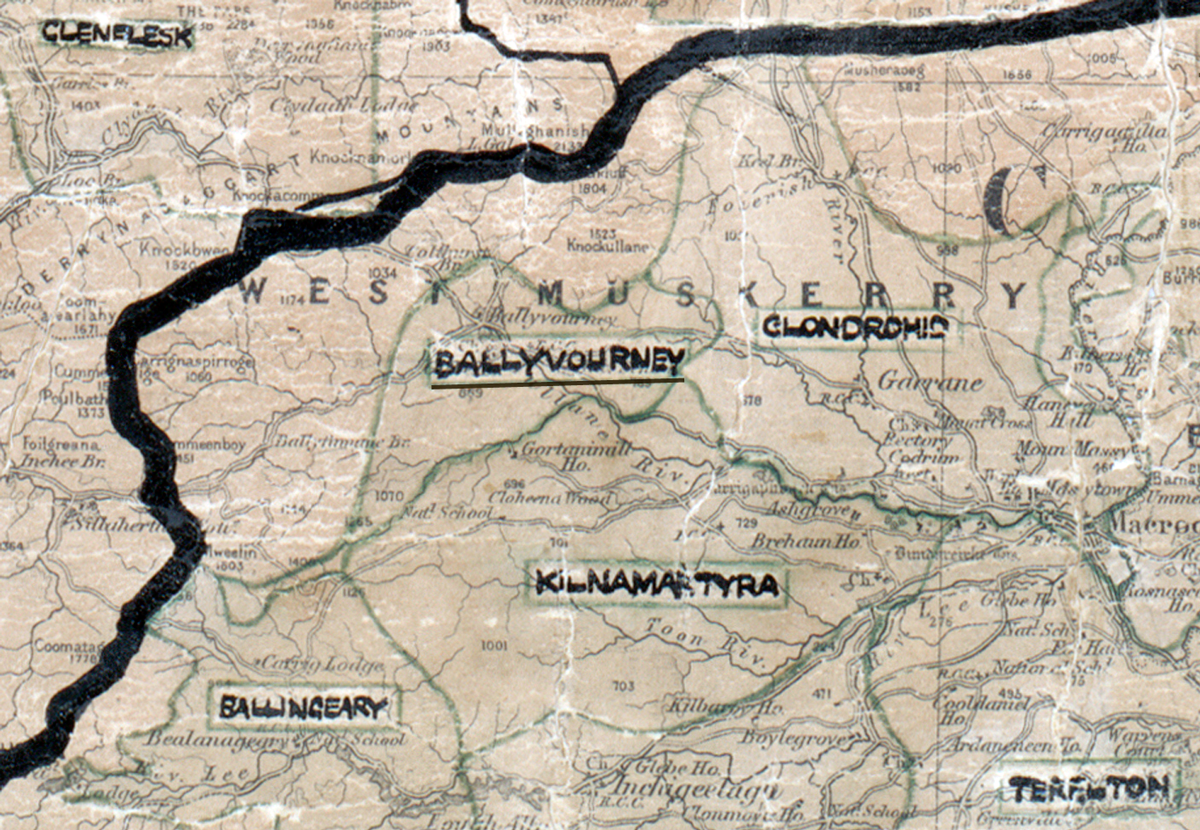
 Area: Ballyvourney
Started: July 1958
Finished: February 1959
Poles used: 904
Line used (km): 81
Premises connected: 300
The figures above were sourced from our REO News magazine, to learn more about what these figures mean, visit our interactive map. The map above shows the area boundary and is from a digitised version of the original map used during the scheme.
The REO News from March 1959 tells us about a famous landmark in Ballyvourney.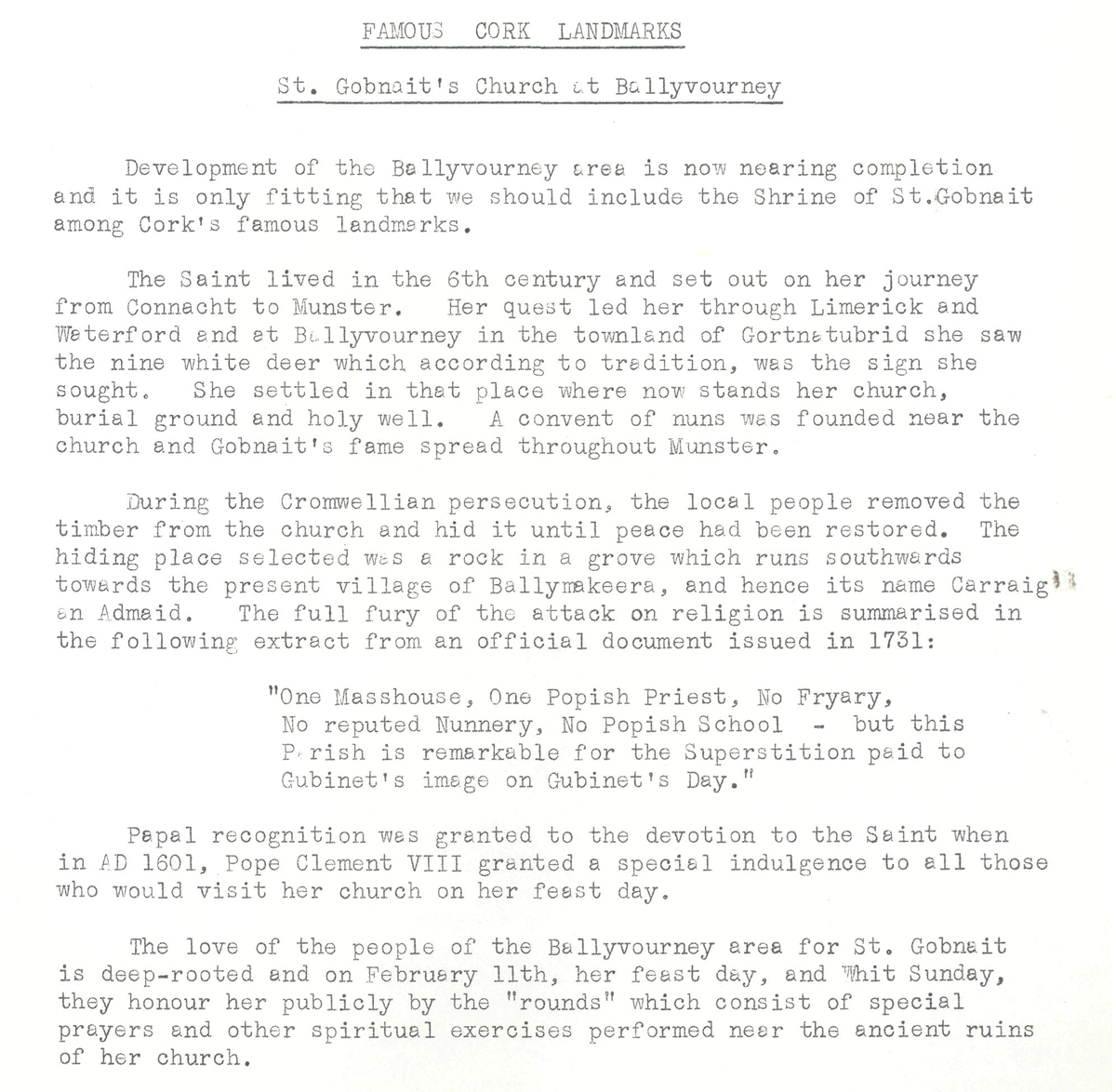 This digital scan from the REO News displays the following text:
"FAMOUS CORK LANDMARKS
St. Gobnait’s Church at Ballyvourney
Development of the Ballyvourney area is now nearing completion and it is only fitting that we should include the Shrine of St. Gobnait among Cork’s famous landmarks.
The Saint lived in the 6th century and set out on her journey from Connacht to Munster. Her quest led her through Limerick and Waterford and at Ballyvourney in the townland of Gortnatubrid she saw the nine white deer which according to tradition, was the sign she sought. She settled in that place where now stands her church, burial ground and holy well. A convent of nuns was founded near the church and Gobnait’s fame spread throughout Munster.
During the Cromwellian persecution, the local people removed the timber from the church and hid it until peace had been restored. The hiding place selected was a rock in a grove which runs southwards towards the present village of Ballymakeera, and hence its name Carraigín an Adhmaid. The full fury of the attack on religion is summarised in the following extract from an official document issued in 1731:
“one Masshouse, One Popish Priest, No Fryary,
No reputed Nunnery, No Popish School — but this
Parish is remarkable for the Superstition paid to
Gubinet’s image on Gubinet’s Day.”
Papal recognition was granted to the devotion to the Saint when in AD 1601, Pope Clement VIII granted a special indulgence to all those who would visit her church on her feast day.
The love of the people of the Ballyvourney area for St. Gobnait is deep-rooted and on February 11th, her feast day, the ancient custom is to honour her publicly by the “rounds” which consist of special prayers and other spiritual exercises performed near the monastic ruins of her church."