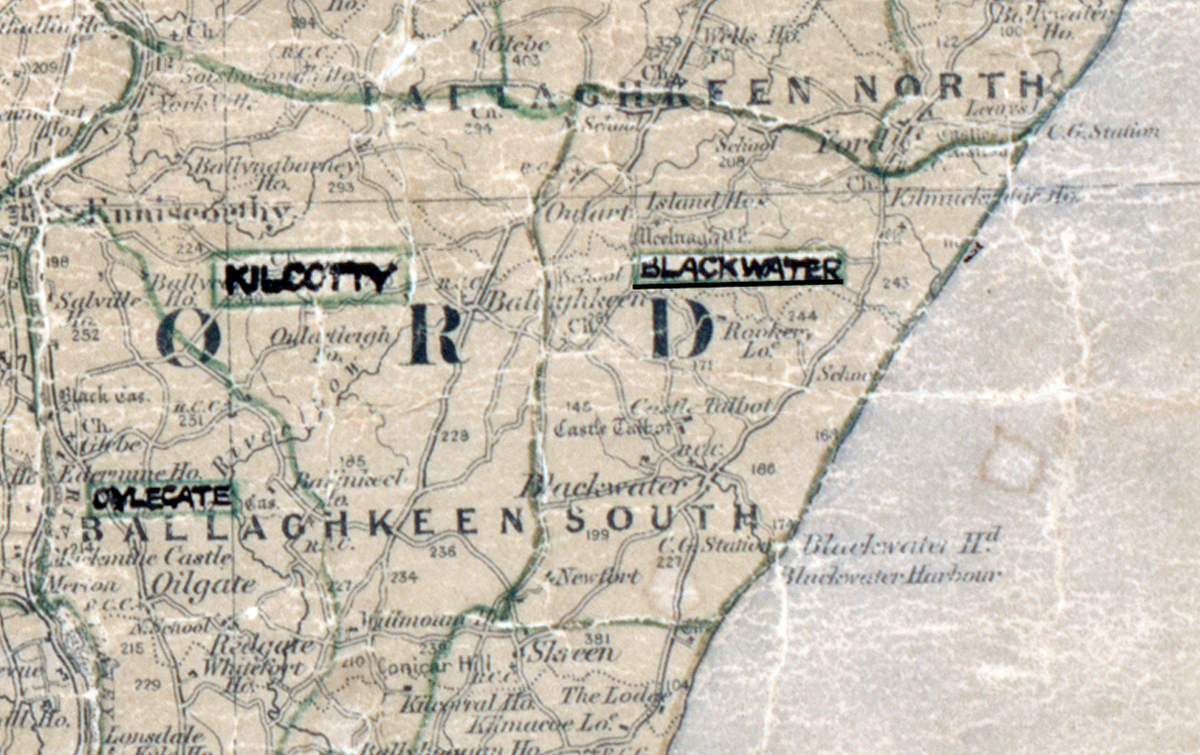
 Area: Blackwater
Started: April 1955
Finished: September 1955
Poles used: 1523
Line used (km): 129
Premises connected: 210
The figures above were sourced from our REO News magazine. Click interactive mapto find out more on what the figures mean. The map above shows the area boundary and is from a digitised version of the original map used during the scheme.
View the original ESB survey of the area. This document shows that the Blackwater rural area was 33sq miles in size, with an initial acceptance rate of 55%."
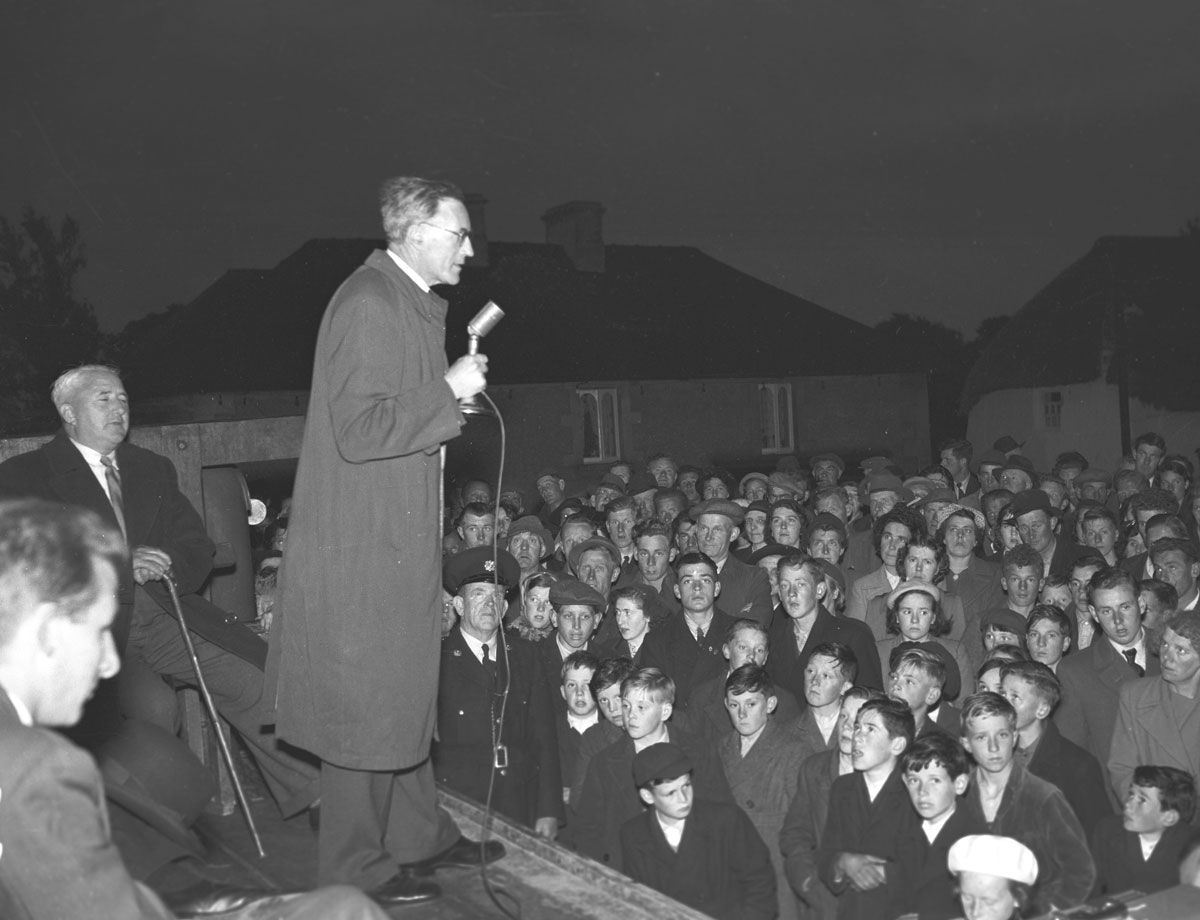 PJ Dowling at the switch on event at Blackwater Co. Wexford, 1955
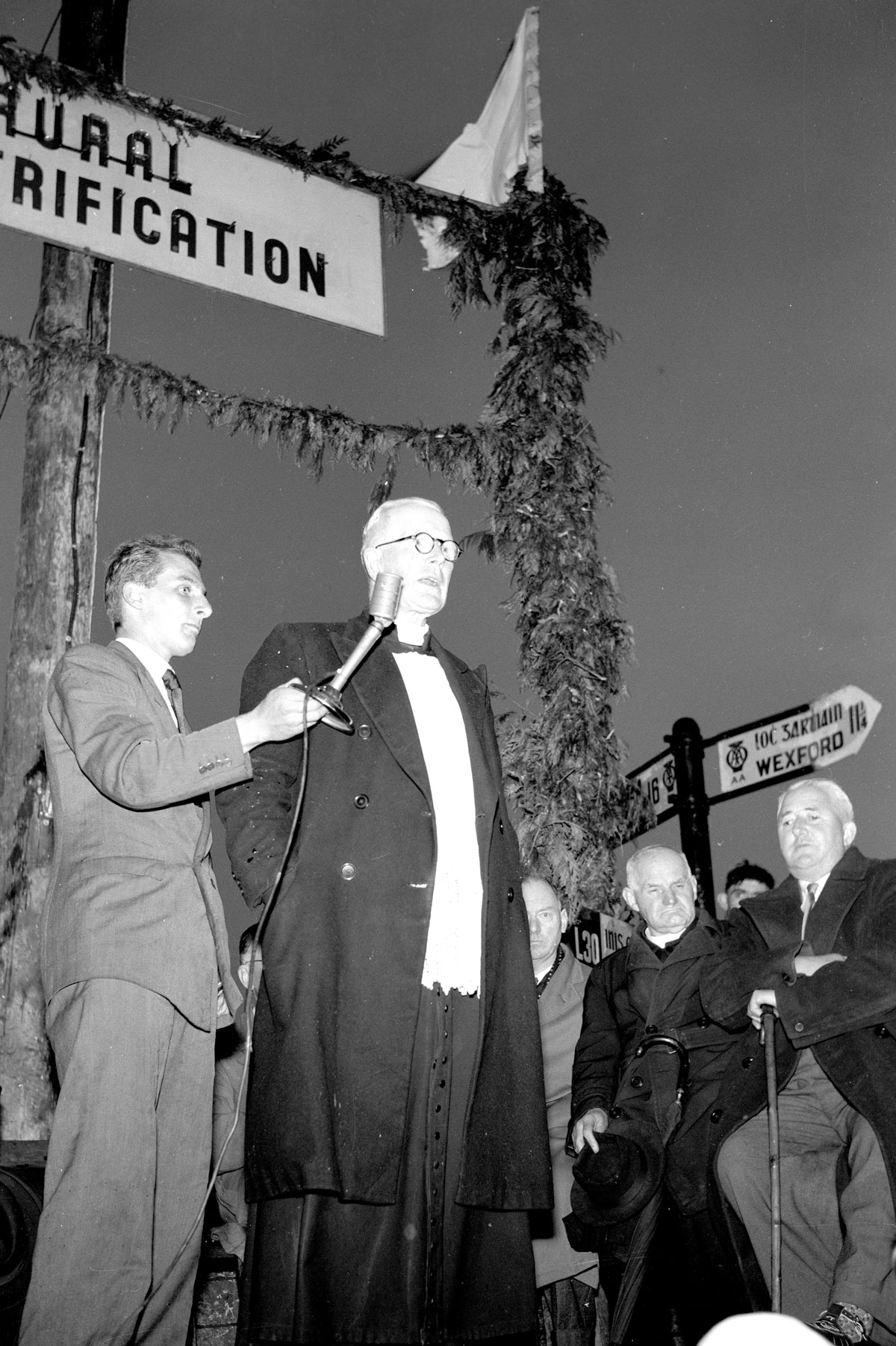 Very Rev. Canon J. Sinnott speaking at the switch on ceremony in Blackwater
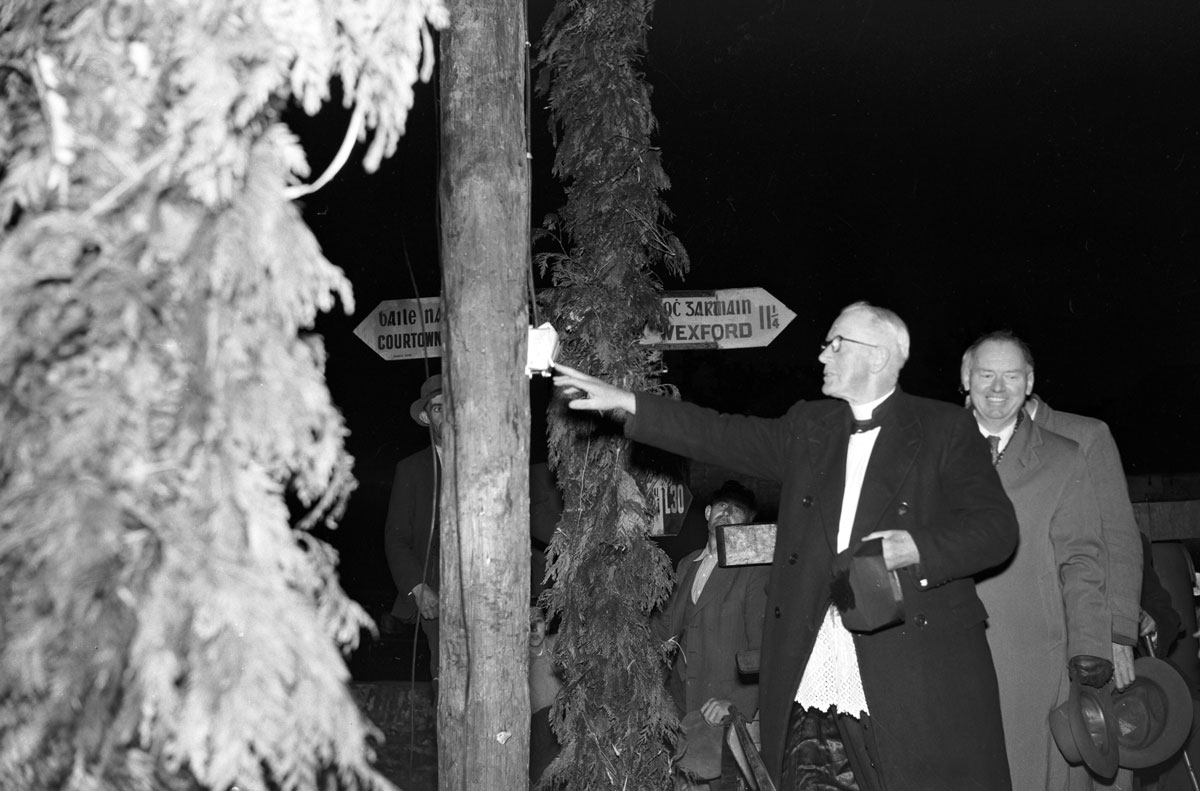 Very Rev. Canon J. Sinnott flicks the switch
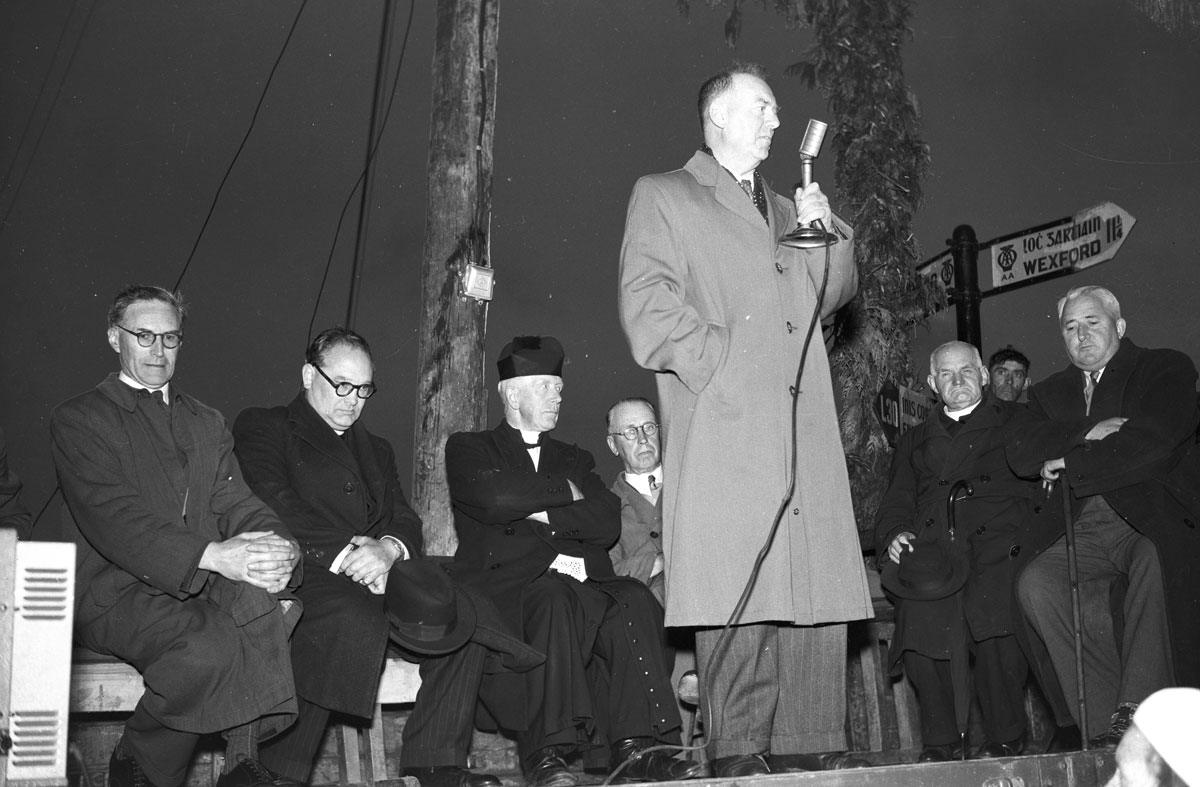 VIP guests at the switch on event
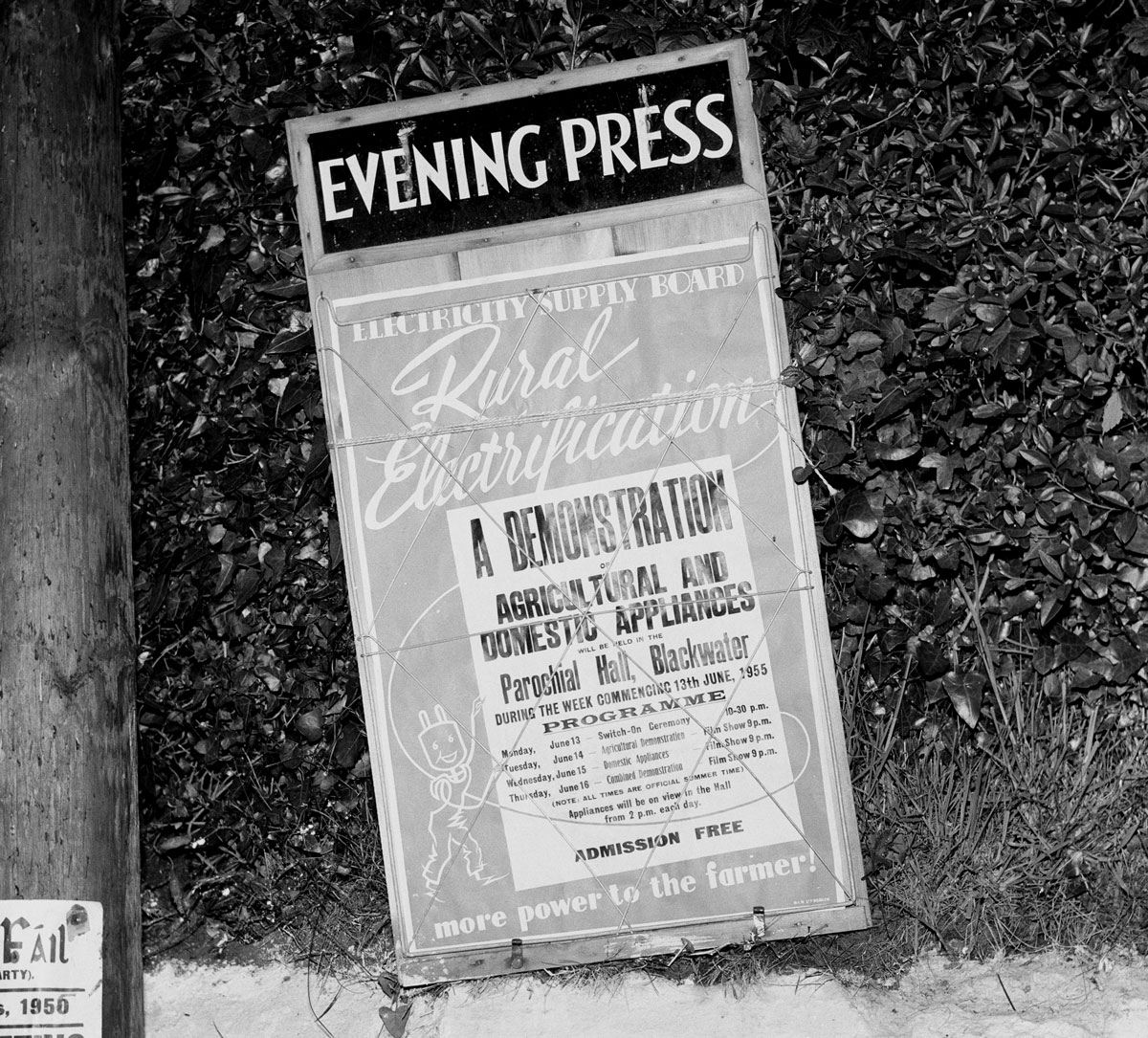 Promotional poster for ESB demonstration at Blackwater
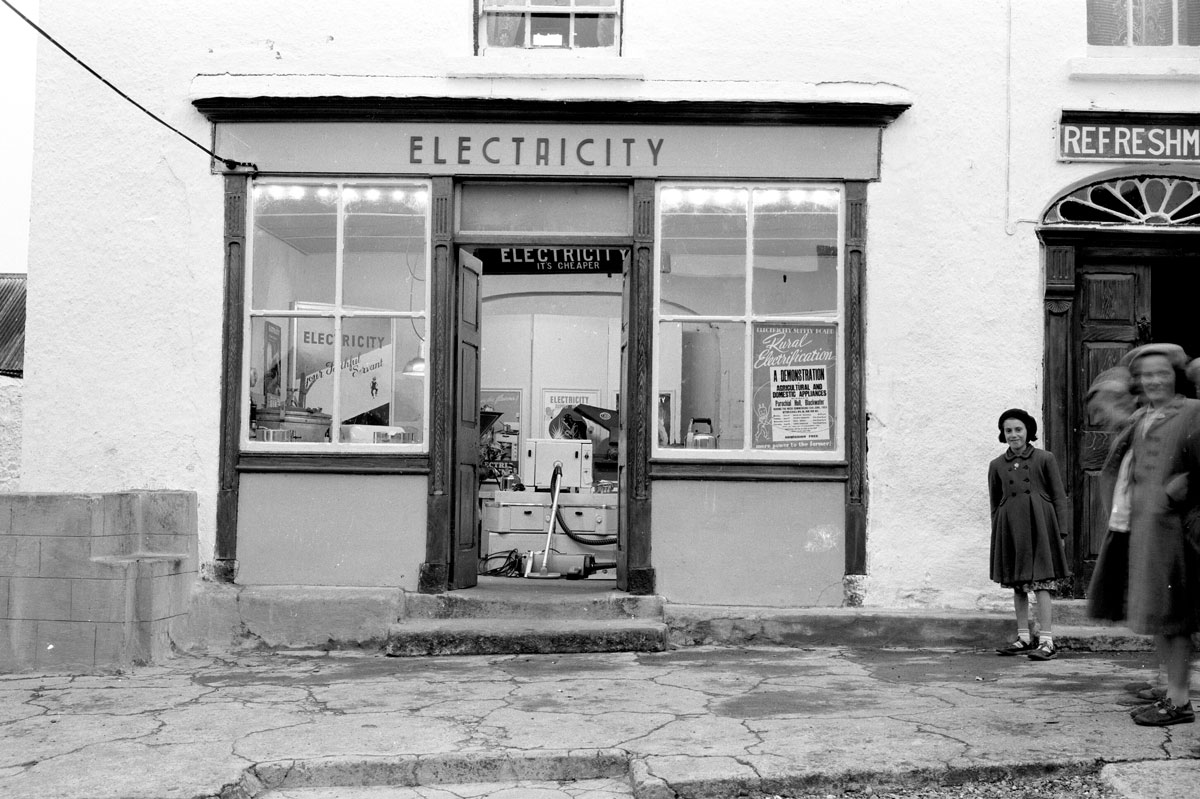
Pop up showroom, Blackwater
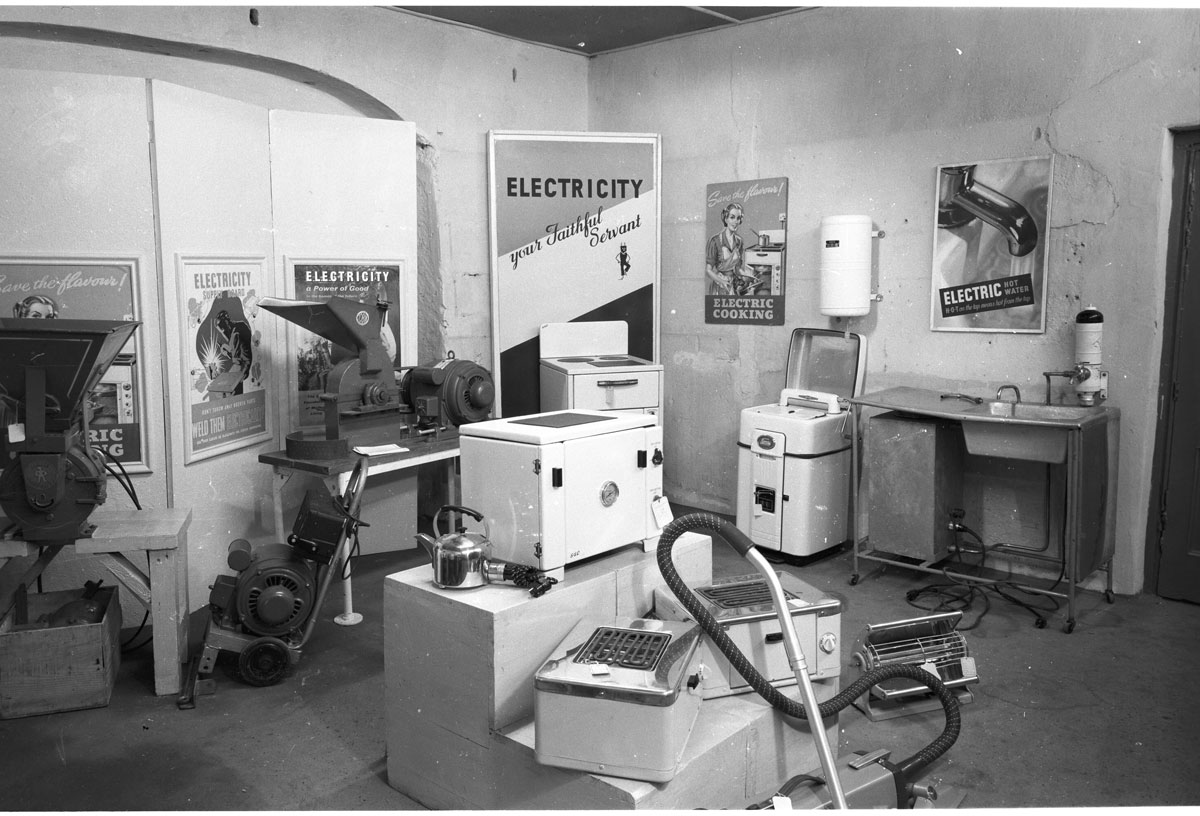 Electrical appliances and machinery on display in the make shift showroom in Blackwater
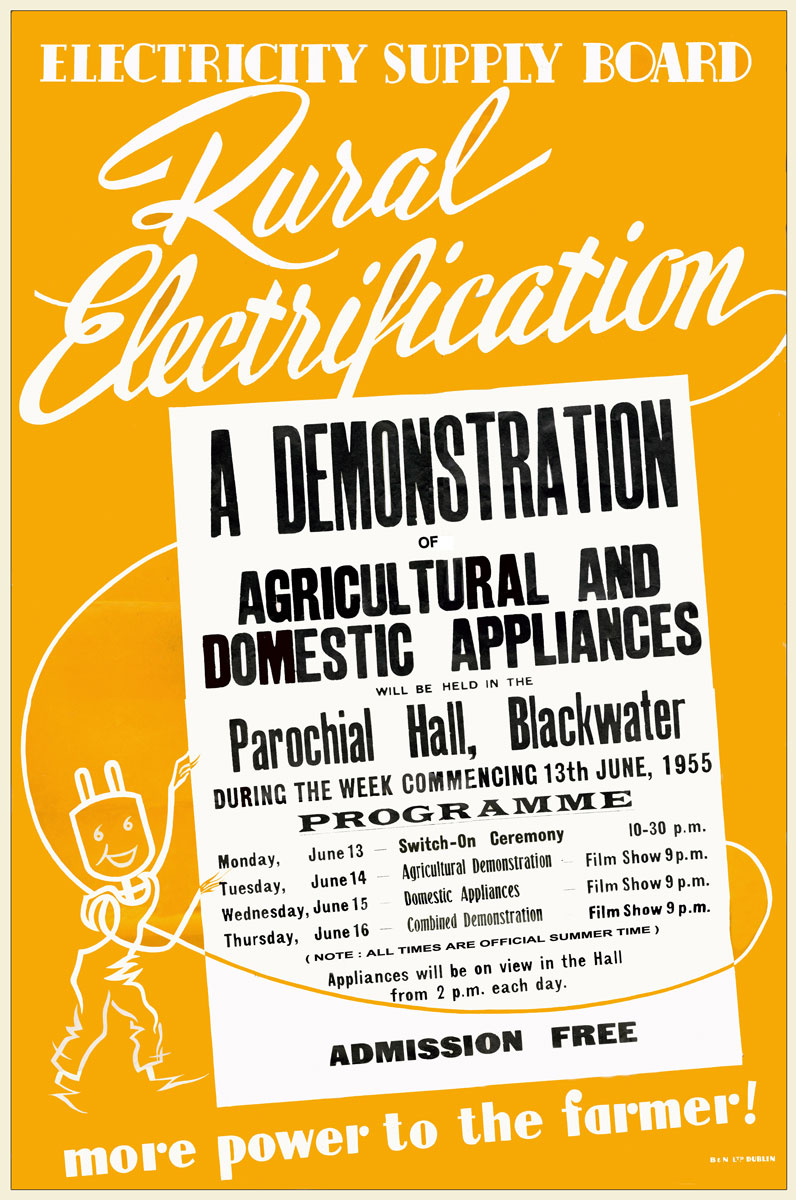 Demonstration poster, 1955
The switch on ceremony was held in the Village Square in Blackwater on 15 June 1955, and was covered extensively in the July 1955 edition of REO News:
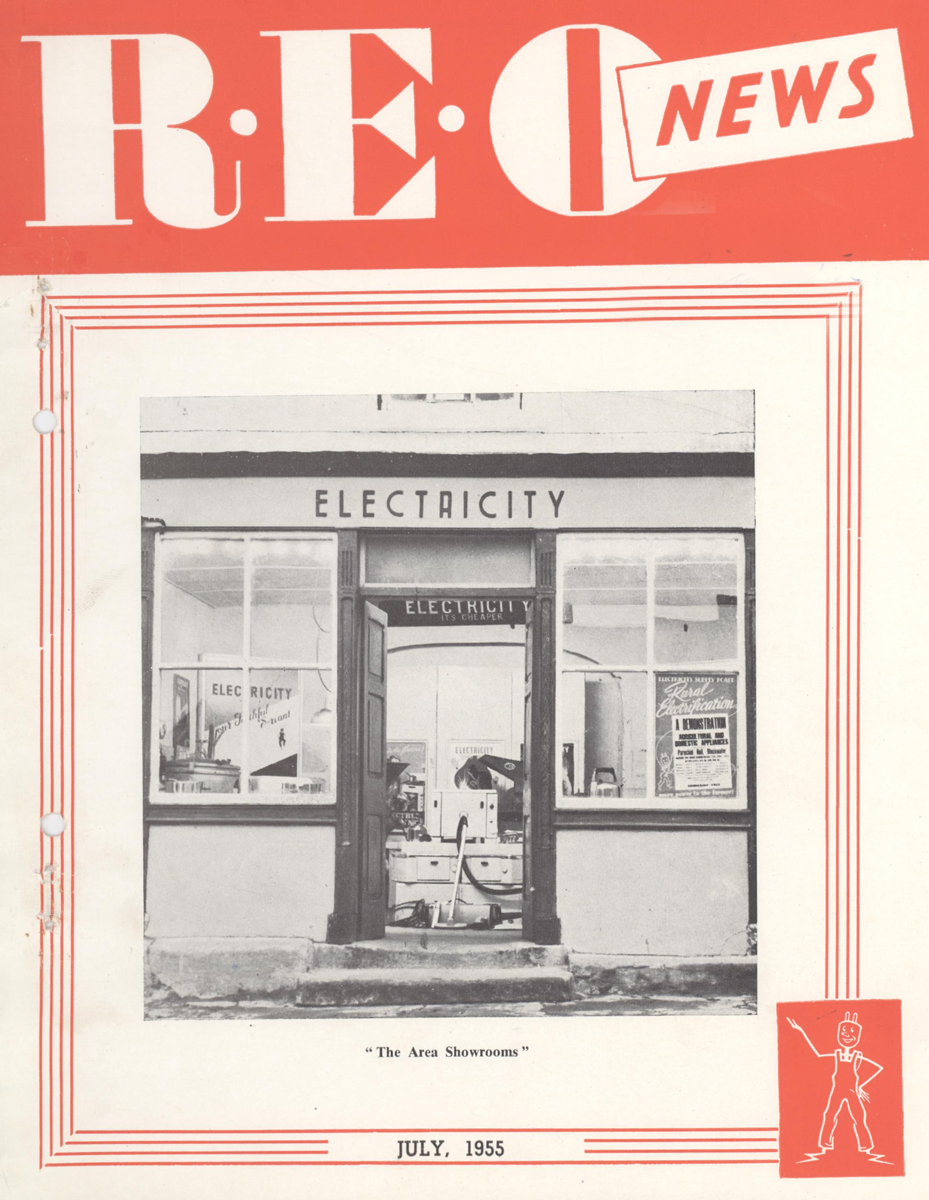
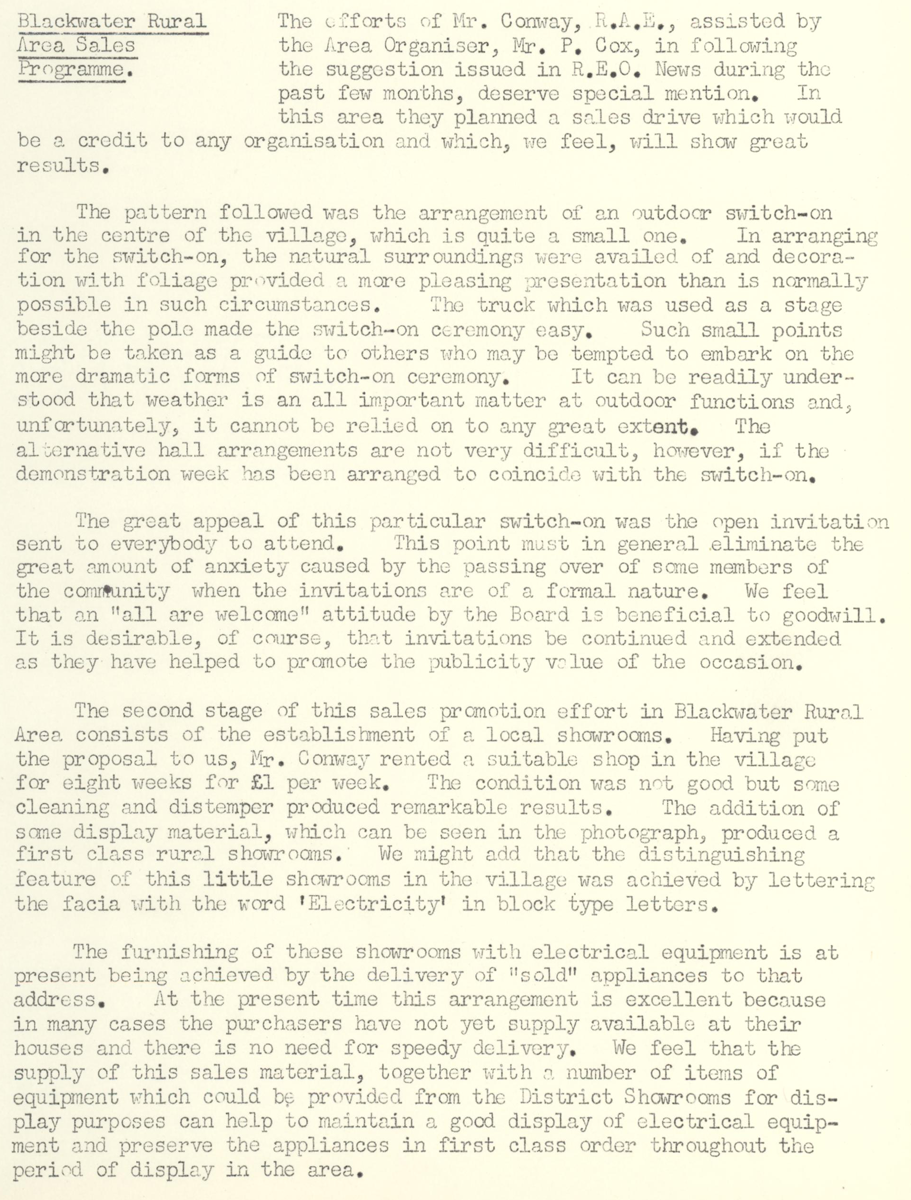
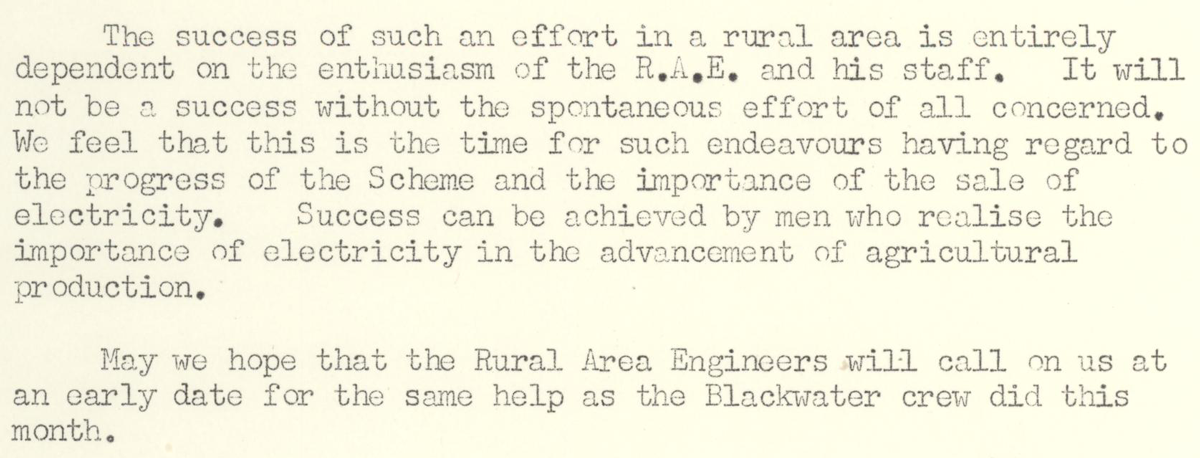 This digital scan from the REO News displays the following text:
"Blackwater Rural Area Sales Programme
The efforts of Mr. Conway, R.A.E., assisted by the Area Organiser, Mr. P. Cox, in following the suggestion issued in R.E.O. News during the past few months, deserve special mention. In this area they planned a sales drive which would be a credit to any organisation and which, we feel, will show great results.
The pattern followed was the arrangement of an outdoor switch-on in the centre of the village, which is quite a small one. In arranging for the switch-on, the natural surroundings were availed of and decoration with foliage provided a more pleasing presentation than is normally possible in such circumstances. The truck which was used as a stage beside the pole made the switch-on ceremony easy. Such small points might be taken as a guide to others who may be tempted to embark on the more dramatic forms of switch-on ceremony. It can be readily understood that weather is an all-important matter at outdoor functions and, unfortunately, it cannot be relied on to any great extent. The alternative hall arrangements are not very difficult, however, if the demonstration week has been arranged to coincide with the switch-on.
The great appeal of this particular switch-on was the open invitation sent to everybody to attend. This point must in general eliminate the great amount of anxiety caused by the passing over of some members of the community when the invitations are of a formal nature. We feel that an "all are welcome" attitude by the Board is beneficial to goodwill. It is desirable, of course, that invitations be continued and extended as they have helped to promote the publicity value of the occasion.
The second stage of this sales promotion effort in Blackwater Rural Area consists of the establishment of a local showroom. Having put the proposal to us, Mr. Conway rented a suitable shop in the village for eight weeks for £1 per week. The condition was not good but some cleaning and distemper produced remarkable results. The addition of some display material, which can be seen in the photograph, produced a first class rural showroom. We might add that the distinguishing feature of this little showroom in the village was achieved by lettering the fascia with the word "Electricity" in block type letters.
The furnishing of these showrooms with electrical equipment is at present being achieved by the delivery of "sold" appliances to that address. At the present time this arrangement is excellent because in many cases the purchasers have not yet supply available at their houses and there is no need for speedy delivery. We feel that the supply of this sales material, together with a number of items of equipment which could be provided from the District Showrooms for display purposes, can help to maintain a good display of electrical equipment and preserve the appliances in first class order throughout the period of display in the area.
The success of such an effort in a rural area is entirely dependent on the enthusiasm of the R.A.E. and staff. It will not be a success without the spontaneous effort of all concerned. We feel that this is the time for such endeavours having regard to the progress of the Scheme and the importance of the sale of electricity. Success can be achieved by people who realise the importance of electricity in the advancement of agricultural production.
May we hope that the Rural Area Engineers will call on us at an early date for the same help as the Blackwater crew did this month."