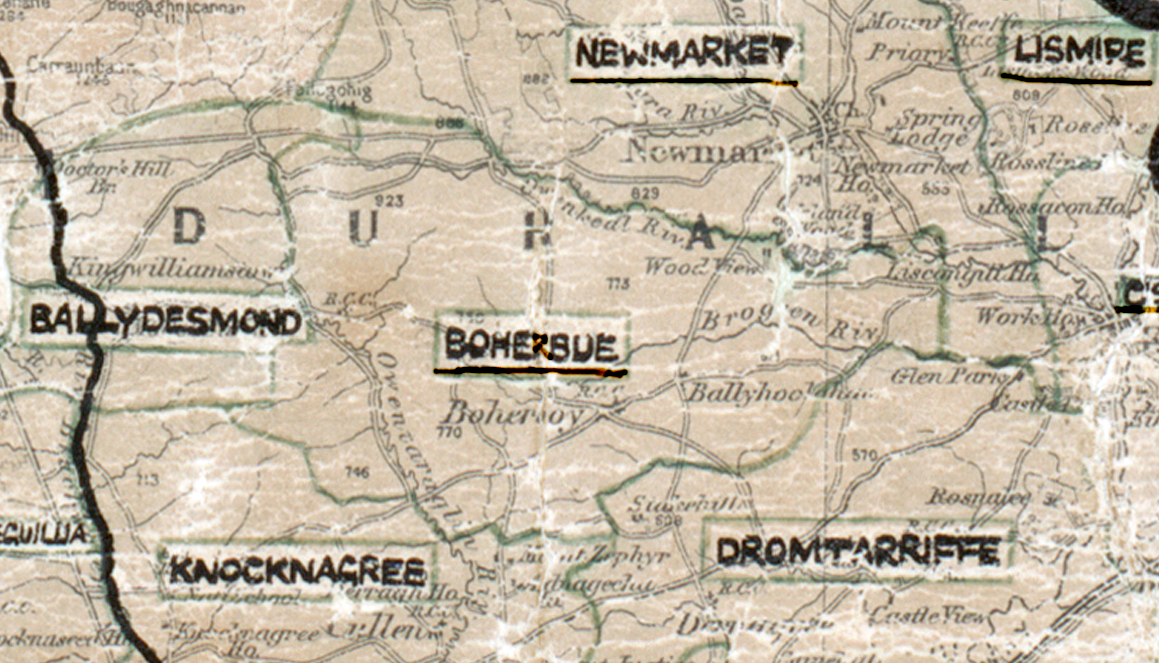
 Area: Boherbue
Started: June 1954
Finished: November 1954
Poles used: 1581
Line used (km): 137
Premises connected: 150
The figures above were sourced from our REO News magazine, to learn more about what these figures mean, visit our interactive map. The map above shows the area boundary and is from a digitised version of the original map used during the scheme.
Boherbue was a progressive area according to The REO News from February 1955.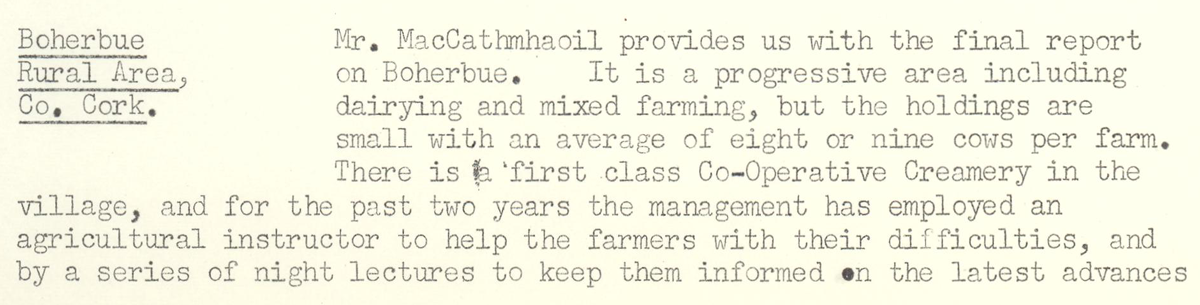 This digital scan from the REO News displays the following text:
"Boherbue Rural Area, Co. Cork: Mr. MacCathmhaoil provides us with the final report on Boherbue. It is a progressive area including dairying and mixed farming, but the holdings are small with an average of eight or nine cows per farm. There is a first class Co‑Operative Creamery in the village, and for the past two years the management has employed an agricultural instructor to help the farmers with their difficulties, and by a series of night lectures to keep them informed on the latest advances."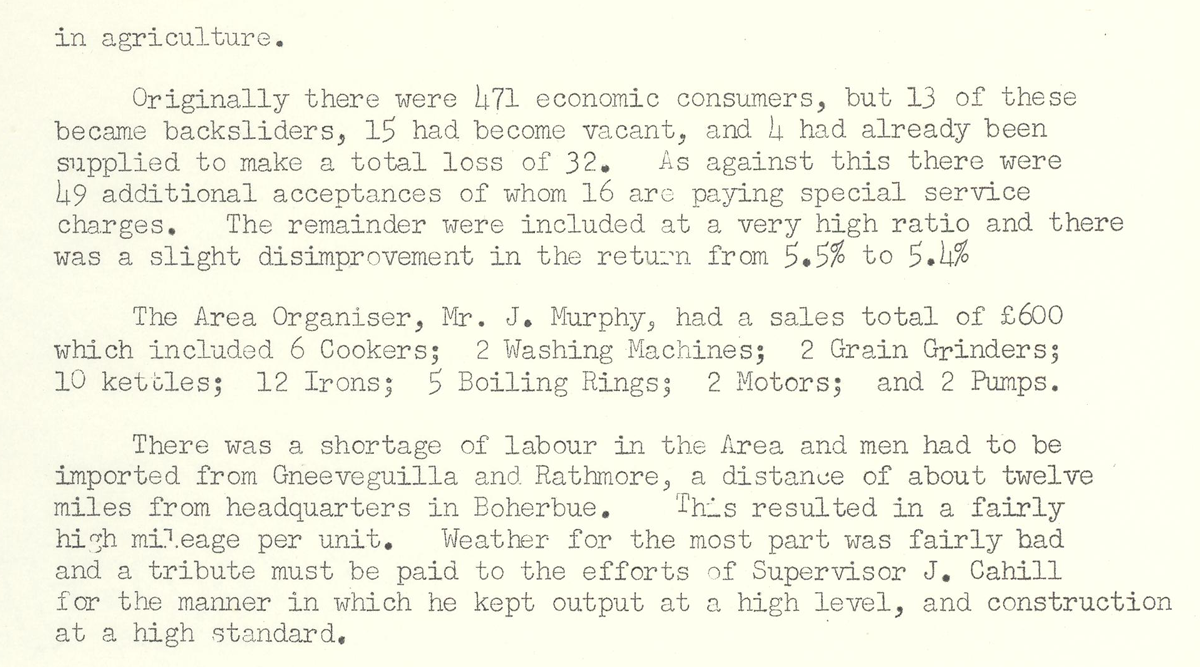 This digital scan from the REO News displays the following text:
"in agriculture. Originally there were 471 economic consumers, but 13 of these became backsliders, 15 had become vacant, and 4 had already been supplied to make a total loss of 32. As against this there were 49 additional acceptances of whom 16 are paying special service charges. The remainder were included at a very high ratio and there was a slight disimprovement in the return from 5.5% to 5.4%.
The Area Organiser, Mr. J. Murphy, had a sales total of £600 which included 6 Cookers; 2 Washing Machines; 2 Grain Grinders; 10 kettles; 12 Irons; 5 Boiling Rings; 2 Motors; and 2 Pumps.
There was a shortage of labour in the Area and men had to be imported from Gneeveguilla and Rathmore, a distance of about twelve miles from headquarters in Boherbue. This resulted in a fairly high mileage per unit. Weather for the most part was fairly bad and a tribute must be paid to the efforts of Supervisor J. Cahill for the manner in which he kept output at a high level, and construction at a high standard."