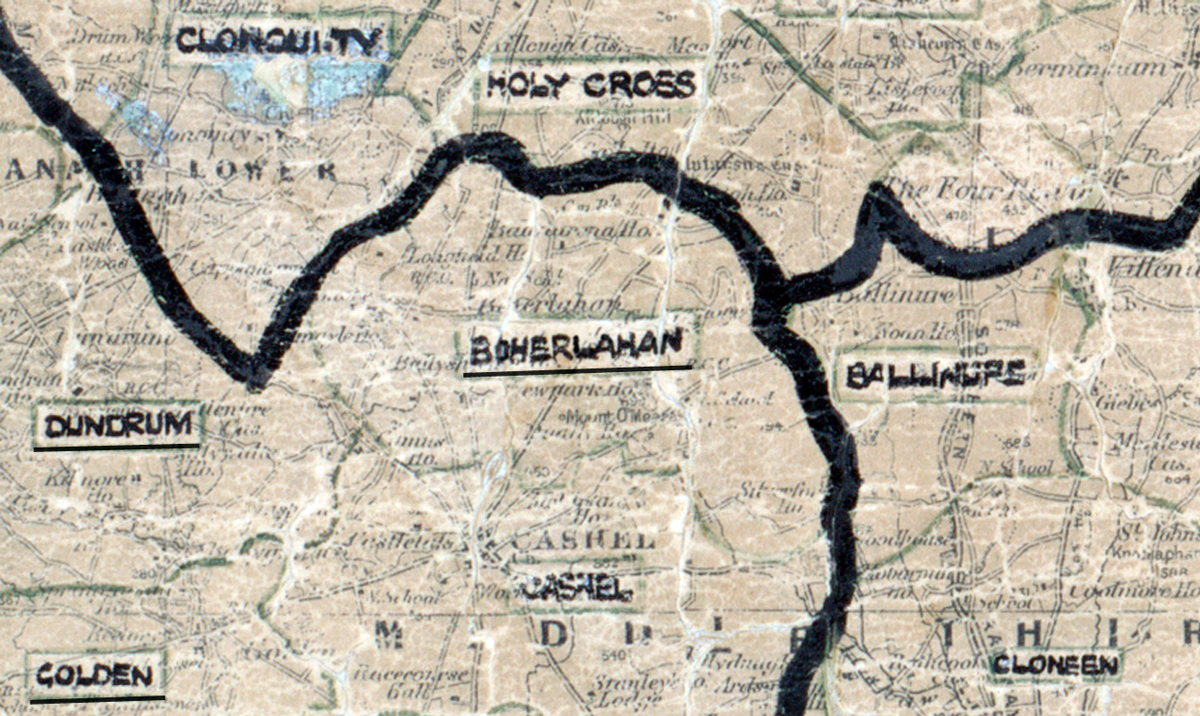
 Area: Boherlahan
Started: August 1954
Finished: June 1955
Poles used: 1124
Line used (km): 100
Premises connected: 151
The figures above were sourced from our REO News magazine, to learn more about what these figures mean, visit our interactive map. The map above shows the area boundary and is from a digitised version of the original map used during the scheme.
The winner of The Aintree Grand National affected the turnout at a demonstration in Boherlahan according to The REO News from August 1955.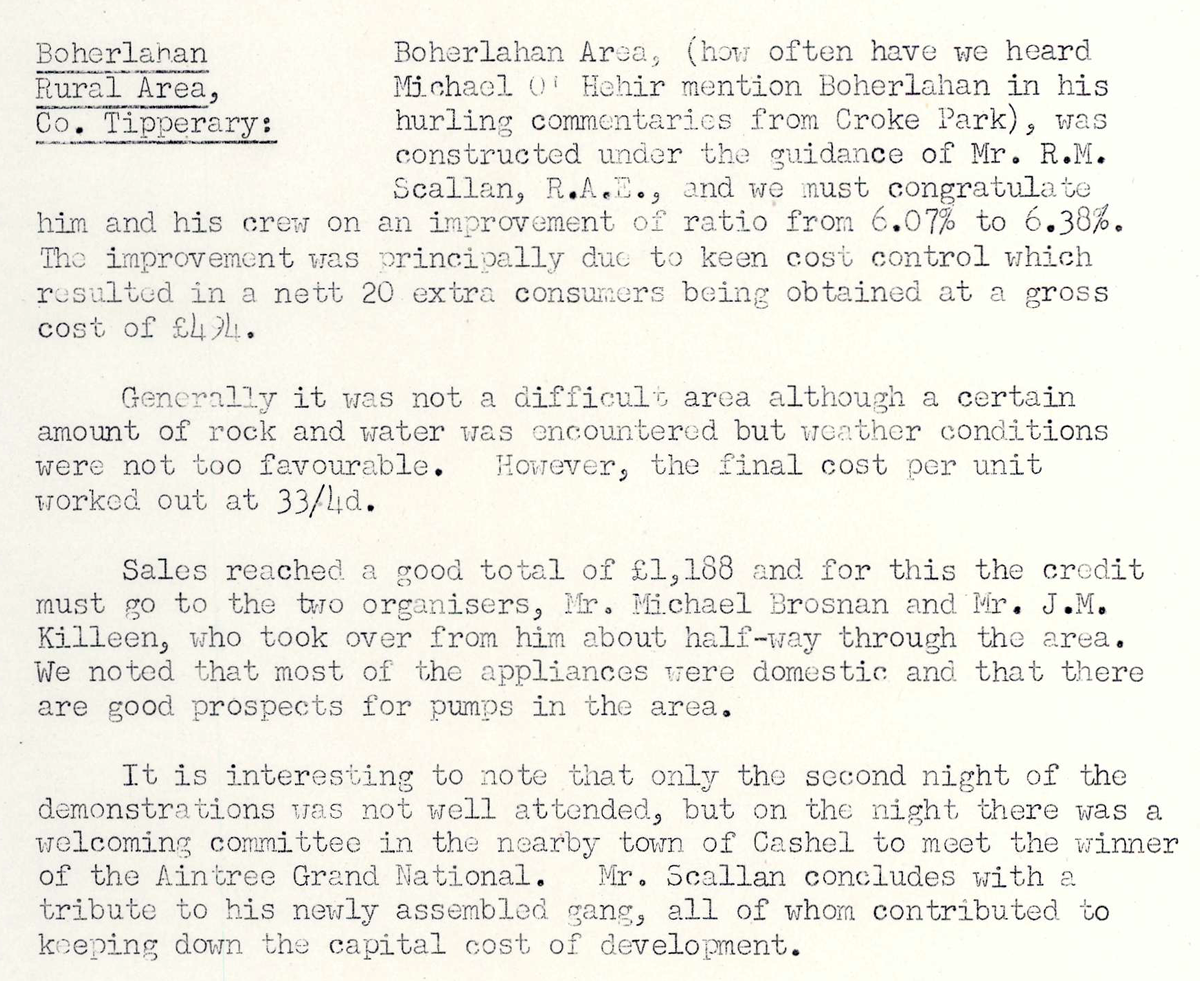 This digital scan from the REO News displays the following text:
“Boherlahan Rural Area, Co. Tipperary: Boherlahan Area (how often have we heard Michael O’Hehir mention Boherlahan in his hurling commentaries from Croke Park), was constructed under the guidance of Mr. R. M. Scallan, R.A.E., and we must congratulate him and his crew on an improvement of ratio from 6.07% to 6.38%. The improvement was principally due to keen cost control which resulted in a nett 20 extra consumers being obtained at a gross cost of £4½d.
Generally it was not a difficult area although a certain amount of rock and water was encountered but weather conditions were not too favourable. However, the final cost per unit worked out at 33/4d.
Sales reached a good total of £1,188 and for this the credit must go to the two organisers, Mr. Michael Brosnan and Mr. J. M. Killeen, who took over from him about half‑way through the area. We noted that most of the appliances were domestic and that there are good prospects for pumps in the area.
It is interesting to note that only the second night of the demonstrations was not well attended, but on the night there was a welcoming committee in the nearby town of Cashel to meet the winner of the Aintree Grand National. Mr. Scallan concludes with a tribute to his newly assembled gang, all of whom contributed to keeping down the capital cost of development.”