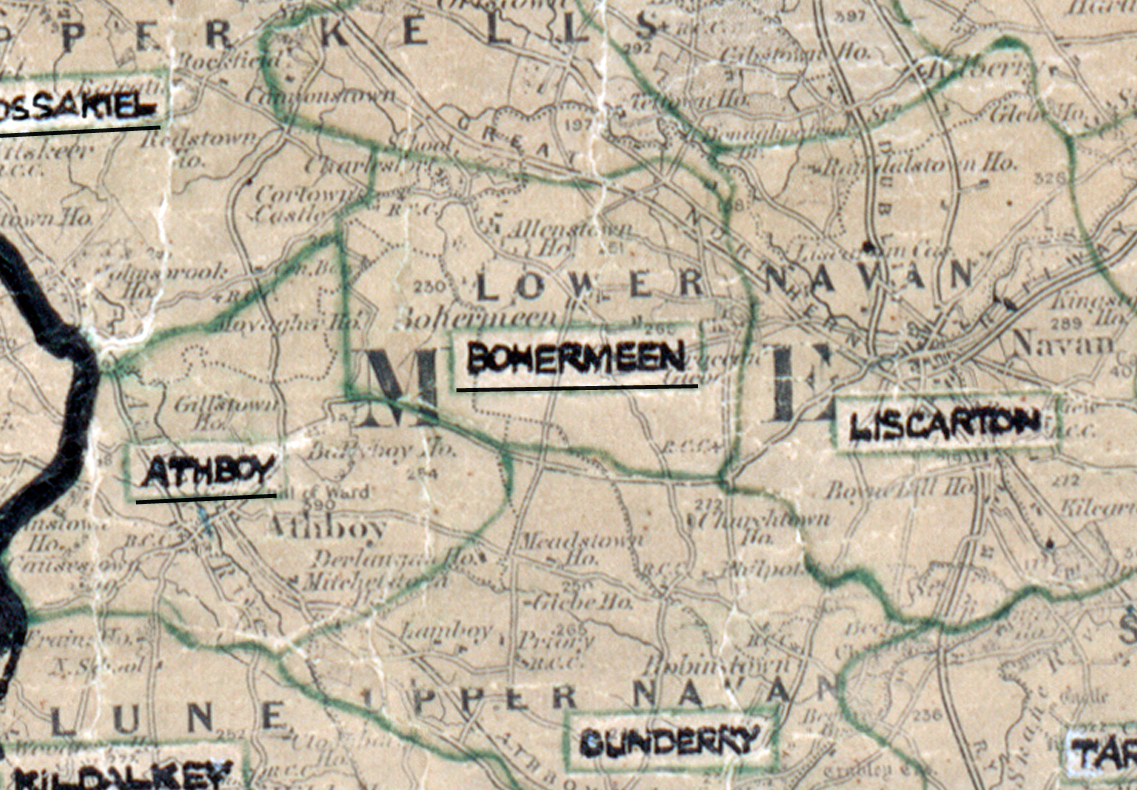
 Area: Bohermeen
Started: June 1951
Finished: June 1952
Poles used: 699
Line used (km): 66
Premises connected: 46
The figures above were sourced from our REO News magazine, to learn more about what these figures mean, visit our interactive map. The map above shows the area boundary and is from a digitised version of the original map used during the scheme.
Bohermeen was an ideal area from a construction point of view according to The REO News from November 1952.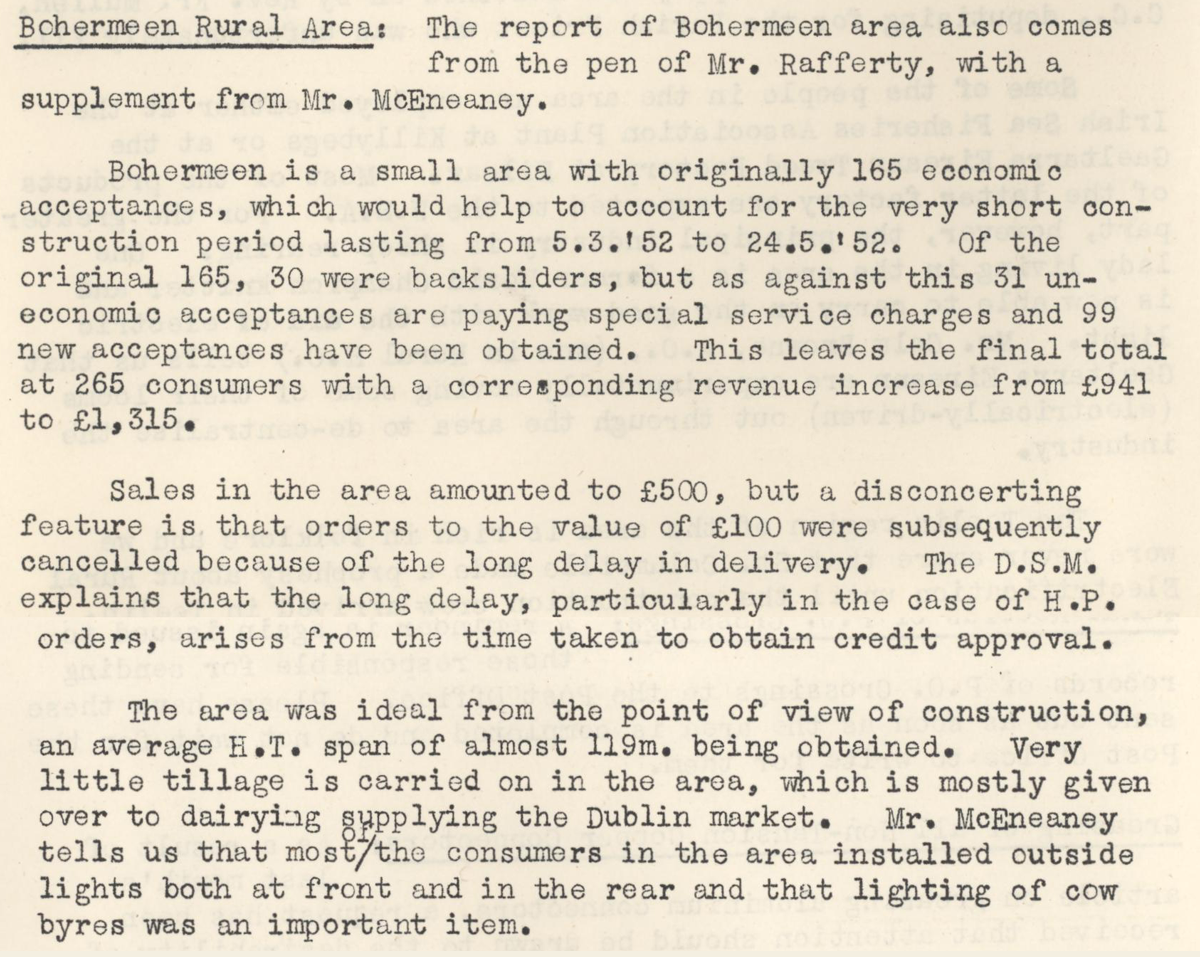 This digital scan from the REO News displays the following text:
"Bohermeen Rural Area: The report of Bohermeen area also comes from the pen of Mr. Rafferty, with a supplement from Mr. McEneaney.
Bohermeen is a small area with originally 165 economic acceptances, which would help to account for the very short construction period lasting from 5.3.’52 to 24.5.’52. Of the original 165, 30 were backsliders, but as against this 31 uneconomic acceptances are paying special service charges and 99 new acceptances have been obtained. This leaves the final total at 265 consumers with a corresponding revenue increase from £941 to £1,315.
Sales in the area amounted to £500, but a disconcerting feature is that orders to the value of £100 were subsequently cancelled because of the long delay in delivery. The D.S.M. explains that the long delay, particularly in the case of H.P. orders, arises from the time taken to obtain credit approval.
The area was ideal from the point of view of construction, an average H.T. span of almost 119m. being obtained. Very little tillage is carried on in the area, which is mostly given over to dairying supplying the Dublin market. Mr. McEneaney tells us that most of the consumers in the area installed outside lights both at front and in the rear and that lighting of cow byres was an important item."