 Area: Bunratty
Started: August 1952
Finished: April 1953
Poles used: 1295
Line used (km): 107
Premises connected: 320
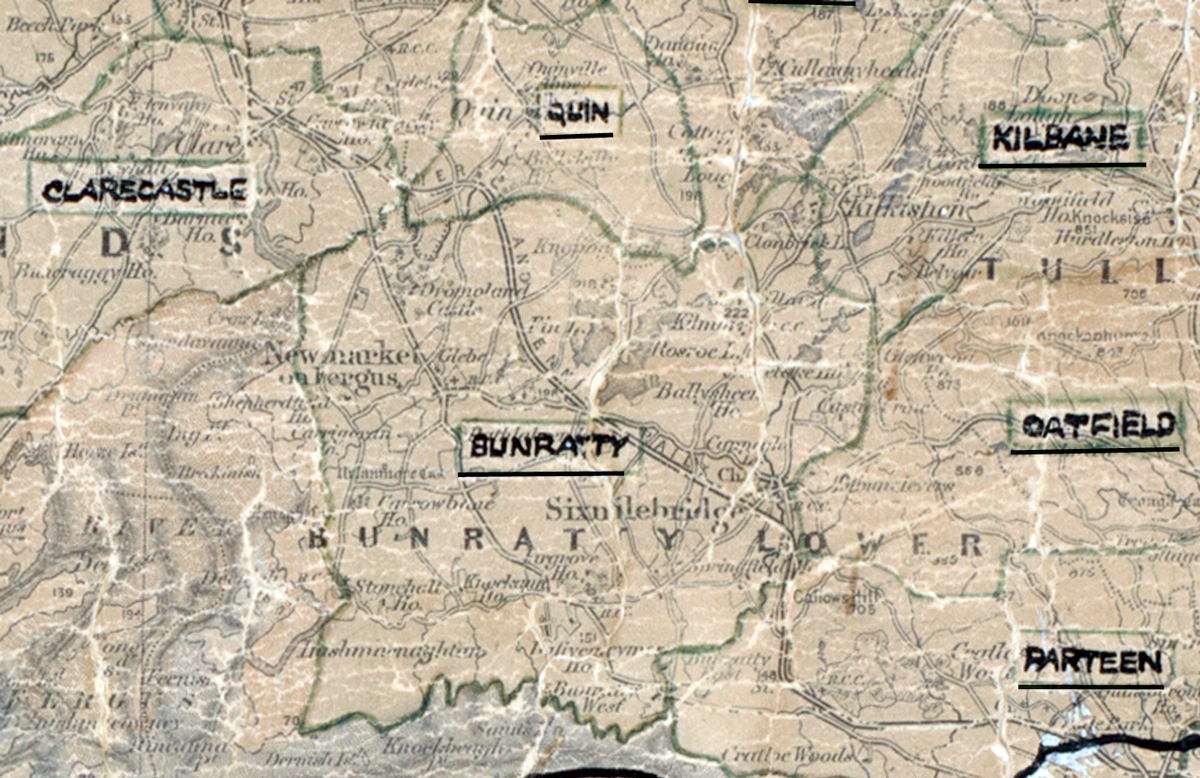
The figures above were sourced from our REO News magazine, to learn more about what these figures mean, visit our interactive map. The map above shows the area boundary and is from a digitised version of the original map used during the scheme.
Most farmers in Bunratty installed outside lights according to The REO News from July 1953.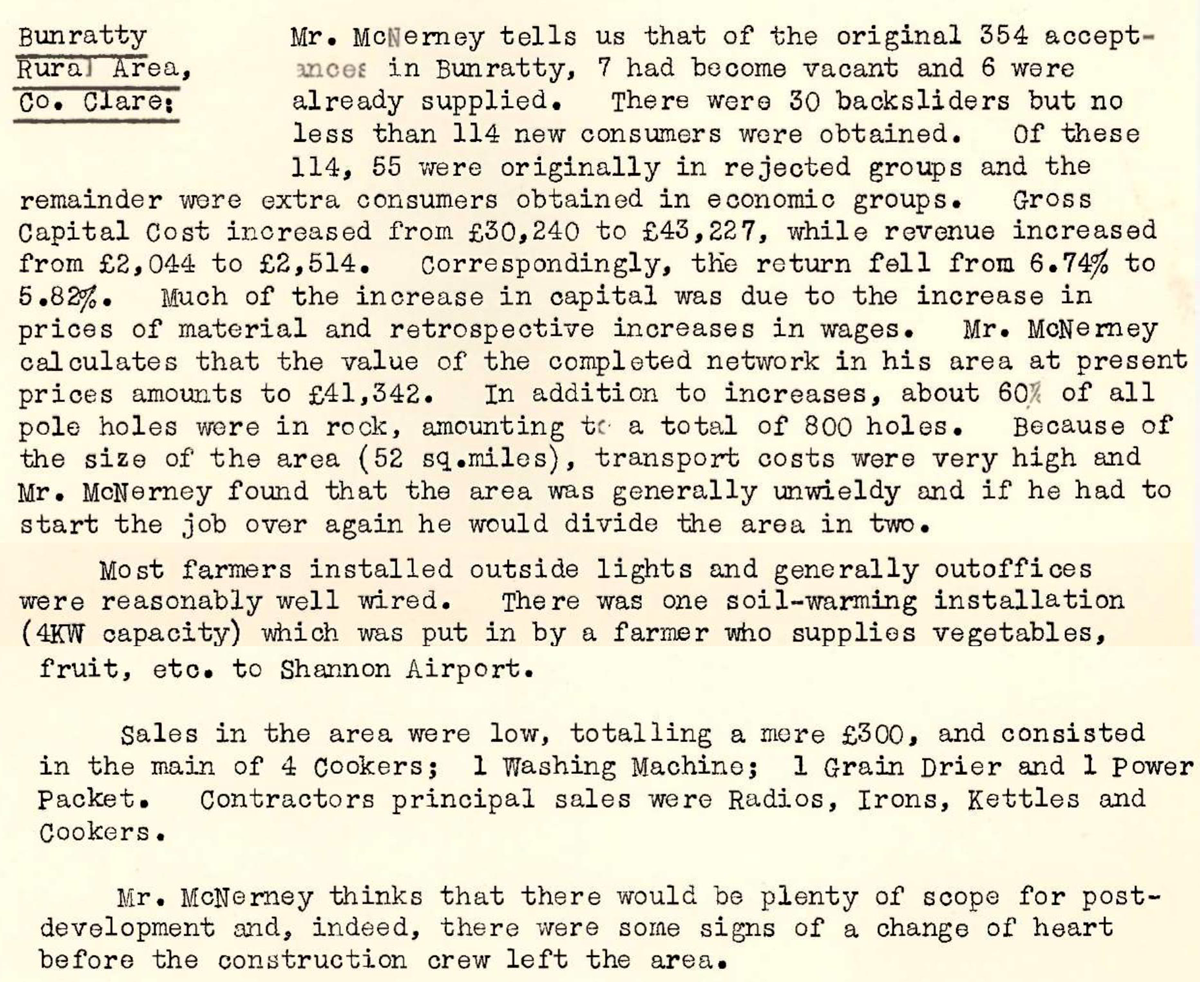 This digital scan from the REO News displays the following text:
“Bunratty Rural Area, Co. Clare: Mr. McNerney tells us that of the original 354 acceptances in Bunratty, 7 had become vacant and 6 were already supplied. There were 30 backsliders but no less than 114 new consumers were obtained. Of these 114, 55 were originally in rejected groups and the remainder were extra consumers obtained in economic groups. Gross Capital Cost increased from £30,240 to £43,227, while revenue increased from £2,044 to £2,514. Correspondingly, the return fell from 6.74% to 5.82%. Much of the increase in capital was due to the increase in prices of material and retrospective increases in wages. Mr. McNerney calculates that the value of the completed network in his area at present prices amounts to £41,342. In addition to increases, about 60% of all pole holes were in rock, amounting to a total of 800 holes. Because of the size of the area (52 sq. miles), transport costs were very high and Mr. McNerney found that the area was generally unwieldy and if he had to start the job over again he would divide the area in two.
Most farmers installed outside lights and generally outoffices were reasonably well wired. There was one soil‑warming installation (4 kW capacity) which was put in by a farmer who supplies vegetables, fruit, etc. to Shannon Airport.
Sales in the area were low, totalling a mere £500, and consisted in the main of 4 Cookers; 1 Washing Machine; 1 Grain Drier and 1 Power Packet. Contractors’ principal sales were Radios, Irons, Kettles and Cookers.
Mr. McNerney thinks that there would be plenty of scope for post‑development and, indeed, there were some signs of a change of heart before the construction crew left the area.”