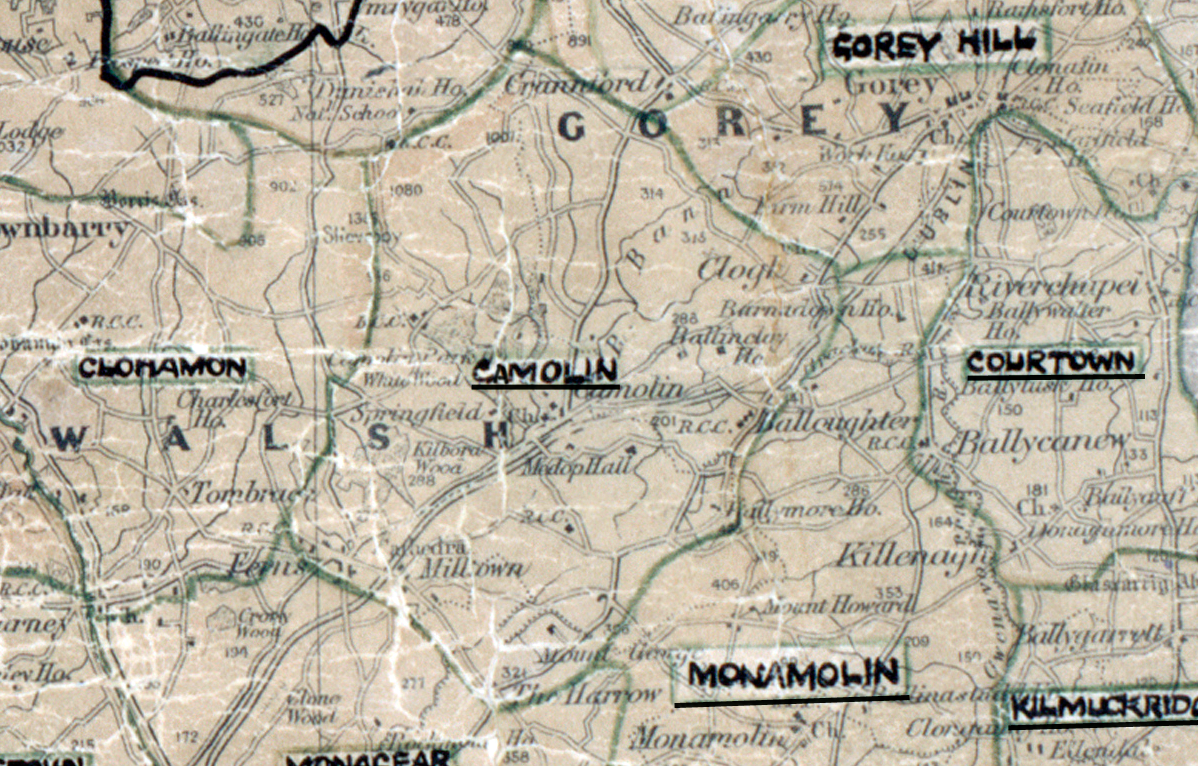
 Area: Camolin
Started: August 1953
Finished: May 1954
Poles used: 1442
Line used (km): 132
Premises connected: 303
The figures above were sourced from our REO News magazine, to learn more about what these figures mean, visit our interactive map. The map above shows the area boundary and is from a digitised version of the original map used during the scheme.
Camolin was an excellent area for sales according to The REO News from July 1954.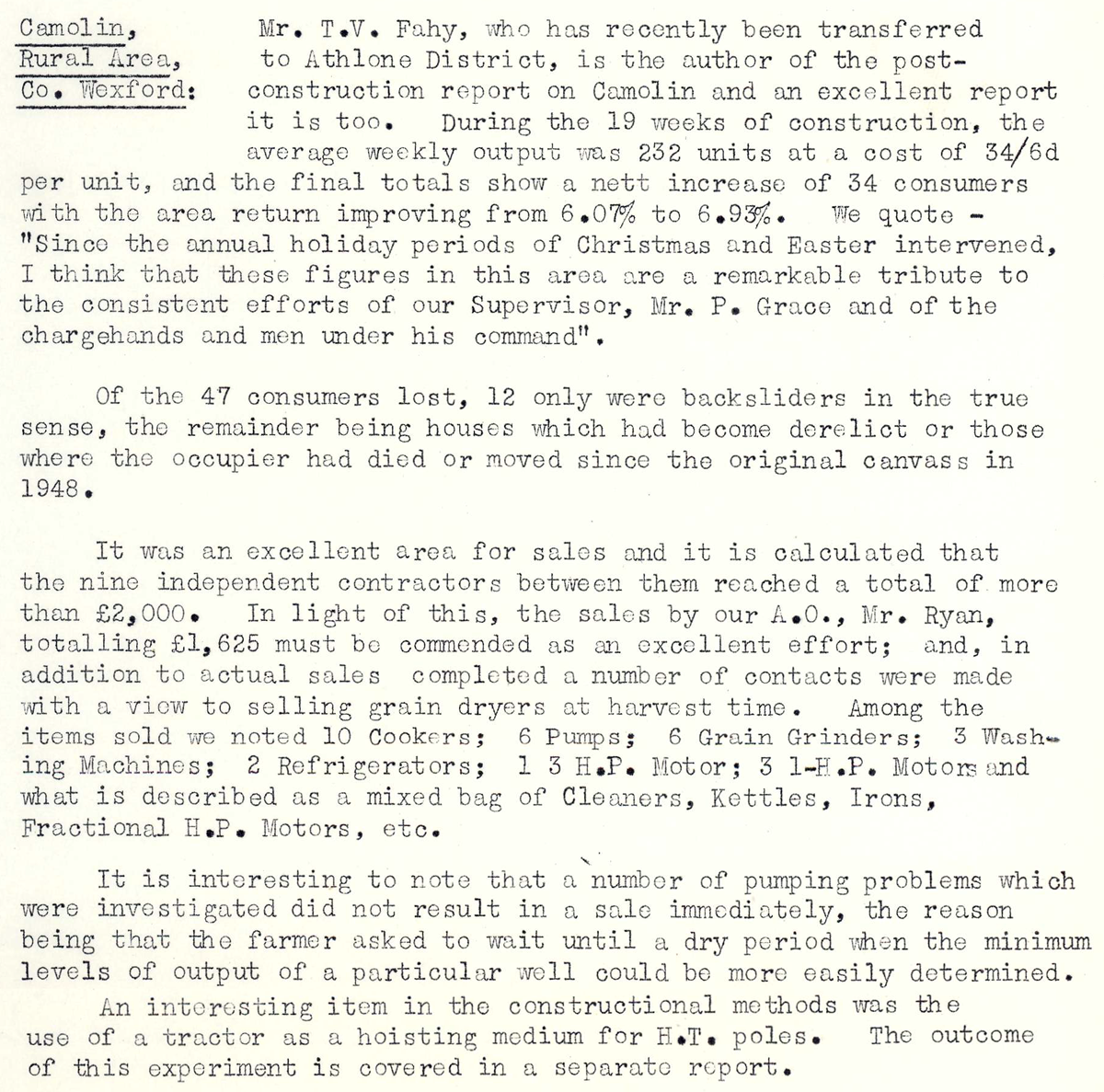 This digital scan from the REO News displays the following text:
“Camolin, Rural Area, Co. Wexford: Mr. T. V. Fahy, who has recently been transferred to Athlone District, is the author of the post‑construction report on Camolin and an excellent report it is too. During the 19 weeks of construction, the average weekly output was 232 units at a cost of 34/6d per unit, and the final totals show a nett increase of 34 consumers with the area return improving from 6.07% to 6.93%. We quote —
‘Since the annual holiday periods of Christmas and Easter intervened, I think that these figures in this area are a remarkable tribute to the consistent efforts of our Supervisor, Mr. P. Grace and of the chargehands and men under his command’.
Of the 47 consumers lost, 12 only were backsliders in the true sense, the remainder being houses which had become derelict or those where the occupier had died or moved since the original canvass in 1948.
It was an excellent area for sales and it is calculated that the nine independent contractors between them reached a total of more than £2,000. In light of this, the sales by our A.O., Mr. Ryan, totalling £1,625 must be commended as an excellent effort; and, in addition to actual sales, completed a number of contacts were made with a view to selling grain dryers at harvest time. Among the items sold we noted 10 Cookers; 6 Pumps; 5 Grain Grinders; 3 Washing Machines; 2 Refrigerators; 1 3 H.P. Motor; 3 1 H.P. Motors and what is described as a mixed bag of Cleaners, Kettles, Irons, Fractional H.P. Motors, etc.
It is interesting to note that a number of pumping problems which were investigated did not result in a sale immediately, the reason being that the farmer asked to wait until a dry period when the minimum loss of output of a particular well could be more easily determined.
An interesting item in the constructional methods was the use of tractors as motor prime movers for H.P. motors. The outcome of this experiment is covered in a separate report.”