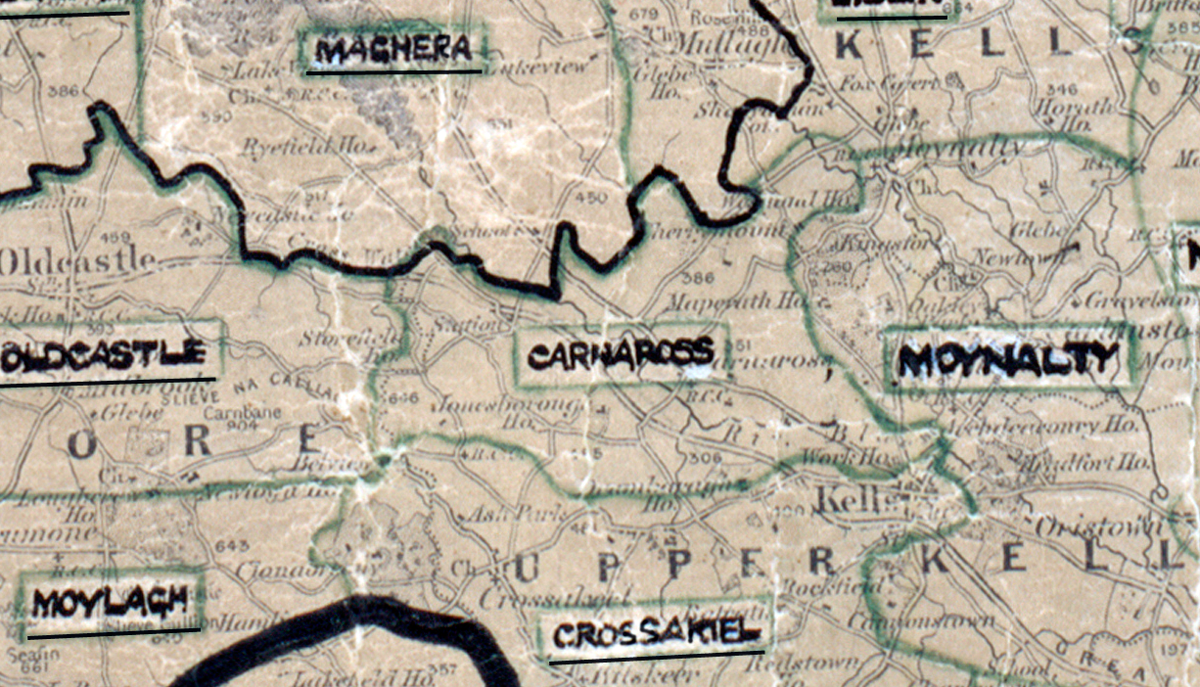
 Area: Carnaross
Started: June 1954
Finished: October 1954
Poles used: 917
Line used (km): 74
Premises connected: 217
The figures above were sourced from our REO News magazine, to learn more about what these figures mean, visit our interactive map. The map above shows the area boundary and is from a digitised version of the original map used during the scheme.
Heavy backsliding was a problem that needed to be overcome in Carnaross according to The REO News from January 1955.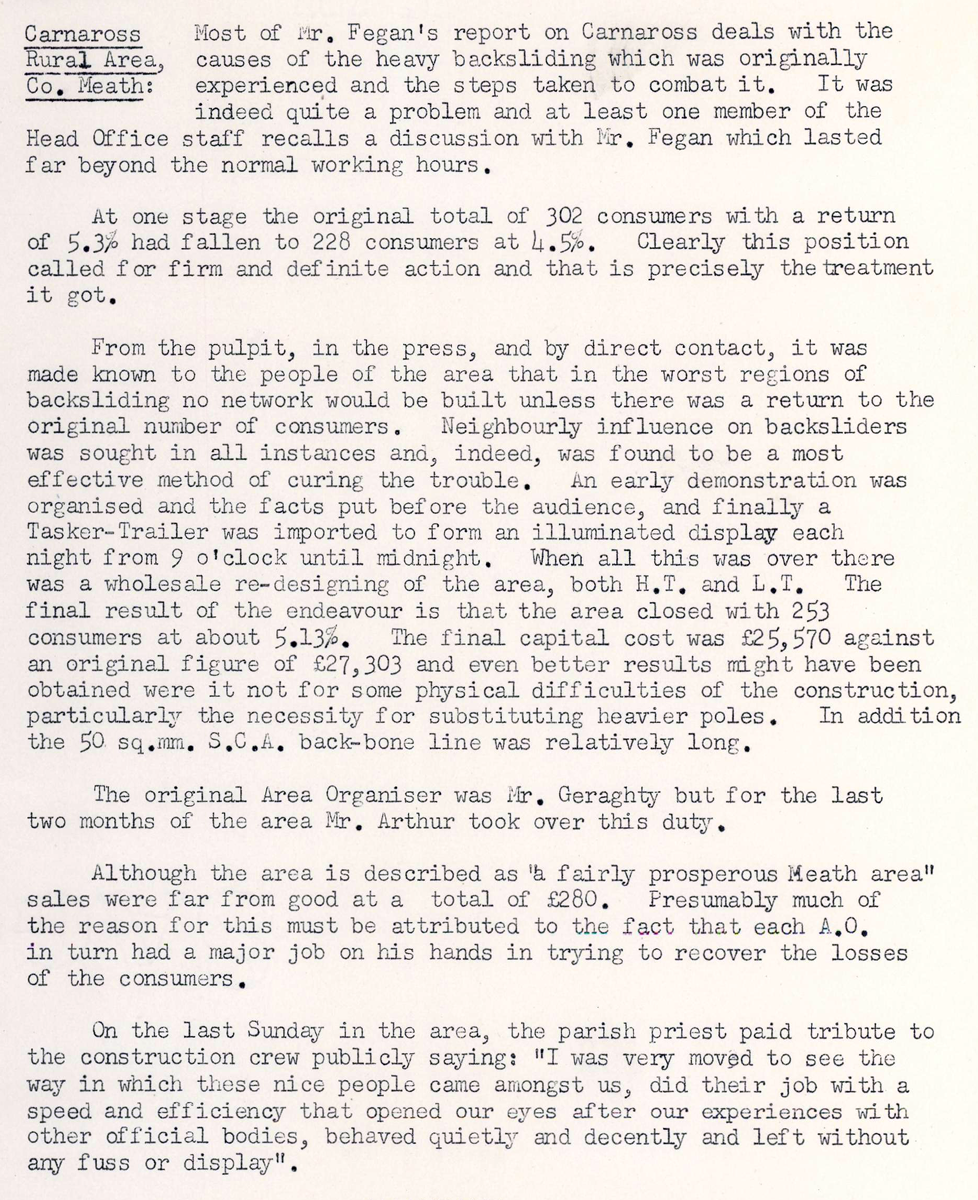 This digital scan from the REO News displays the following text:
"Carnaross Rural Area, Co. Meath: Most of Mr. Fegan’s report on Carnaross deals with the causes of the heavy backsliding which was originally experienced and the steps taken to combat it. It was indeed quite a problem and at least one member of the Head Office staff recalls a discussion with Mr. Fegan which lasted far beyond the normal working hours.
At one stage the original total of 302 consumers with a return of 5.3% had fallen to 228 consumers at 4.5%. Clearly this position called for firm and definite action and that is precisely the treatment it got.
From the pulpit, in the press, and by direct contact, it was made known to the people of the area that in the worst regions of backsliding no network would be built unless there was a return to the original number of consumers. Neighbourly influence on backsliders was sought in all instances and, indeed, was found to be a most effective method of curing the trouble. An early demonstration was organised and the facts put before the audience, and an illuminated Tasker‑Trailer was imported to form an illuminated display each night from 9 o’clock until 1 in the morning. Much stress was over the wireless‑re‑designing of the area, both H.T. and L.T.
The final net of the endeavour is that the area closed with 253 consumers at about 5.13%. The final capital cost was £25,570 against an original figure of £27,303 and even better results would have been obtained were it not for some physical difficulties of the construction, particularly the necessity for substituting heavier poles. In addition the 50 sq. mile, 3‑φ backbone line was relatively long.
The original Area Organiser was Mr. Geraghty but for the last two months of the area Mr. Arthur took over this duty.
Although the area is described as a “fairly prosperous Meath area” sales were far from good at a total of £280. Presumably much of the reason for this must be attributed to the fact that the A.O. often had a major job on his hands in trying to recover the losses of the consumers.
On the last Sunday in the area, the parish priest paid tribute to the construction crew publicly saying: “I was very moved to see the way in which the crew of people came along, saw what they had to do with speed and efficiency. It opened our eyes after our experiences with other official bodies, behaved quietly and decently and left without any fuss or display.”