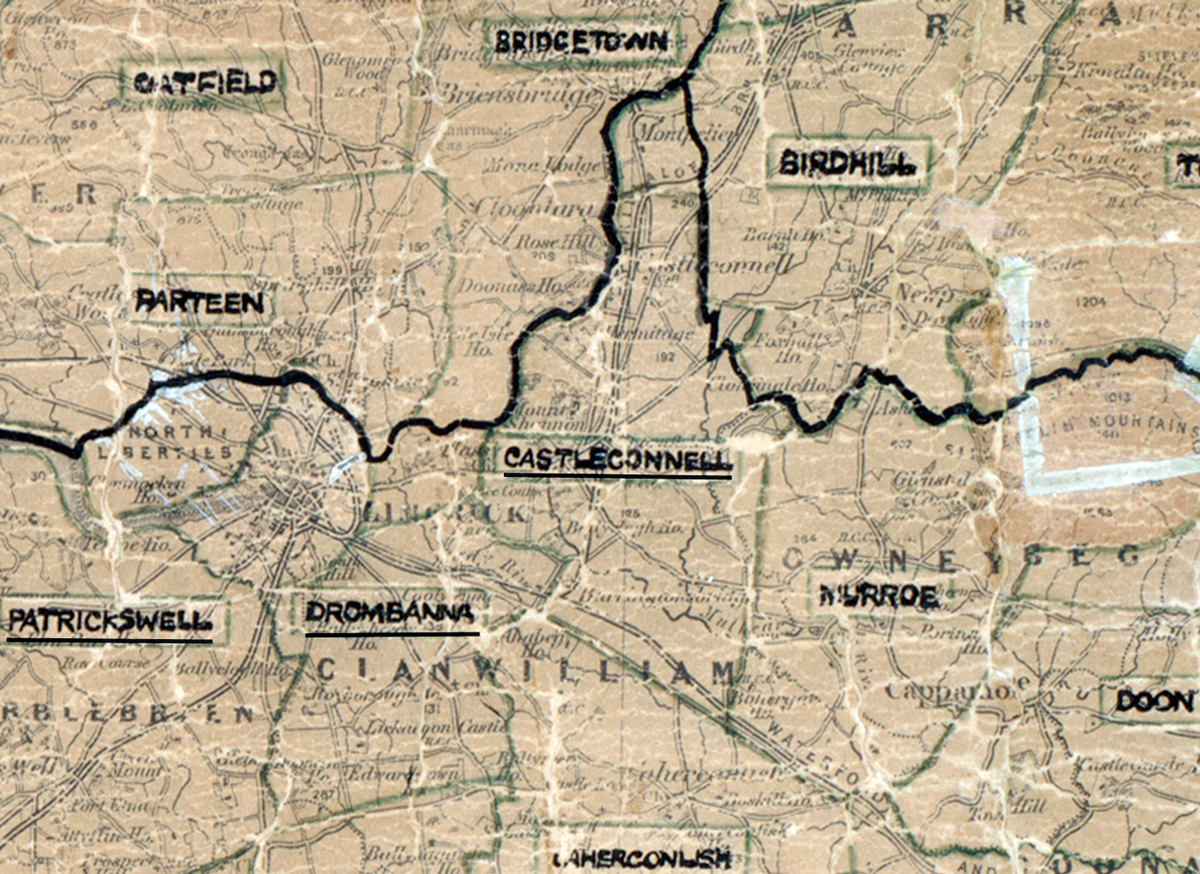
 Area: Castleconnell
Started: April 1950
Finished: September 1950
Poles used: 889
Line used (km): 72
Premises connected: 140
The figures above were sourced from our REO News magazine, to learn more about what these figures mean, visit our interactive map page. The map above shows the area boundary and is from a digitised version of the original map used during the scheme.
The REO News from September 1950 praises the work done in Castleconnell. This digital scan from the REO News displays the following text:
Castleconnell Rural Area has proved to be another triumph for R.A.E. J. T. Dillon. Completed in just under 4 months, he has obtained an additional 77 consumers, to bring the total in the area up to 373. We have not got final figures for Capital Cost but judging by Mr. Dillon’s past performances, we have no doubt that the percentage for the area will not have disimproved.
Which was expanded upon in The REO News from November 1950.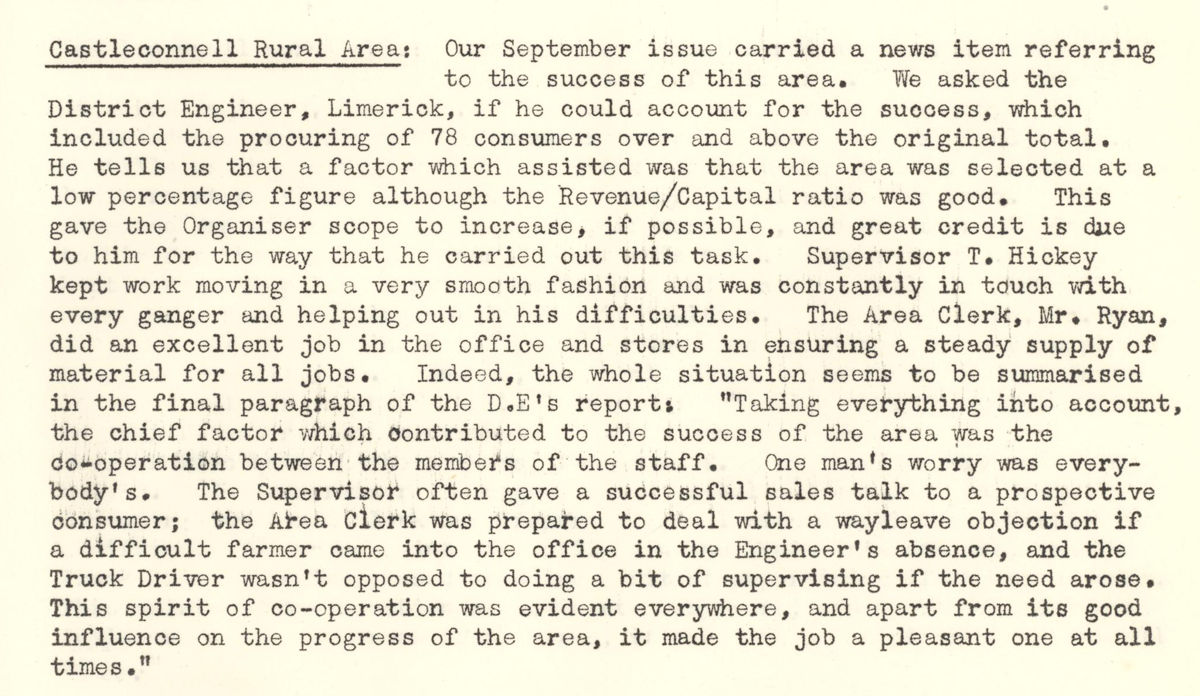 This digital scan from the REO News displays the following text:
Castleconnell Rural Area: Our September issue carried a news item referring to the success of this area. We asked the District Engineer, Limerick, if he could account for the success, which included the procuring of 78 consumers over and above the original total. He tells us that a factor which assisted was that the area was selected at a low percentage figure although the Revenue/Capital ratio was good. This gave the Organiser scope to increase, if possible, and great credit is due to him for the way that he carried out this task.
Supervisor T. Hickey kept work moving in a very smooth fashion and was constantly in touch with every ganger and helping out in his difficulties. The Area Clerk, Mr. Ryan, did an excellent job in the office and stores in ensuring a steady supply of material for all jobs. Indeed, the whole situation seems to be summarised in the final paragraph of the D.E.’s report: “Taking everything into account, the chief factor which contributed to the success of the area was the co‑operation between the members of the staff. One man’s worry was everybody’s. The Supervisor often gave a successful sales talk to a prospective consumer; the Area Clerk was prepared to deal with a wayleave objection if a difficult farmer came into the office in the Engineer’s absence, and the Truck Driver wasn’t opposed to doing a bit of supervising if the need arose. This spirit of co‑operation was evident everywhere, and apart from its good influence on the progress of the area, it made the job a pleasant one at all times.”