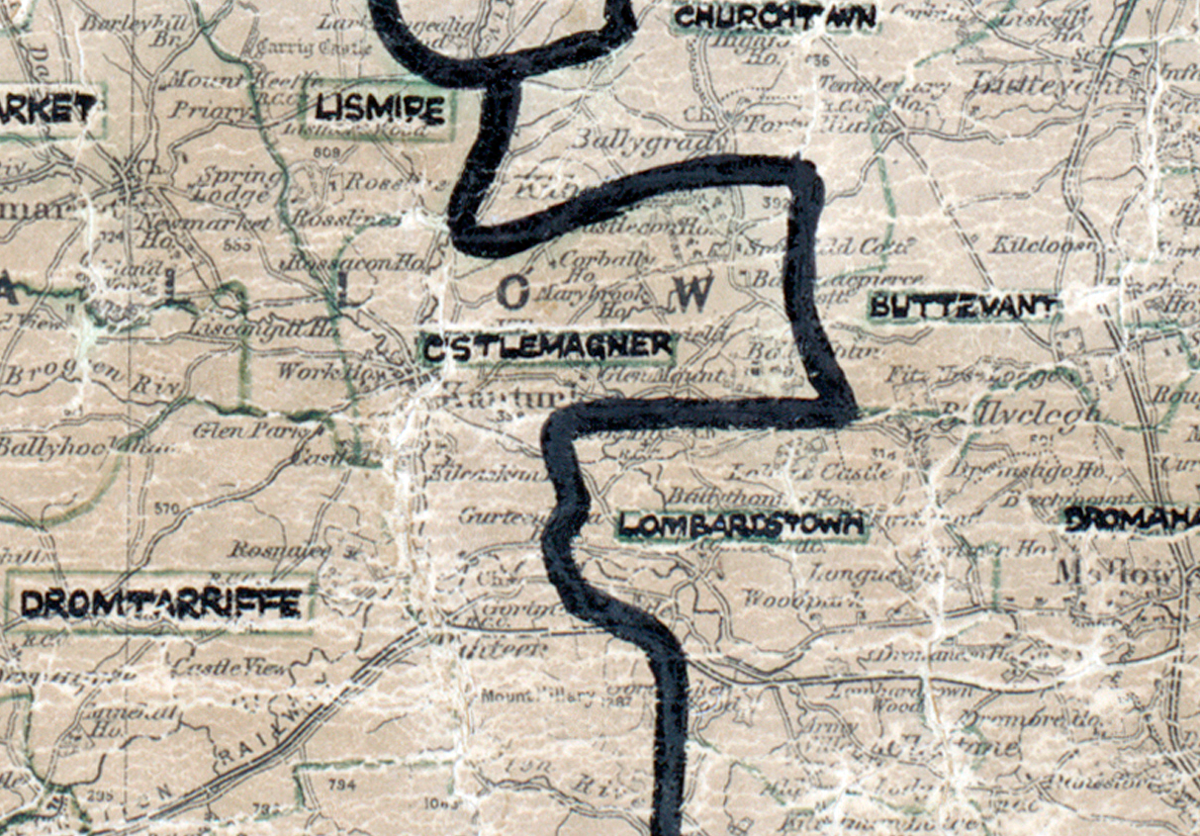
 Area: Castlemagner
Started: December 1950
Finished: October 1951
Poles used: 1124
Line used (km): 86
Premises connected: 71
The figures above were sourced from our REO News magazine, to learn more about what these figures mean, visit our interactive map. The map above shows the area boundary and is from a digitised version of the original map used during the scheme.
Tree lined fences caused a problem in Castlemagner according to The REO News from January 1952.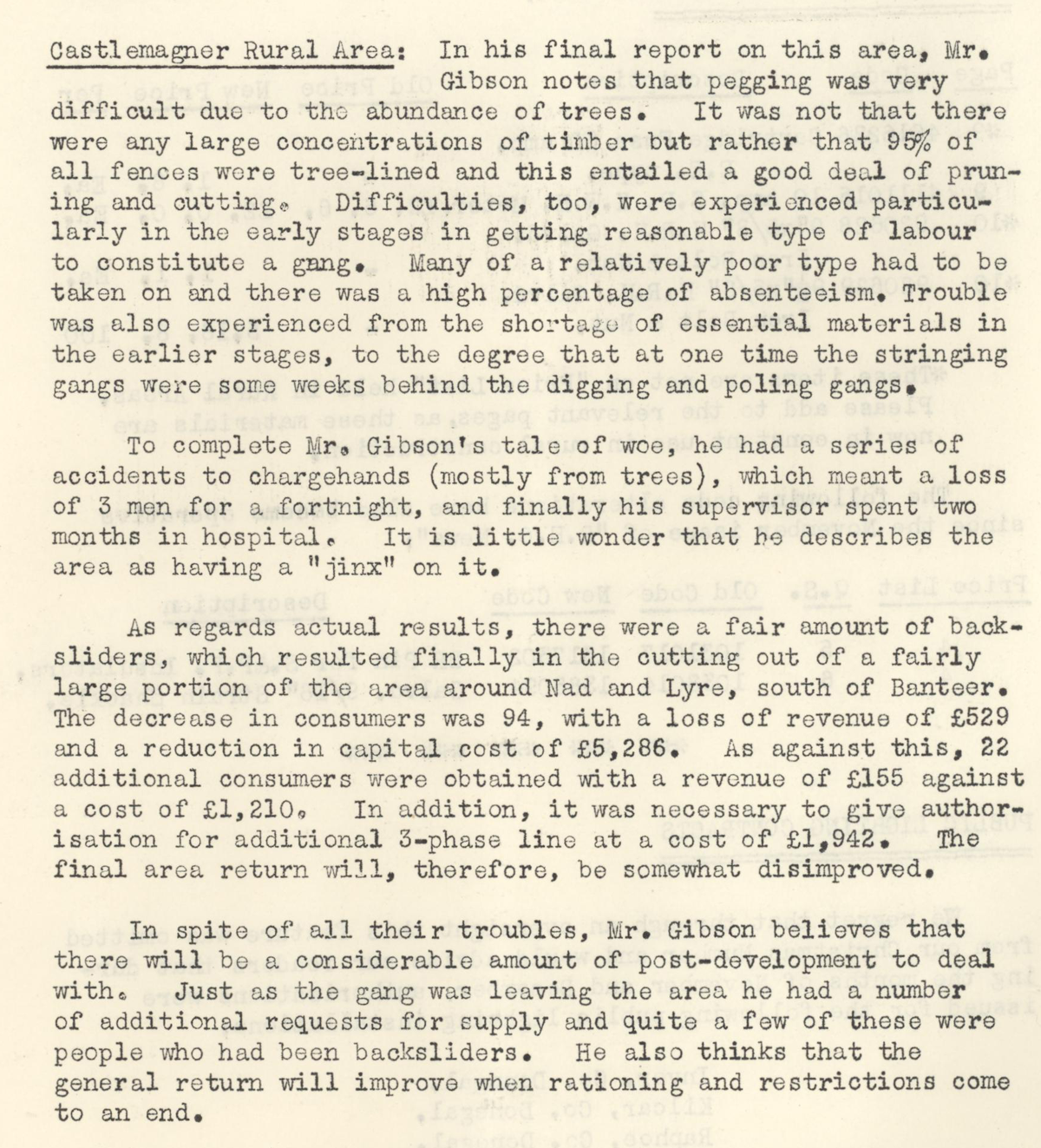 This digital scan from the REO News displays the following text:
"Castlemagnor Rural Area: In his final report on this area, Mr. Gibson notes that pegging was very difficult due to the abundance of trees. It was not that there were any large concentrations of timber but rather that 95% of all fences were tree‑lined and this entailed a good deal of pruning and cutting. Difficulties, too, were experienced particularly in the early stages in getting reasonable type of labour to constitute a gang. Many of a relatively poor type had to be taken on and there was a high percentage of absenteeism. Trouble was also experienced from the shortage of essential materials in the earlier stages, to the degree that at one time the stringing gangs were some weeks behind the digging and poling gangs.
To complete Mr. Gibson’s tale of woe, he had a series of accidents to chargehands (mostly from trees), which meant a loss of 3 men for a fortnight, and finally his supervisor spent two months in hospital. It is little wonder that he describes the area as having a “jinx” on it.
As regards actual results, there were a fair amount of backsliders, which resulted finally in the cutting out of a fairly large portion of the area around Nad and Lyre, south of Bantree. The decrease in consumers was 94, with a loss of revenue of £529 and a reduction in capital cost of £5,286. As against this, 22 additional consumers were obtained with a revenue of £155 against a cost of £1,210. In addition, it was necessary to give authority for an additional 3‑phase line at a cost of £1,942. The final area return will, therefore, be somewhat disimproved.
In spite of all their troubles, Mr. Gibson believes that there was considerable amount of post‑development to deal with. Just as the gang was leaving the area he had a number of additional requests for supply and quite a few of these were people who had been backsliders. He also thinks that the general return will improve when rationing and restrictions come to an end."