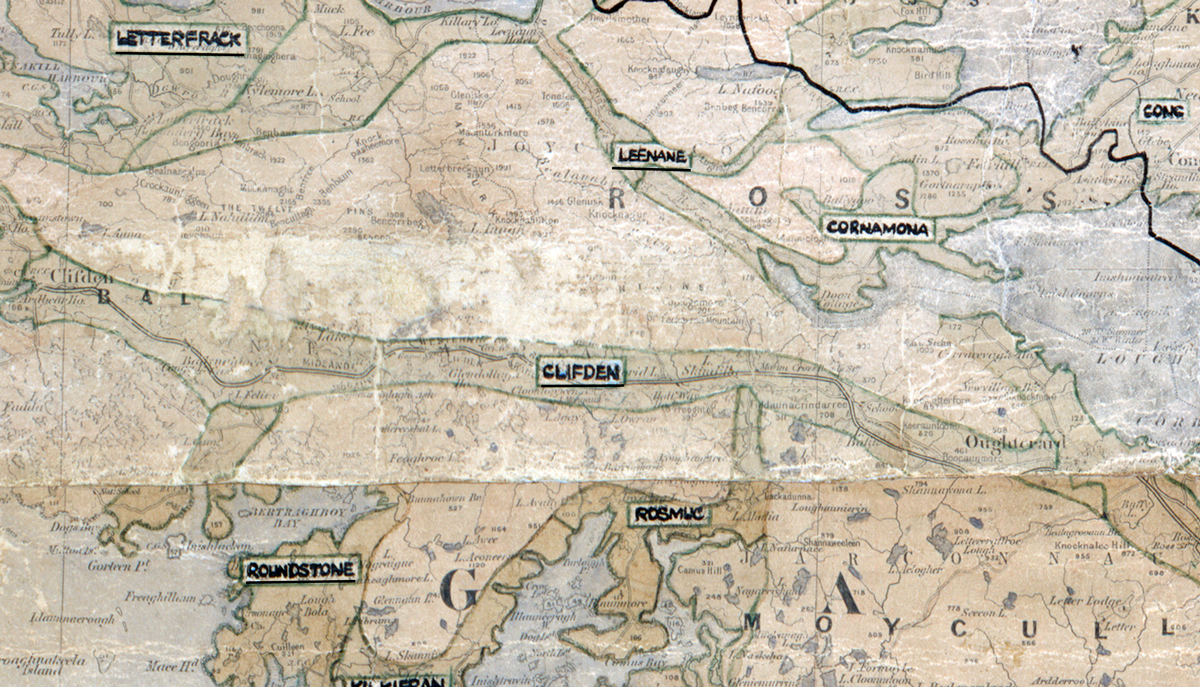
 Area: Clifden
Started: December 1952
Finished: October 1953
Poles used: 882
Line used (km): 73
Premises connected: 284
The figures above were sourced from our REO News magazine, to learn more about what these figures mean, visit our interactive map page. The map above shows the area boundary and is from a digitised version of the original map used during the scheme.
Clifden rural area wound its way through numerous lakes according to The REO News from January 1954.
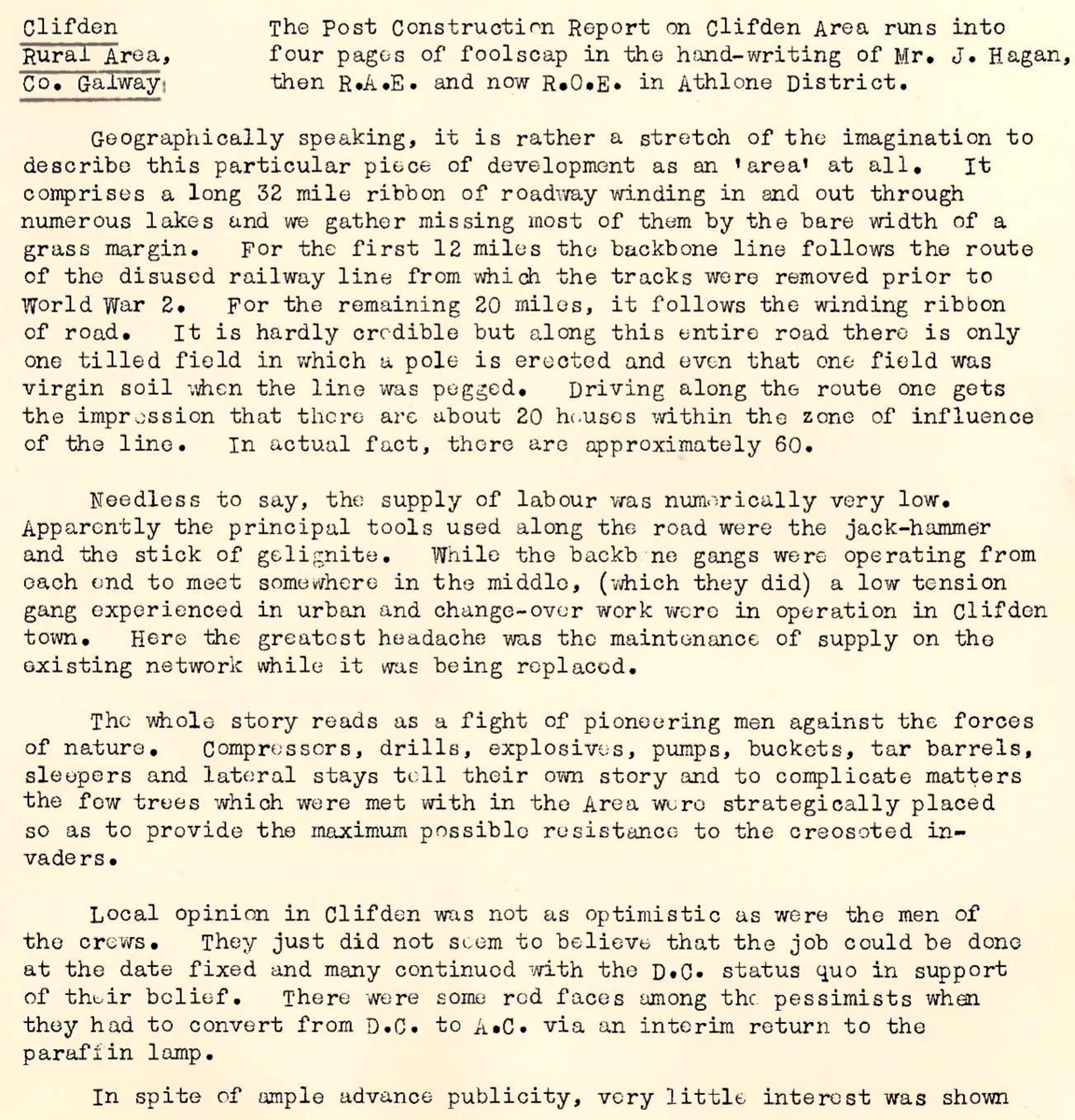 This digital scan from the REO News displays the following text:
"Clifden Rural Area, Co. Galway: The Post Construction Report on Clifden Area runs into four pages of foolscap in the handwriting of Mr. J. Hagan, then R.A.E. and now R.O.E. in Athlone District.
Geographically speaking, it is rather a stretch of the imagination to describe this particular piece of development as an "area" at all. It comprises a long 32 mile ribbon of roadway winding in and out through numerous lakes and we gather missing most of them by the bare width of a grass margin. For the first 12 miles the backbone line follows the route of the disused railway line from which the tracks were removed prior to World War 2. For the remaining 20 miles, it follows the winding ribbon of road. It is hardly credible but along this entire road there is only one tilled field in which a pole is erected and even that one field was virgin soil when the line was pegged. Driving along the route one gets the impression that there are about 20 houses within the zone of influence of the line. In actual fact, there are approximately 60.
Needless to say, the supply of labour was numerically very low. Apparently the principal tools used along the road were the jack‑hammer and the stick of gelignite. While the backbone gangs were operating from each end to meet somewhere in the middle (which they did) a low tension gang experienced an urban and change‑over work were in operation in Clifden town. Here the greatest headache was the maintenance of supply on the existing network while it was being replaced.
The whole story reads as a fight of pioneering men against the forces of nature. Compressors, drills, explosives, pumps, tractors, tar barrels, sleepers and lateral stays tell their own story and to complicate matters the few trees which were met with in the Area were strategically placed so as to provide the maximum possible resistance to the enroached invaders.
Local opinion in Clifden was not as optimistic as were the men of the crews. They just did not want us. However, the townspeople gave us the date fixed and many continued with the D.C. status quo in support of their belief. There were some roads to travel, for in their pessimism they had to convert from D.C. to A.C. via an interim return to the paraffin lamp.
In spite of ample advance publicity, very little interest was shown"
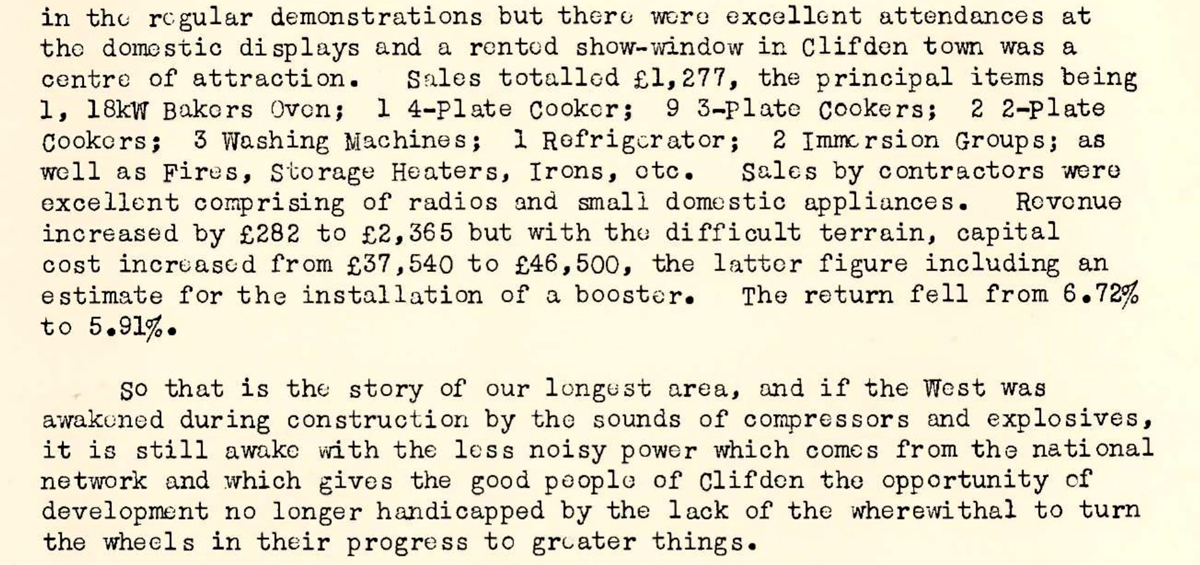
This digital scan from the REO News displays the following text:
"In the regular demonstrations but there were excellent attendances at the domestic displays and a rented show‑window in Clifden town was a centre of attraction. Sales totalled £1,277, the principal items being 1, 18 kW Bakers Oven; 1 4‑Plate Cooker; 9 3‑Plate Cookers; 2 2‑Plate Cookers; 3 Washing Machines; 1 Refrigerator; 2 Immersion Groups; as well as Fires, Storage Heaters, Irons, etc. Sales by contractors were excellent comprising of radios and small domestic appliances. Revenue increased by £282 to £2,365 but with the difficult terrain, capital cost increased from £37,540 to £46,500, the latter figure including an estimate for the installation of a booster. The return fell from 6.72% to 5.91%.
So that is the story of our longest area, and if the West was awakened during construction by the sounds of compressors and explosives, it is still awake with the less noisy power which comes from the national network and which gives the good people of Clifden the opportunity of development no longer handicapped by the lack of the wherewithal to turn the wheels in their progress to greater things."