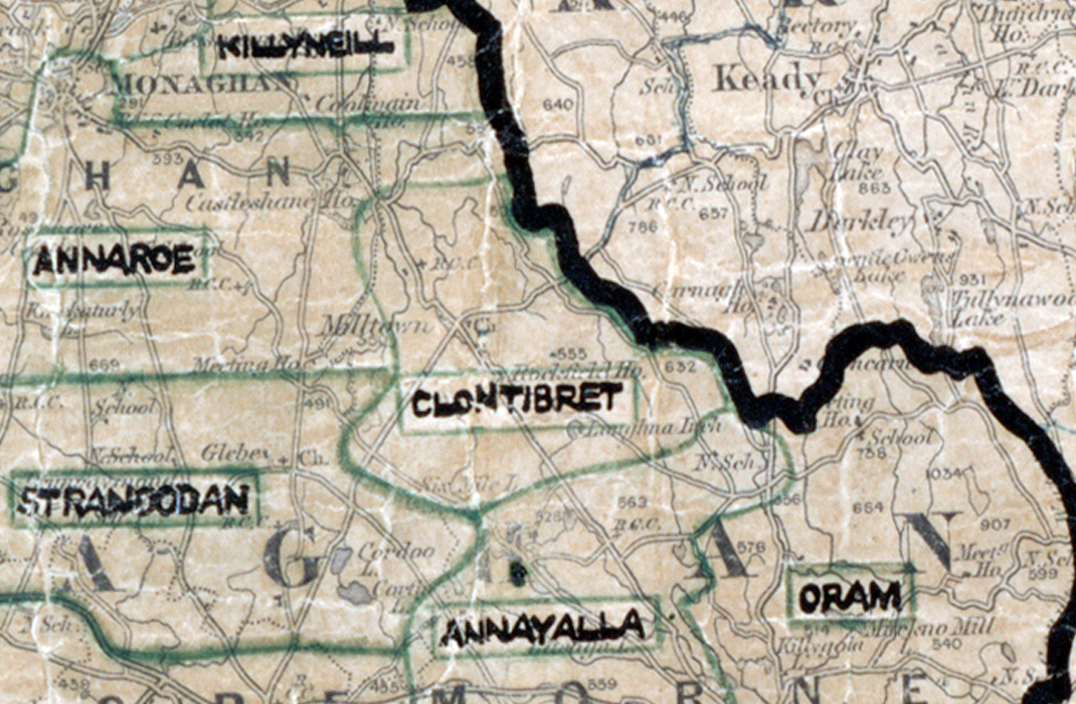
 Area: Clontibret
Started: January 1953
Finished: February 1954
Poles used: 912
Line used (km): 78
Premises connected: 250
The figures above were sourced from our REO News magazine, to learn more about what these figures mean, visit our interactive map. The map above shows the area boundary and is from a digitised version of the original map used during the scheme.
The large amounts of rock in the Clontibret area caused some problems according to The REO News from April 1954.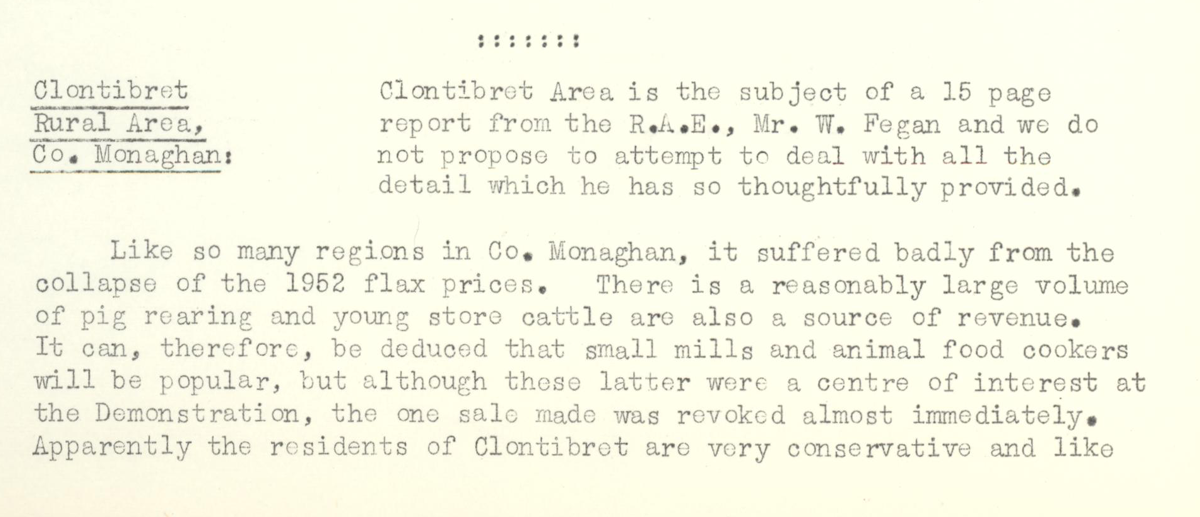
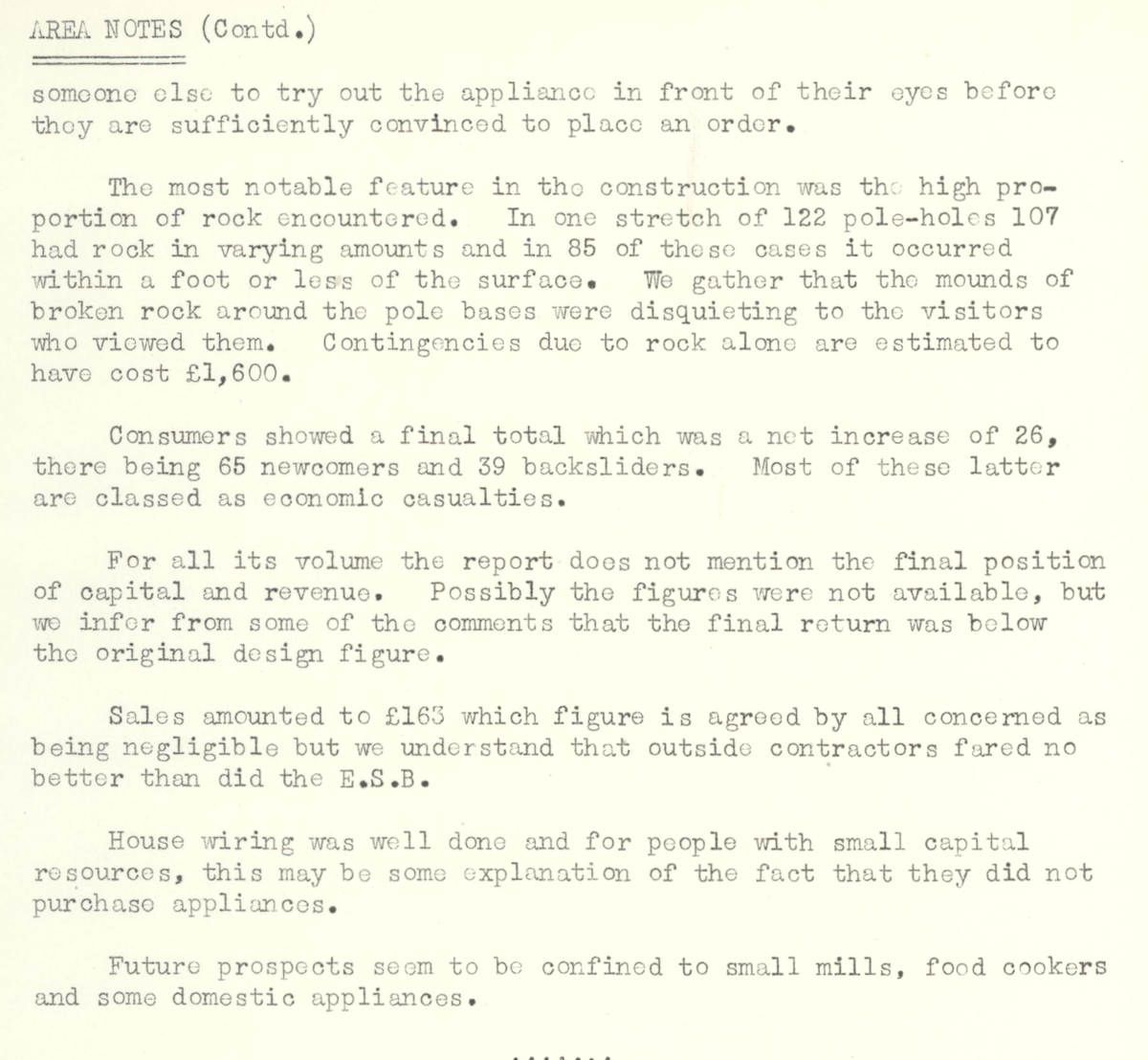 This digital scan from the REO News displays the following text:
“Clontibret Rural Area, Co. Monaghan: Clontibret Area is the subject of a 15‑page report from the R.A.E., Mr. W. Fegan and we do not propose to attempt to deal with all the detail which he has so thoughtfully provided.
Like so many regions in Co. Monaghan, it suffered badly from the collapse of the 1952 flax prices. There is a reasonably large volume of pig rearing and young store cattle are also a source of revenue. It can, therefore, be deduced that small mills and animal food cookers will be popular, but although these latter were a centre of interest at the demonstration, the one sale made was revoked almost immediately. Apparently the residents of Clontibret are very conservative and like…”
“AREA NOTES (Contd.): …someone else to try out the appliance in front of their eyes before they are sufficiently convinced to place an order.
The most notable feature in the construction was the high proportion of rock encountered. In one stretch of 122 pole‑holes 107 had rock in varying amounts and in 85 of these cases it occurred within a foot or less of the surface. We gather that the mounds of broken rock around the pole bases were disquieting to the visitors who viewed them. Contingencies due to rock alone are estimated to have cost £1,600.
Consumers showed a final total which was a net increase of 26, there being 65 newcomers and 39 backsliders. Most of these latter are classed as economic casualties.
For all its volume the report does not mention the final position of capital and revenue. Possibly the figures were not available, but we infer from some of the comments that the final return was below the original design figure.
Sales amounted to £163 which figure is agreed by all concerned as being negligible but we understand that outside contractors fared no better than did the E.S.B.
House wiring was well done and for people with small capital resources, this may be some explanation of the fact that they did not purchase appliances.
Future prospects seem to be confined to small mills, food cookers and some domestic appliances.”