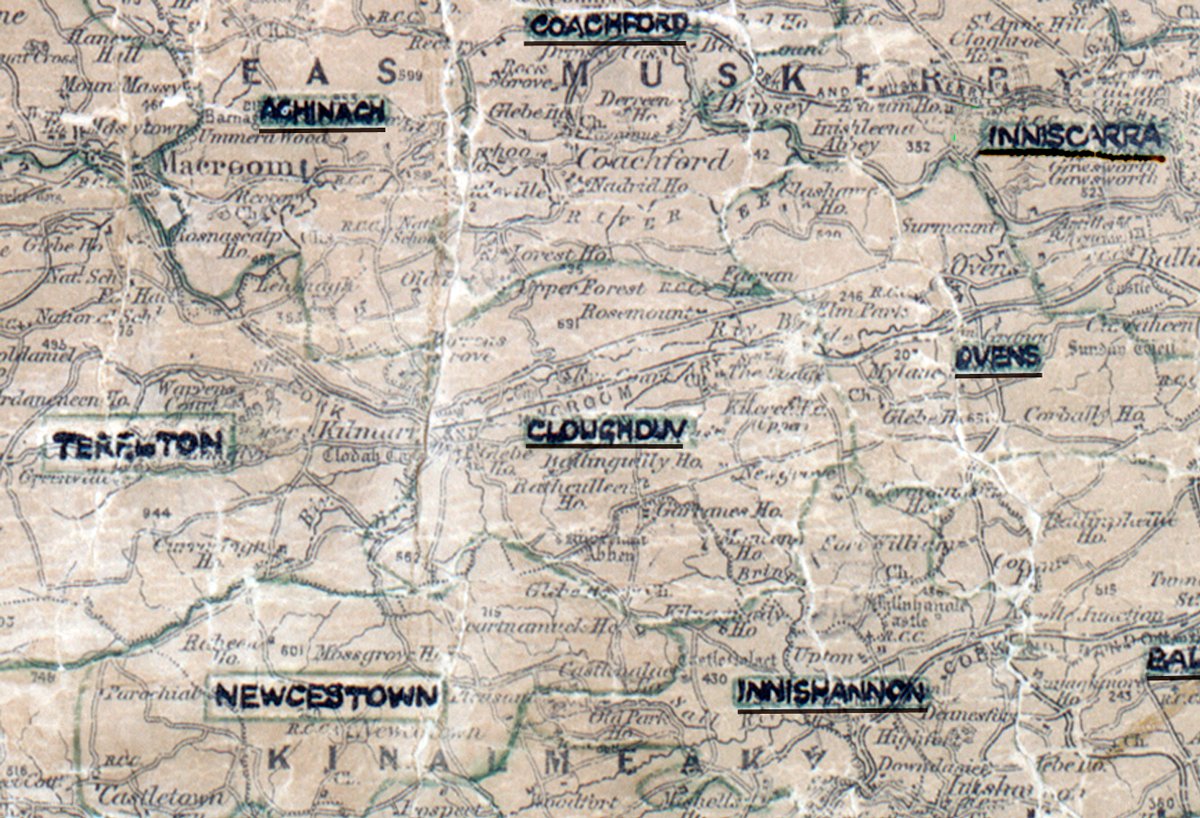
 Area: Cloughduv
Started: March 1952
Finished: October 1952
Poles used: 1133
Line used (km): 111
Premises connected: 336
The figures above were sourced from our REO News magazine, to learn more about what these figures mean, visit our interactive map. The map above shows the area boundary and is from a digitised version of the original map used during the scheme.
In a report on Cloughduv from The REO News of January 1953 the importance of appliance sales was emphasised.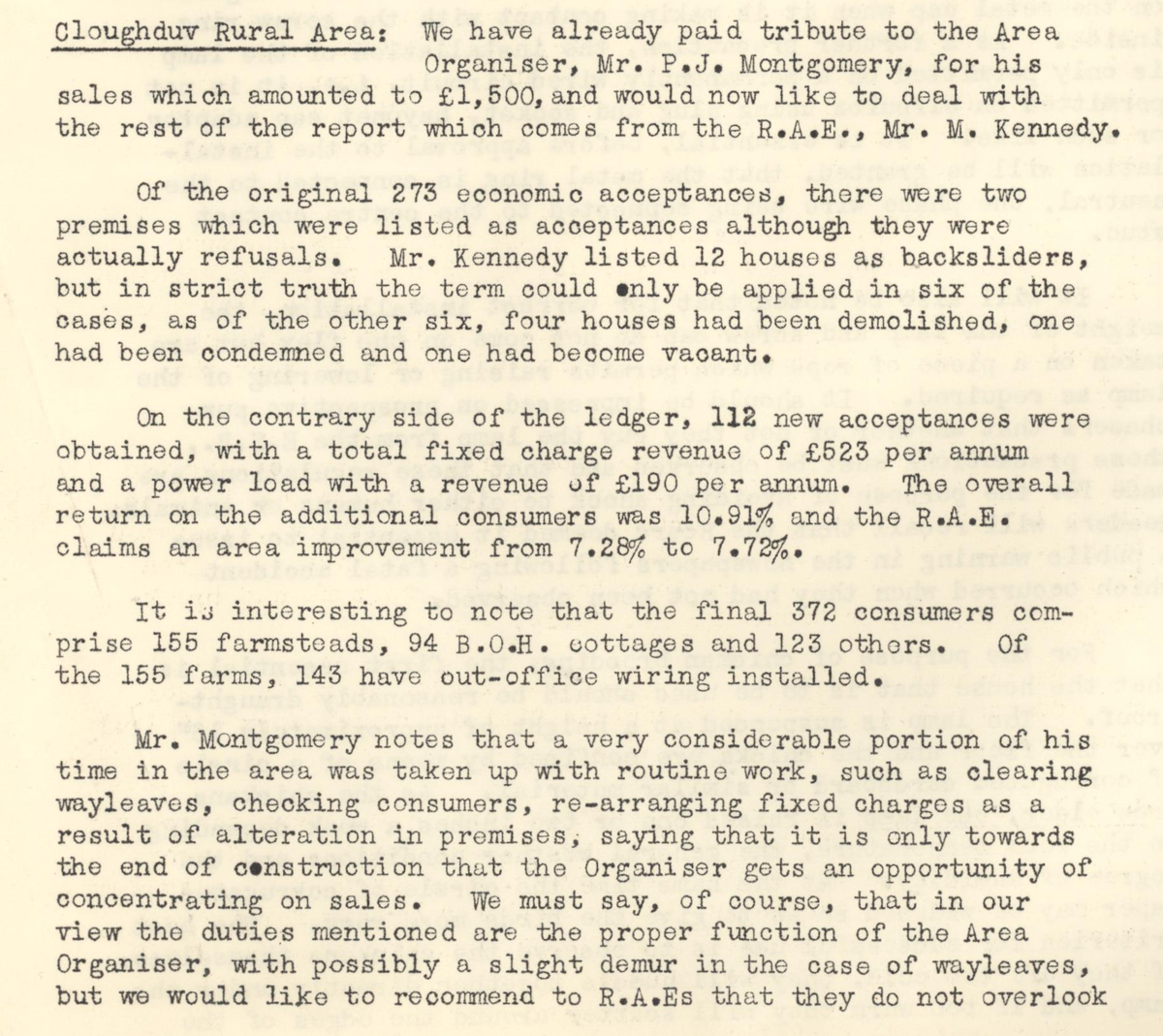
 This digital scan from the REO News displays the following text:
"Cloughduv Rural Area: We have already paid tribute to the Area Organiser, Mr. P.J. Montgomery, for his sales which amounted to £1,500, and would now like to deal with the rest of the report which comes from the R.A.E., Mr. M. Kennedy.
Of the original 273 economic acceptances, there were two premises which were listed as acceptances although they were actually refusals. Mr. Kennedy listed 12 houses as backsliders, but in strict truth the term could only be applied in six of the cases, as of the other six, four houses had been demolished, one had been condemned and one had become vacant.
On the contrary side of the ledger, 112 new acceptances were obtained, with a total fixed charge revenue of £523 per annum and a power load with a revenue of £190 per annum. The overall return on the additional consumers was 10.91%, and the R.A.E. claims an area improvement from 7.28% to 7.72%.
It is interesting to note that the final 372 consumers comprise 155 farmsteads, 94 B.O.H. cottages and 123 others. Of the 155 farms, 143 have out‑office wiring installed.
Mr. Montgomery notes that a very considerable portion of his time in the area was taken up with routine work, such as clearing wayleaves, checking consumers, re‑arranging fixed charges and the result of alteration in premises, saying that it is only towards the end of construction that the Organiser gets an opportunity of concentrating on sales. We must say, however, that some of the view thereto mentioned are the proper function of the Area Organiser, with possibly a dimmer view in the case of wayleaves, but we would like to recommend to R.A.E.s that they do not overlook"
This digital scan from the REO News displays the following text:
"the importance of sales and in so doing relegate it to a subordinate position."