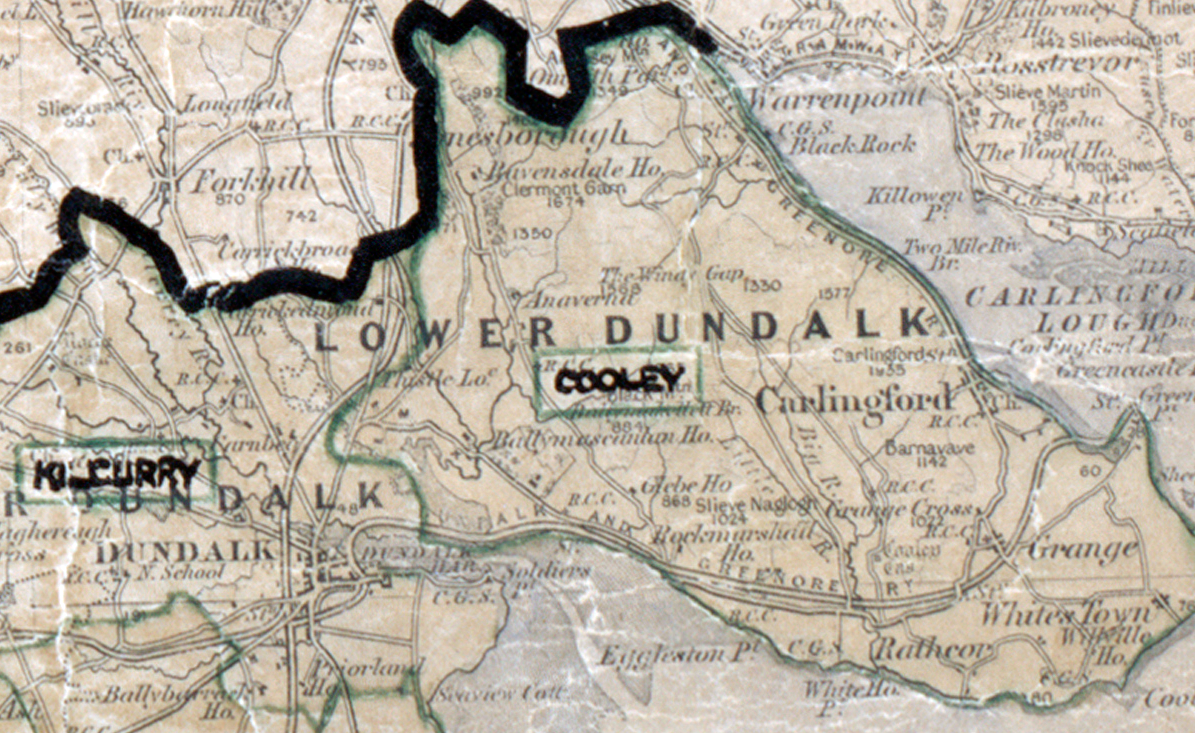
 Area: Cooley
Started: July 1948
Finished: February 1950
Poles used: 2045
Line used (km): 181
Premises connected: 1010
The figures above were sourced from our REO News magazine. Click interactive map to find out more on what the figures mean. The map above shows the area boundary and is from a digitised version of the original map used during the scheme.
The REO News from January 1950 quotes an article from The Independent reporting on the scheme in Cooley:
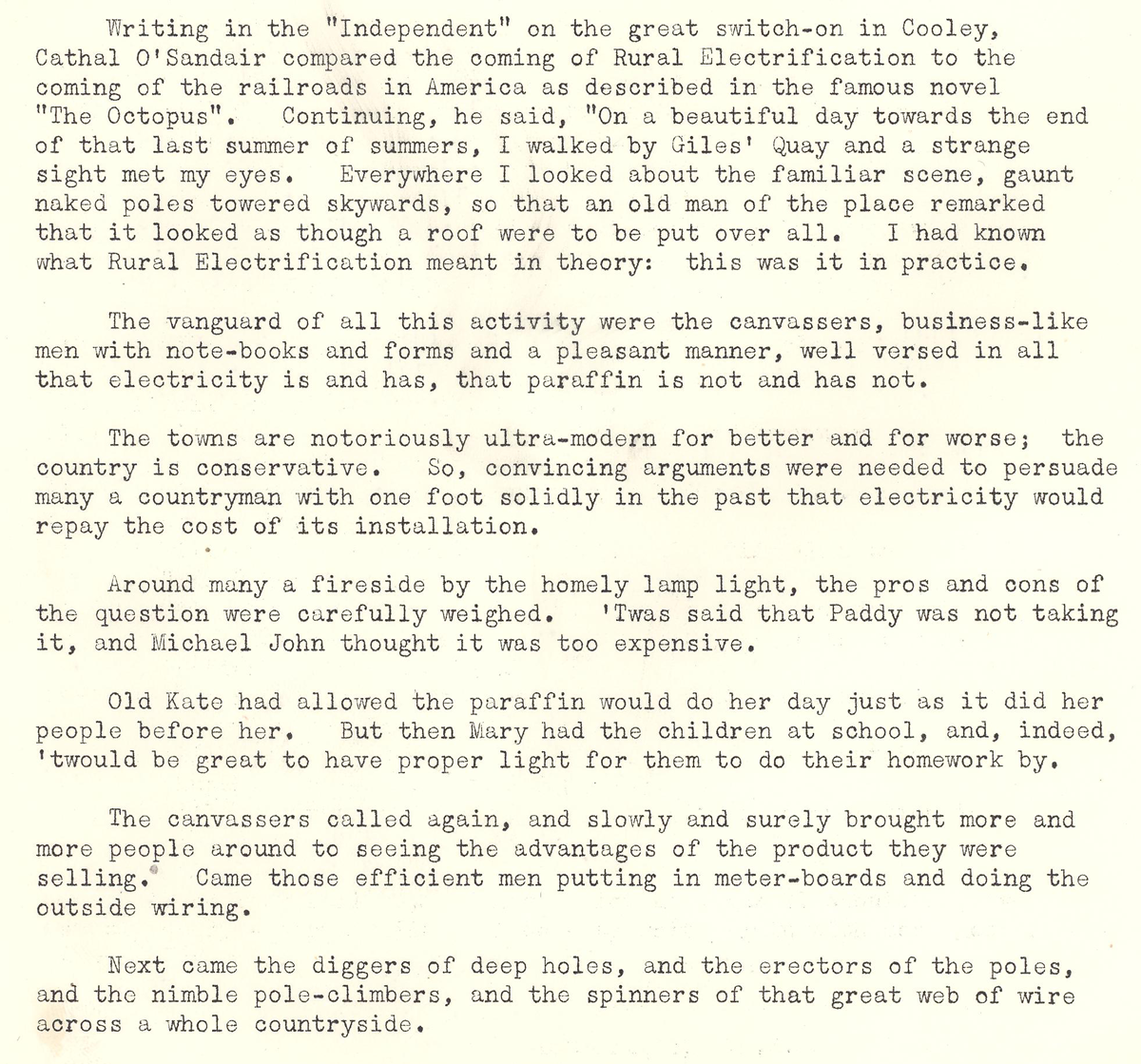 This digital scan from the REO News displays the following text:
"Writing in the "Independent" on the great switch-on in Cooley, Cathal O'Sandair compared the coming of Rural Electrification to the coming of the railroads in America as described in the famous novel The Octopus. Continuing, he said, "On a beautiful day towards the end of that last summer of summers, I walked by Giles' Quay and a strange sight met my eyes. Everywhere I looked about the familiar scene, gaunt naked poles towered skywards, so that an old man of the place remarked that it looked as though a roof were to be put over all. I had known what Rural Electrification meant in theory: this was it in practice."
The vanguard of all this activity were the canvassers, business-like people with note-books and forms and a pleasant manner, well versed in all that electricity is and has, that paraffin is not and has not.
The towns are notoriously ultra-modern for better and for worse; the country is conservative. So, convincing arguments were needed to persuade many a countryman with one foot solidly in the past that electricity would repay the cost of its installation.
Around many a fireside by the homely lamp light, the pros and cons of the question were carefully weighed. 'Twas said that Paddy was not taking it, and Michael John thought it was too expensive.
Old Kate had allowed the paraffin would do her day just as it did her people before her. But then Mary had the children at school, and, indeed, 'twould be great to have proper light for them to do their homework by.
The canvassers called again, and slowly and surely brought more and more people around to seeing the advantages of the product they were selling. Came those efficient people putting in meter-boards and doing the outside wiring.
Next came the diggers of deep holes, and the erectors of the poles, and the nimble pole-climbers, and the spinners of that great web of wire across a whole countryside."
An REO News article from February 1950 reports on the completion of the scheme in Cooley:
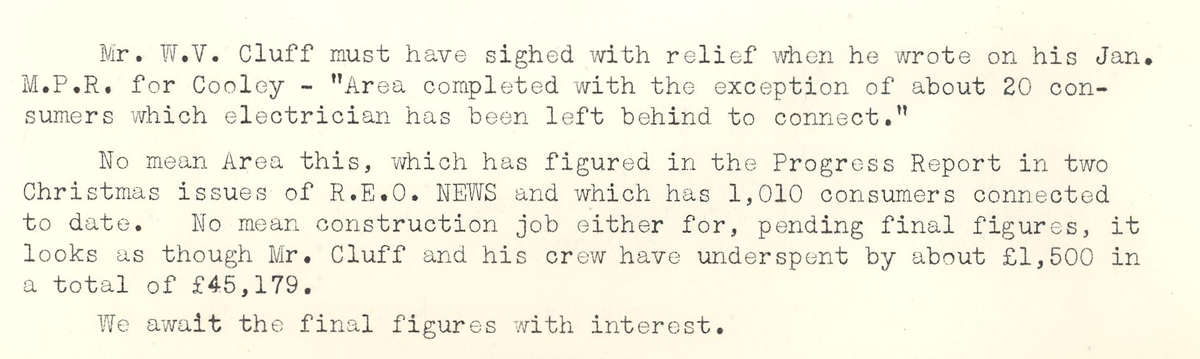 This digital scan from the REO News displays the following text:
"Mr. W.V. Cluff must have sighed with relief when he wrote on his Jan. M.P.R. for Cooley: "Area completed with the exception of about 20 consumers which electrician has been left behind to connect."
No mean Area this, which has figured in the Progress Report in two Christmas issues of R.E.O. NEWS and which has 1,010 consumers connected to date. No mean construction job either for, pending final figures, it looks as though Mr. Cluff and his crew have underspent by about £1,500 in a total of £45,179.
We await the final figures with interest."