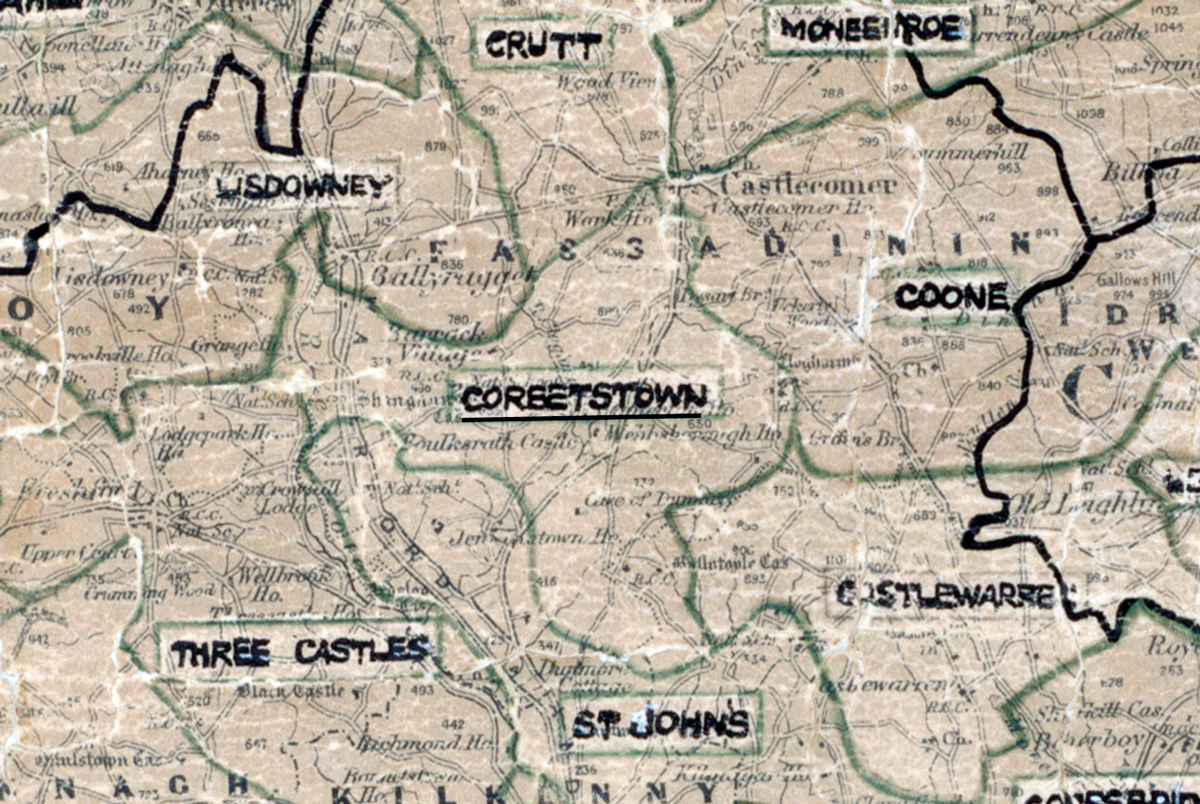
 Area: Corbetstown
Started: December 1954
Finished: November 1955
Poles used: 966
Line used (km): 86
Premises connected: 110
The figures above were sourced from our REO News magazine, to learn more about what these figures mean, visit our rural map explanation page. The map above shows the area boundary and is from a digitised version of the interactive map used during the scheme. Unfortunately no further information is available for this area in the REO magazine.
Shortage of labour was a problem in Corbetstown according to The REO News from February 1956.
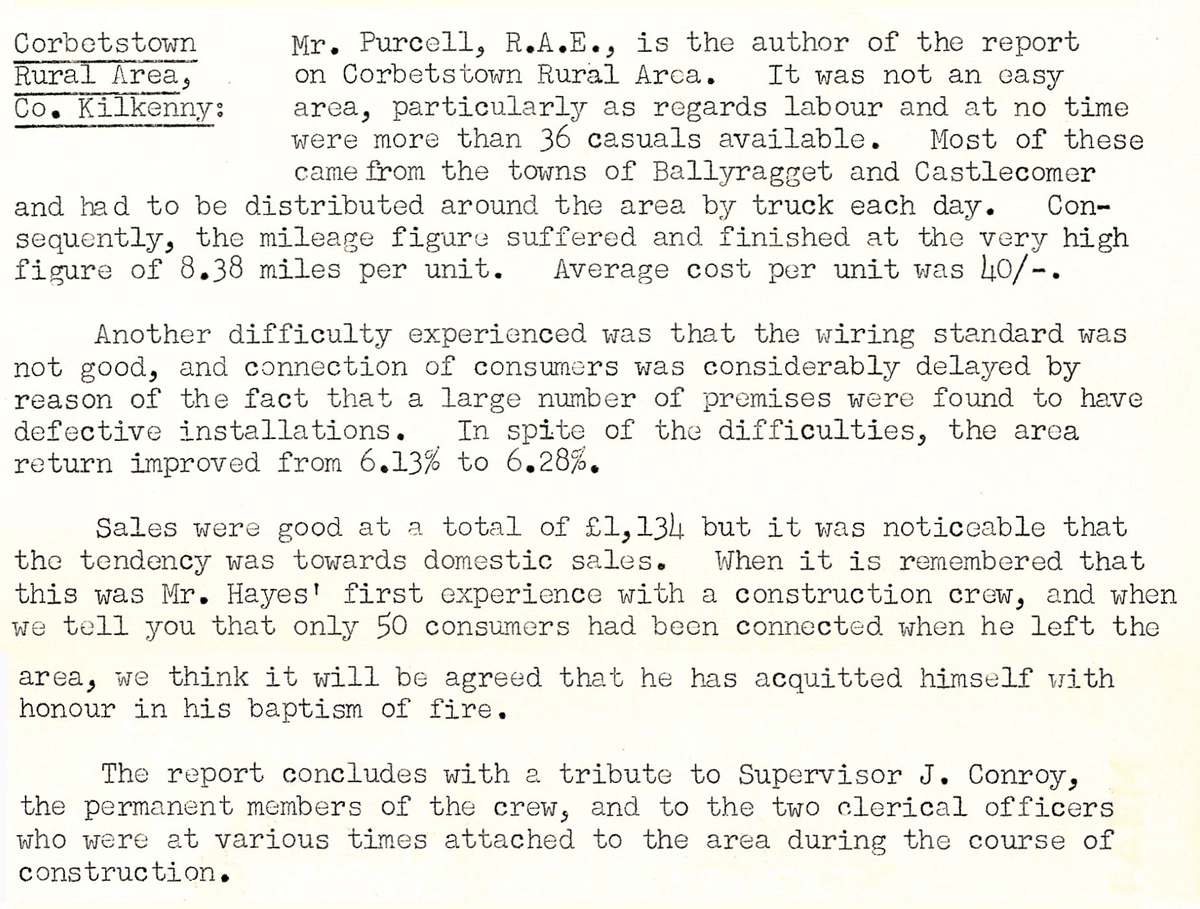
This digital scan from the REO News displays the following text:
“Corbetstown Rural Area, Co. Kilkenny: Mr. Purcell, R.A.E., is the author of the report on Corbetstown Rural Area. It was not an easy area, particularly as regards labour and at no time were more than 36 casuals available. Most of these came from the towns of Ballyraggett and Castlecomer and had to be distributed around the area by truck each day. Consequently, the mileage figure suffered and finished at the very high figure of 8.38 miles per unit. Average cost per unit was 40/–.
Another difficulty experienced was that the wiring standard was not good, and connection of consumers was considerably delayed by reason of the fact that a large number of premises were found to have defective installations. In spite of the difficulties, the area return improved from 6.13% to 6.28%.
Sales were good at a total of £1,134 but it was noticeable that the tendency was towards domestic sales. When it is remembered that this was Mr. Hayes’ first experience with a construction crew, and when we tell you that only 50 consumers had been connected when he left the area, we think it will be agreed that he has acquitted himself with honour in his baptism of fire.
The report concludes with a tribute to Supervisor J. Conroy, the permanent members of the crew, and to the two clerical officers who were at various times attached to the area during the course of construction.”