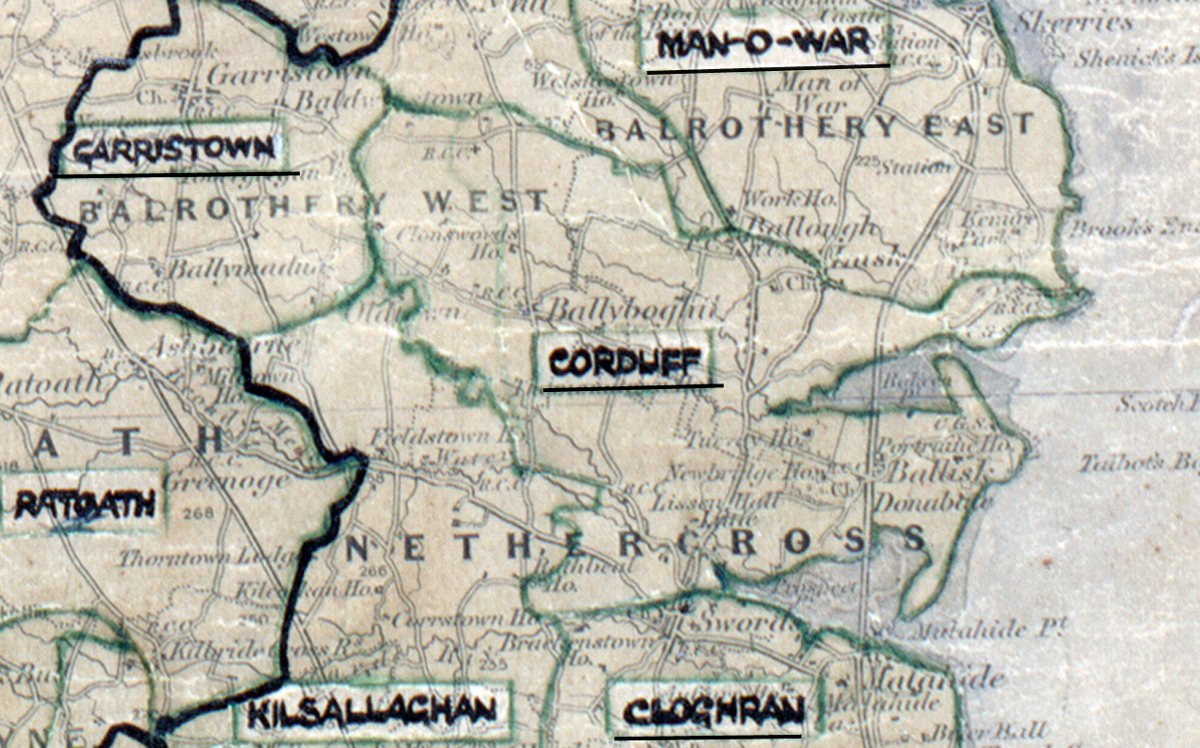
 Area: Corduff
Started: June 1951
Finished: February 1952
Poles used: 584
Line used (km): 49
Premises connected: 235
The figures above were sourced from our REO News magazine, to learn more about what these figures mean, visit our interactive map. The map above shows the area boundary and is from a digitised version of the original map used during the scheme.
The REO News from March 1952 reports that about 50 outside lights were erected in Corduff.
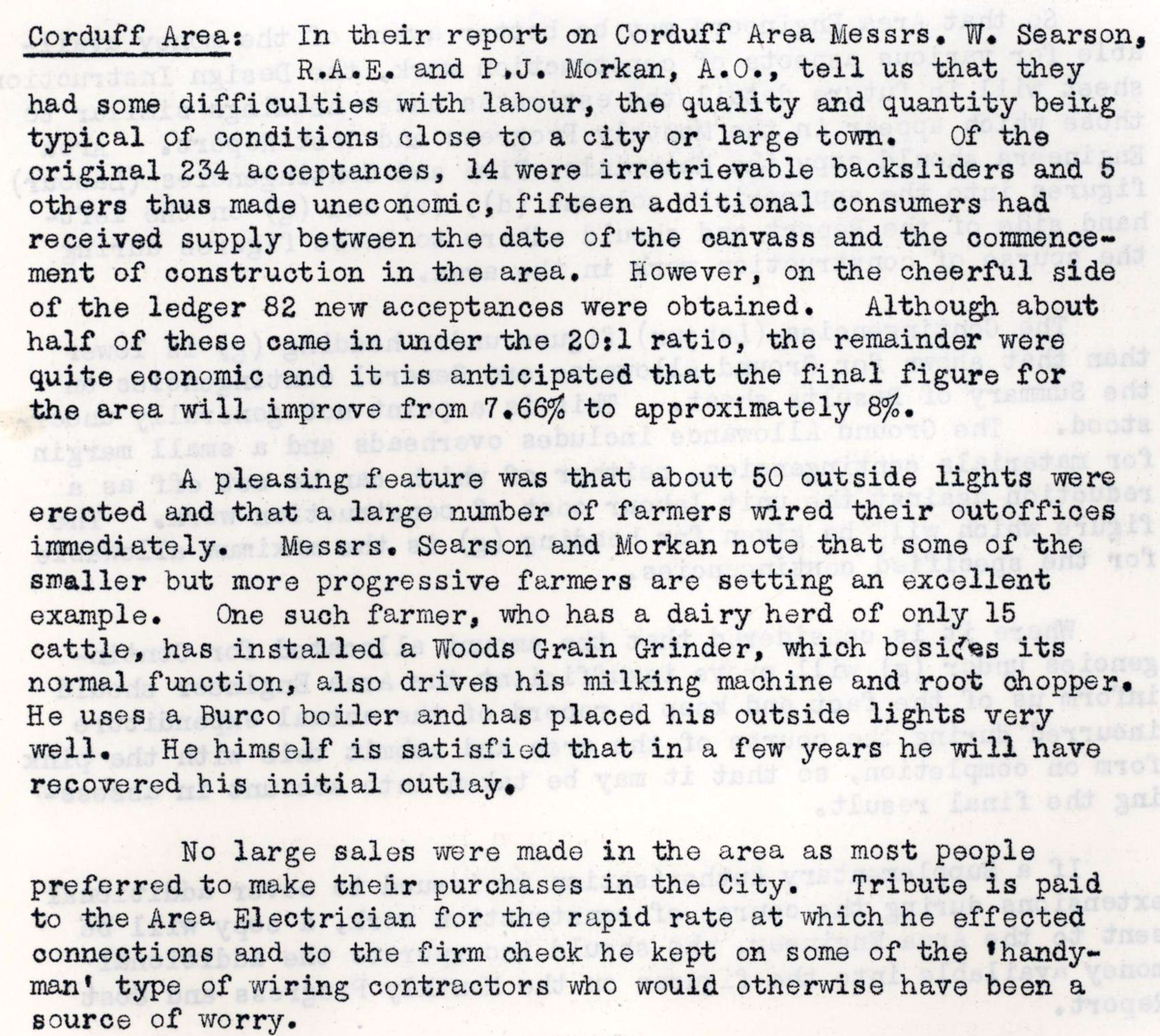 This digital scan from the REO news displays the following text:
"Corduff Area: In their report on Corduff Area Messrs. W. Searson, R.A.E. and P.J. Morkan, A.O., tell us that they had some difficulties with labour, the quality and quantity being typical of conditions close to a city or large town. Of the original 234 acceptances, 14 were irretrievable backsliders and 5 others thus made uneconomic, fifteen additional consumers had received supply between the date of the canvass and the commencement of construction in the area. However, on the cheerful side of the ledger 82 new acceptances were obtained. Although about half of these came in under the 20:1 ratio, the remainder were quite economic and it is anticipated that the final figure for the area will improve from 7.66% to approximately 8%.
A pleasing feature was that about 50 outside lights were erected and that a large number of farmers wired their outoffices immediately. Messrs. Searson and Morkan note that some of the smaller but more progressive farmers are setting an excellent example. One such farmer, who has a dairy herd of only 15 cattle, has installed a Woods Grain Grinder, which besides its normal function, also drives his milking machine and root chopper. He uses a Burco boiler and has placed his outside lights very well. He himself is satisfied that in a few years he will have recovered his initial outlay.
No large sales were made in the area as most people preferred to make their purchases in the City. Tribute is paid to the Area Electrician for the rapid rate at which he effected connections and to the firm check he kept on some of the “handy-man” type of wiring contractors who would otherwise have been a source of worry."