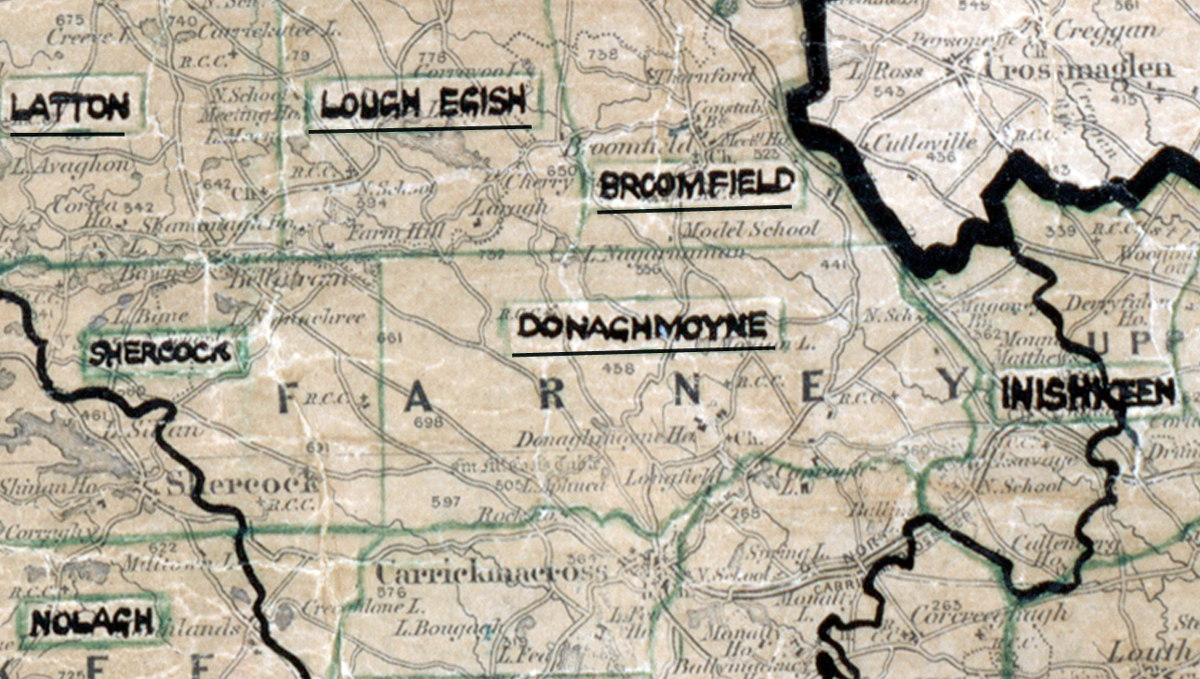
 Area: Donaghmoyne
Started: April 1955
Finished: December 1955
Poles used: 1825
Line used (km): 156
Premises connected: 370
The figures above were sourced from our REO News magazine, to learn more about what these figures mean, visit our interactive map. The map above shows the area boundary and is from a digitised version of the original map used during the scheme.
The REO News from April 1955 reports that there was severe backsliding in Donaghmoyne.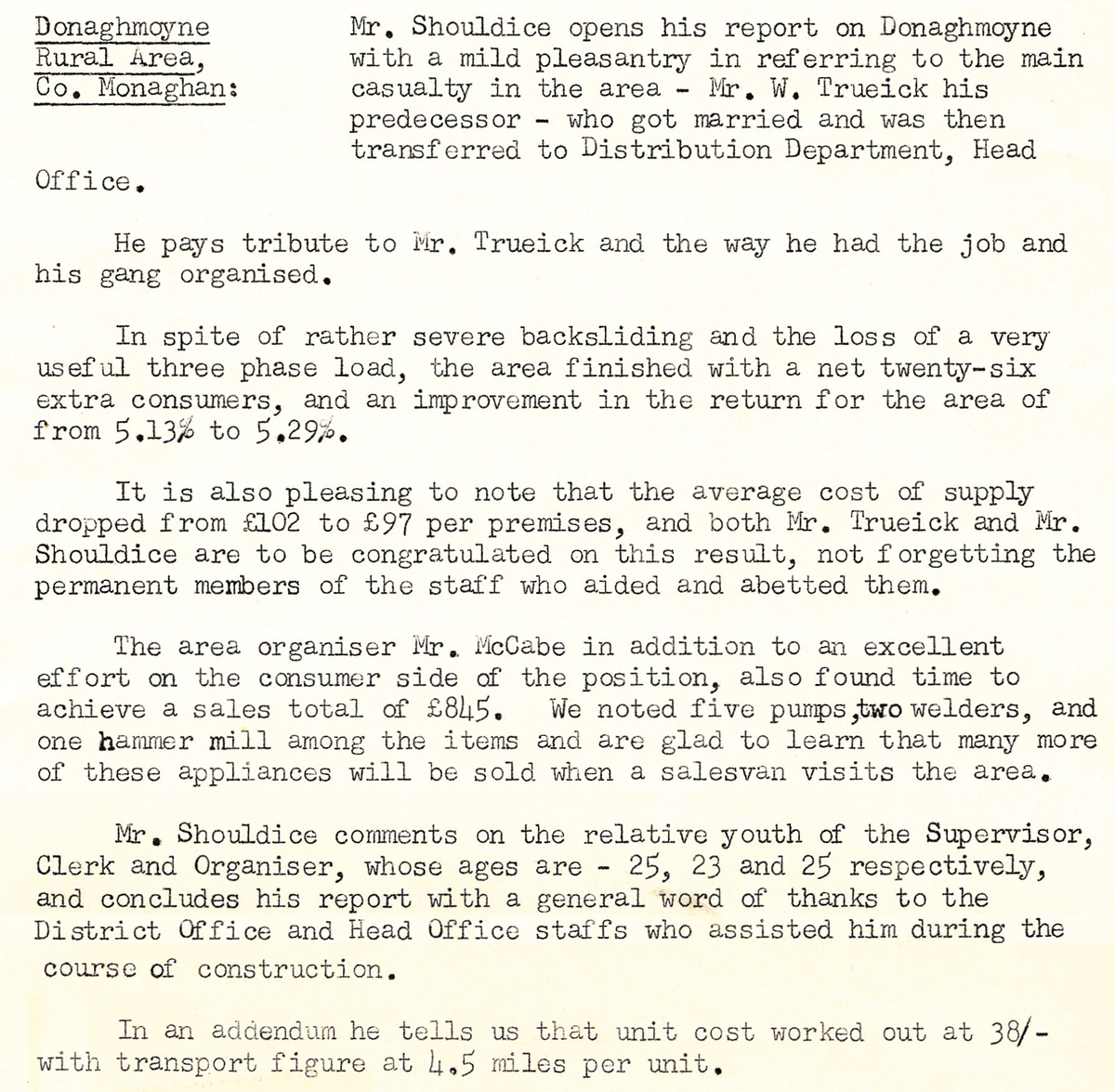 This digital scan from the REO News displays the following text:
“Donaghmoyne Rural Area, Co. Monaghan: Mr. Shouldice opens his report on Donaghmoyne with a mild pleasantry in referring to the main casualty in the area – Mr. W. Trueick his predecessor – who got married and was then transferred to Distribution Department, Head Office.
He pays tribute to Mr. Trueick and the way he had the job and his gang organised.
In spite of rather severe backsliding and the loss of a very useful three phase load, the area finished with a net twenty‑six extra consumers, and an improvement in the return for the area of from 5.13% to 5.29%.
It is also pleasing to note that the average cost of supply dropped from £102 to £97 per premises, and both Mr. Trueick and Mr. Shouldice are to be congratulated on this result, not forgetting the permanent members of the staff who aided and abetted them.
The area organiser Mr. McCabe, in addition to an excellent effort on the consumer side of the position, also found time to achieve a sales total of £845. We noted five pumps, two welders, and one hammer mill among the items and are glad to learn that many more of these appliances will be sold when a salesvan visits the area.
Mr. Shouldice comments on the relative youth of the Supervisor, Clerk and Organiser, whose ages are – 25, 23 and 25 respectively, and concludes his report with a general word of thanks to the District Office and Head Office staffs who assisted him during the course of construction.
In an addendum he tells us that unit cost worked out at 38/– with transport figure at 4.5 miles per unit.”