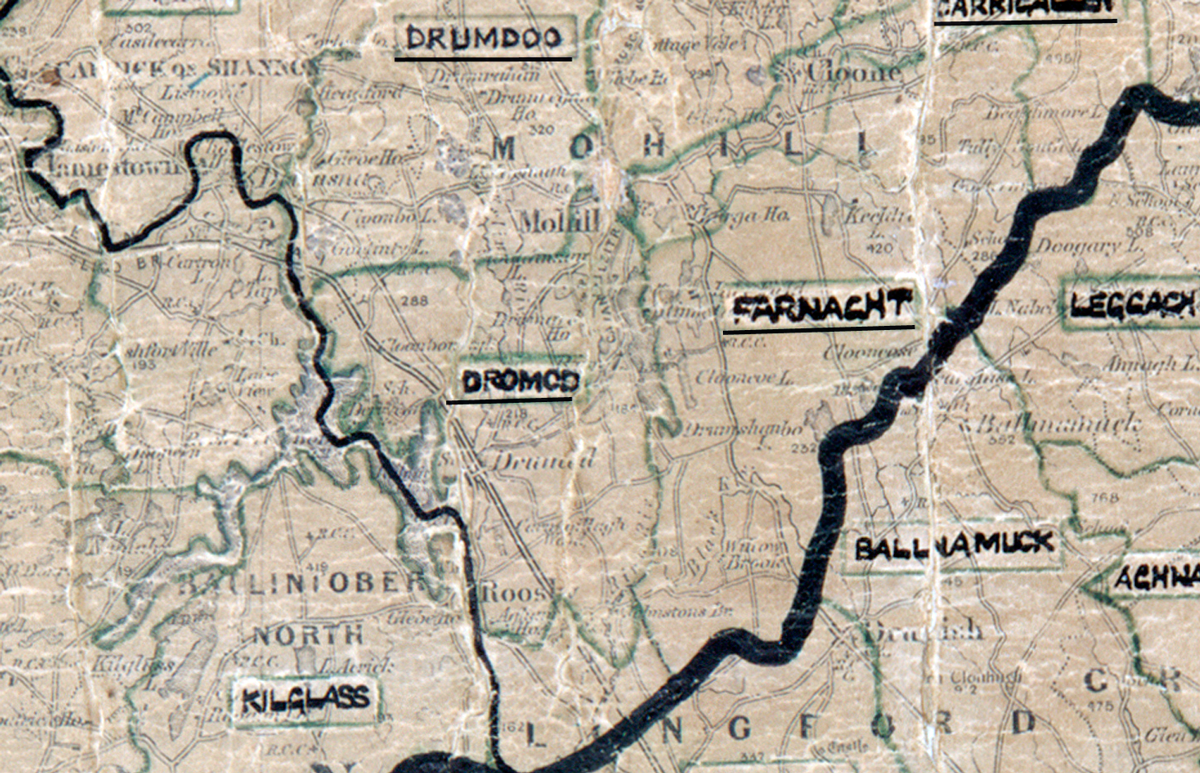
 Area: Dromod
Started: June 1953
Finished: December 1953
Poles used: 989
Line used (km): 86
Premises connected: 5
The figures above were sourced from our REO News magazine, to learn more about what these figures mean, visit our interactive map. The map above shows the area boundary and is from a digitised version of the original map used during the scheme.
Construction was difficult in Dromod according to The REO News from February 1954.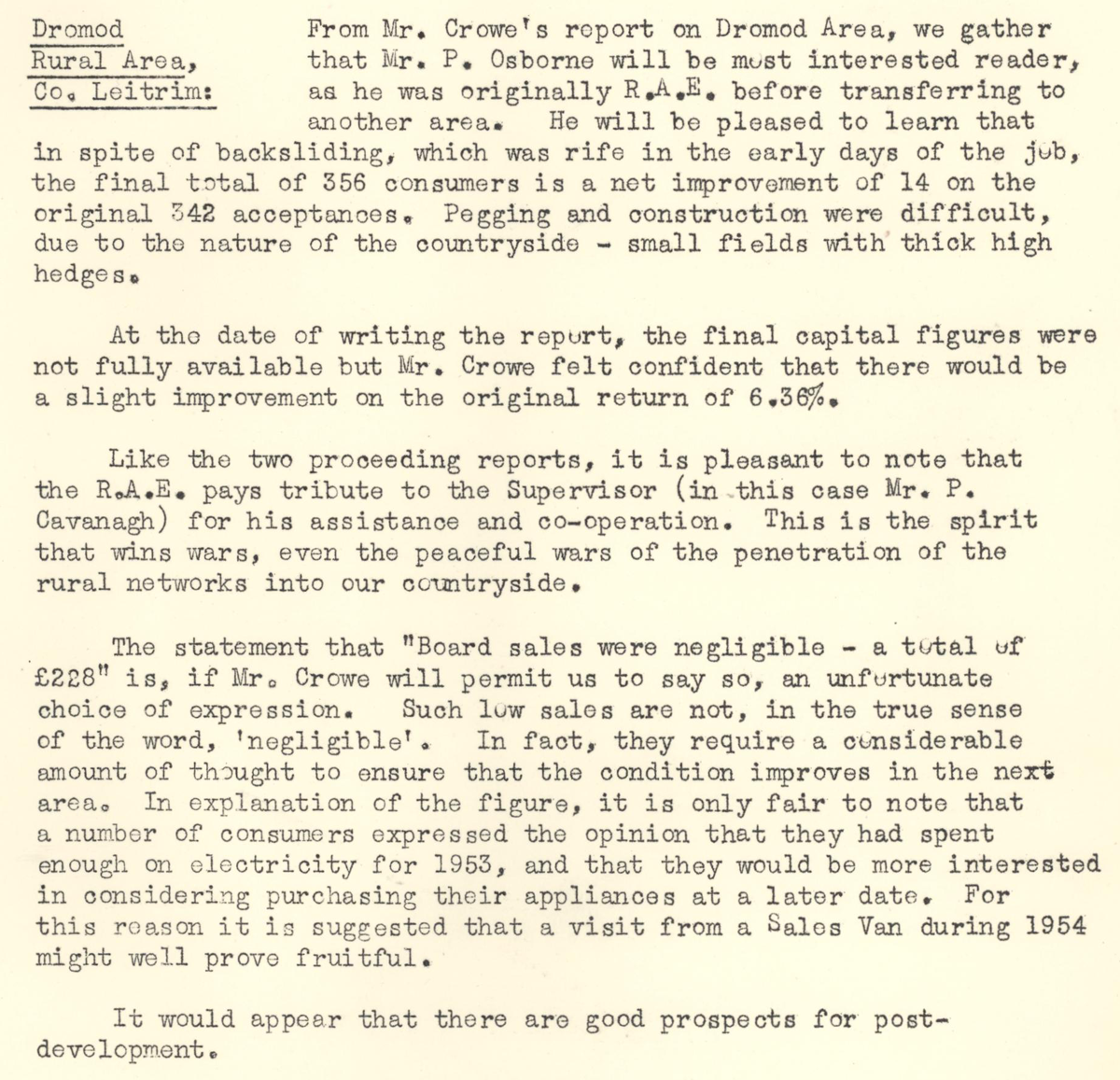 This digital scan from the REO News displays the following text:
“Dromod Rural Area, Co. Leitrim: From Mr. Crowe’s report on Dromod Area, we gather that Mr. P. Osborne will be most interested reader, as he was originally R.A.E. before transferring to another area. He will be pleased to learn that in spite of backsliding, which was rife in the early days of the job, the final total of 356 consumers is a net improvement of 14 on the original 342 acceptances. Pegging and construction were difficult, due to the nature of the countryside – small fields with thick high hedges.
At the date of writing the report, the final capital figures were not fully available but Mr. Crowe felt confident that there would be a slight improvement on the original return of 6.36%.
Like the two proceeding reports, it is pleasant to note that the R.A.E. pays tribute to the Supervisor (in this case Mr. P. Cavanagh) for his assistance and co‑operation. This is the spirit that wins wars, even the peaceful wars of the penetration of the rural networks into our countryside.
The statement that ‘Board sales were negligible – a total of £228’ is, if Mr. Crowe will permit us to say so, an unfortunate choice of expression. Such low sales are not, in the true sense of the word, ‘negligible’. In fact, they require a considerable amount of thought to ensure that the condition improves in the next area. In explanation of the figure, it is only fair to note that a number of consumers expressed the opinion that they had spent enough on electricity for 1953, and that they would be more interested in purchasing the larger appliances at a later date. For this reason it is suggested that a visit from a Sales Van during 1954 might well prove fruitful.
It would appear that there are good prospects for post‑development.”