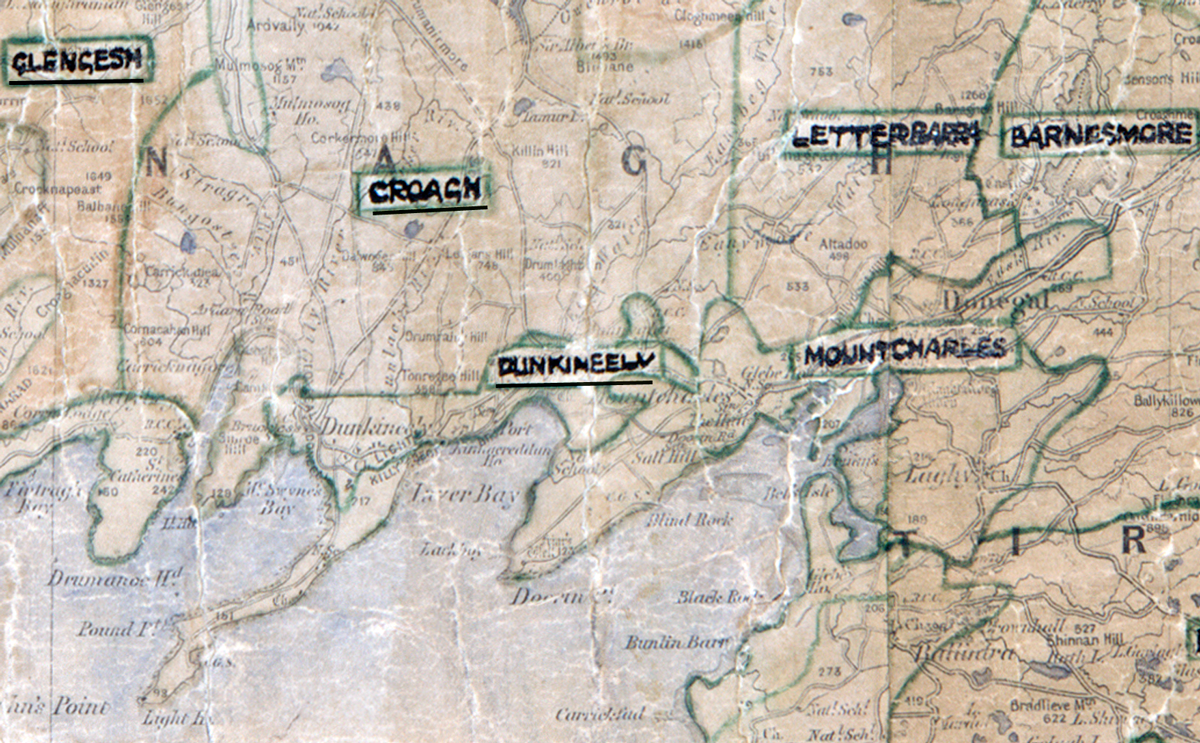
 Area: Dunkineely
Started: August 1950
Finished: August 1951
Poles used: 460
Line used (km): 39
Premises connected: 28
The figures above were sourced from our REO News magazine, to learn more about what these figures mean, visit our interactive map. The map above shows the area boundary and is from a digitised version of the original map used during the scheme.
The REO News from January 1952 tells us that Dunkineely is an area of small farms.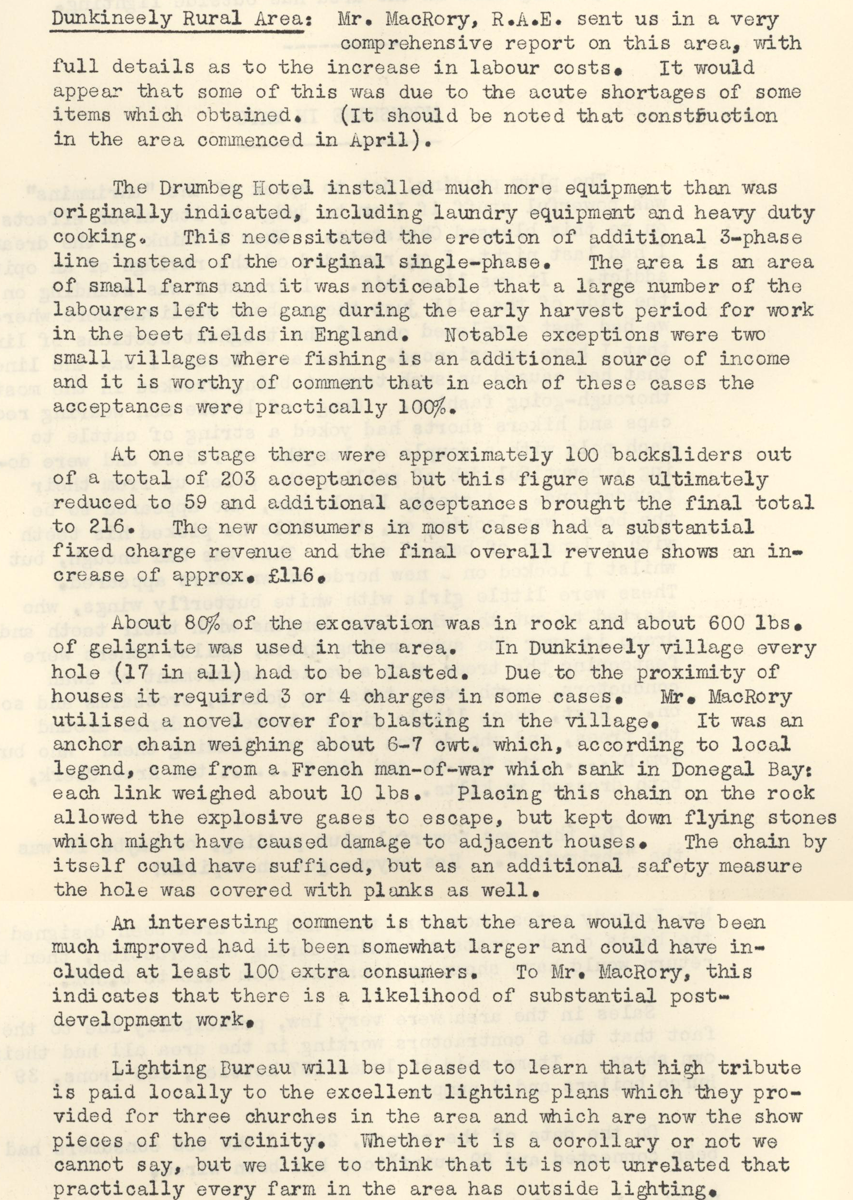
This digital scan from the REO News displays the following text:
"Dunkineely Rural Area, Co. Donegal: Mr. MacRory, R.A.E., sent us in a very comprehensive report on this area, with full details as to the increase in labour costs. It would appear that some of this was due to the acute shortage of some items which obtained. (It should be noted that construction in the area commenced in April.)
The Drumbeagh Hotel installed much more equipment than was originally indicated, including laundry equipment and heavy duty cooking. This necessitated the erection of additional 3‑phase line instead of the original single‑phase. The area is an area of small farms and it was noticeable that a large number of the labourers left the gangs during the early harvest period for work in the beet fields in England. Notable exceptions were two small villages where fishing is an additional source of income and it is worthy of comment that in each of these cases the acceptances were practically 100%.
At one stage there were approximately 100 backsliders out of a total of 203 acceptances but this figure was ultimately reduced to 53, and additional acceptances brought the final total to 216. The new consumers in most cases had a substantial fixed charge revenue and the final overall revenue shows an increase of approx. £116.
About 80% of the excavation was in rock and about 600 lbs. of gelignite was used in the area in the anchoring village only 17 in all had to be blasted. Due to the proximity of houses it was necessary to be as careful as possible. The local R.I.C. utilities rod on several occasions in which was engaged. It was an anchor chain, weighing about 6–7 cwt., which, according to local legend, came from a French man‑of‑war which sank in Donegal Bay; each link weighs about 15 lb. Placing this chain on the rock was most useful in anchoring. The chain had kept down on the bog which might have caused damage to adjacent houses. The chain by itself could have pulled stakes but as an added safety measure the hole was covered with soft bog as well.
An interesting note was the fact that the area would have been much longer had it been somewhat larger and could have included, by then, that isolated estate. If it had been included, there is a likelihood of substantial post‑development work.
Lighting Bureau will be pleased to learn that high tribute is paid locally to the under‑taking in the planting of the probable increase. It is worthy of note that in which is now the show area nearly every farm in the area has outside lighting."