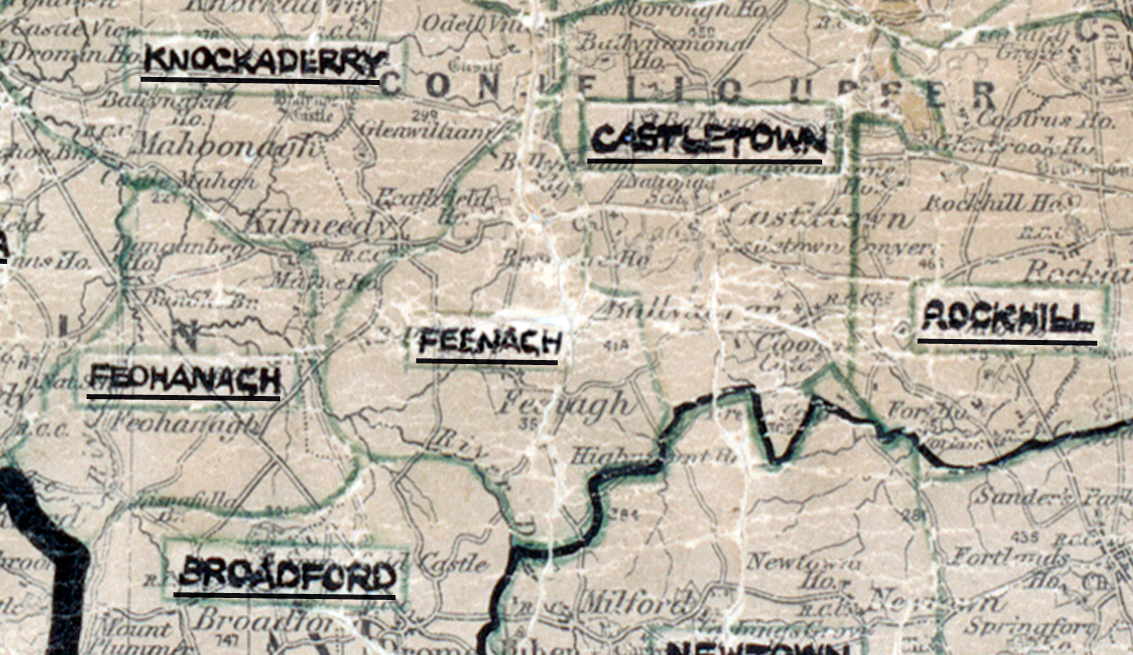
 Area: Feenagh
Started: August 1952
Finished: April 1953
Poles used: 883
Line used (km): 74
Premises connected: 220
The figures above were sourced from our REO News magazine, to learn more about what these figures mean, visit our interactive map. The map above shows the area boundary and is from a digitised version of the original map used during the scheme.
The REO News from June 1953 reports that sales were fair in Feenagh.
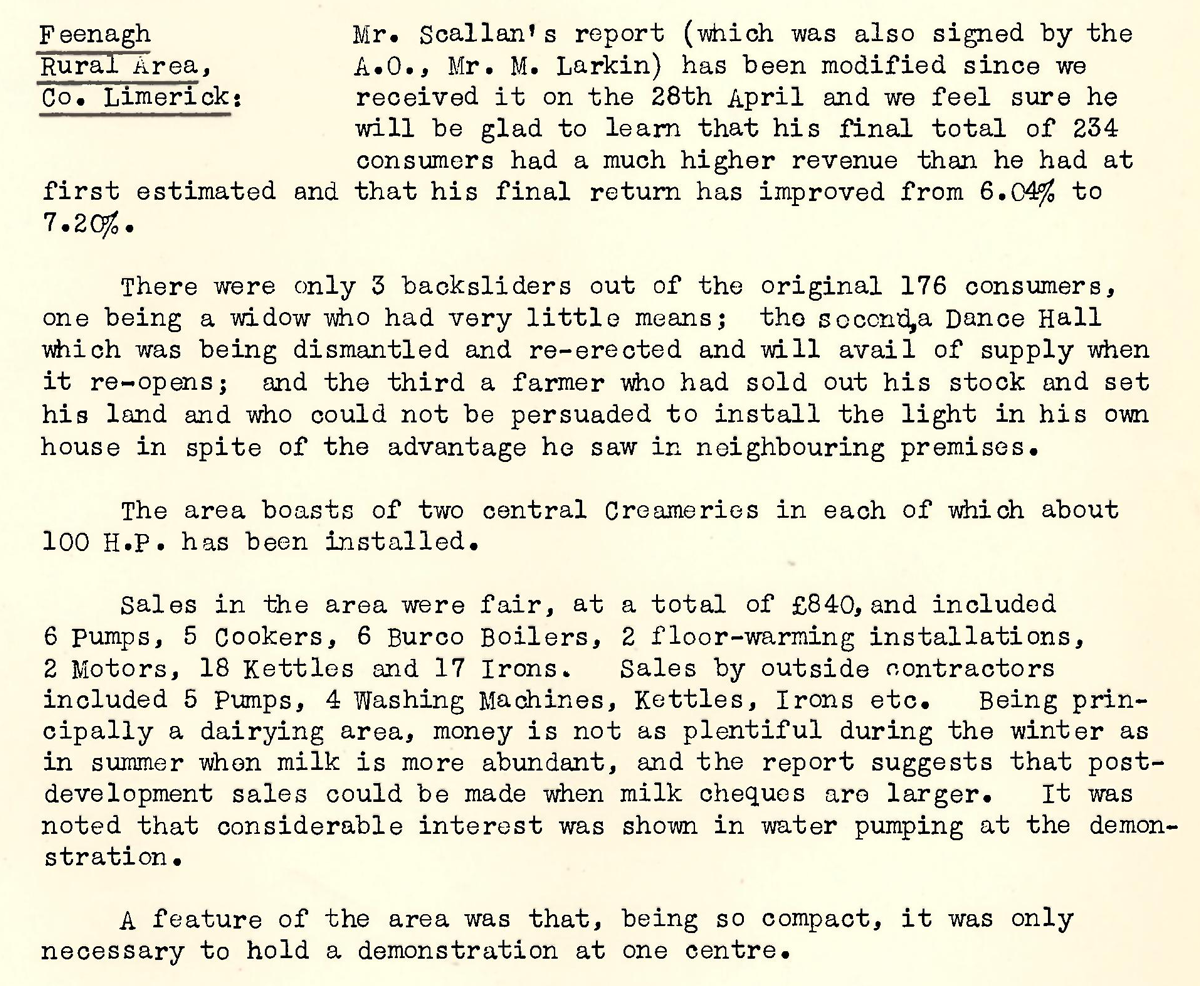
This digital scan from the REO News displays the following text:
"Feenagh Rural Area, Co. Limerick: Mr. Scallan’s report (which was also signed by the A.O., Mr. M. Larkin) has been modified since we received it on the 28th April and we feel sure he will be glad to learn that his final total of 234 consumers had a much higher revenue than he had first estimated and that his final return has improved from 6.04% to 7.20%.
There were only 3 backsliders out of the original 176 consumers, one being a widow who had very little means; the second, a Dance Hall which was being dismantled and re‑erected and will avail of supply when it re‑opens; and the third, a farmer who had sold out his stock and set out his land and who could not be persuaded to install the light in his own house in spite of the advantage he saw in neighbouring premises.
The area boasts of two central Creameries in each of which about 100 H.P. has been installed.
Sales in the area were fair, at a total of £840, and included 6 Pumps, 5 Cookers, 6 Burco Boilers, 2 floor‑warming installations, 2 Motors, 18 Kettles and 17 Irons. Sales by outside contractors included 5 Pumps, 4 Washing Machines, Kettles, Irons etc. Being principally a dairying area, money is not as plentiful during the winter as in summer when milk is more abundant, and the report suggests that post‑development sales could be made when milk cheques are larger. It was also noted that considerable interest was shown in water pumping at the demonstration.
A feature of the area was that, being so compact, it was only necessary to hold a demonstration at one centre."