 Area: Fethard on Sea
Started: February 1952
Finished: May 1952
Poles used: 693
Line used (km): 70
Premises connected: 200
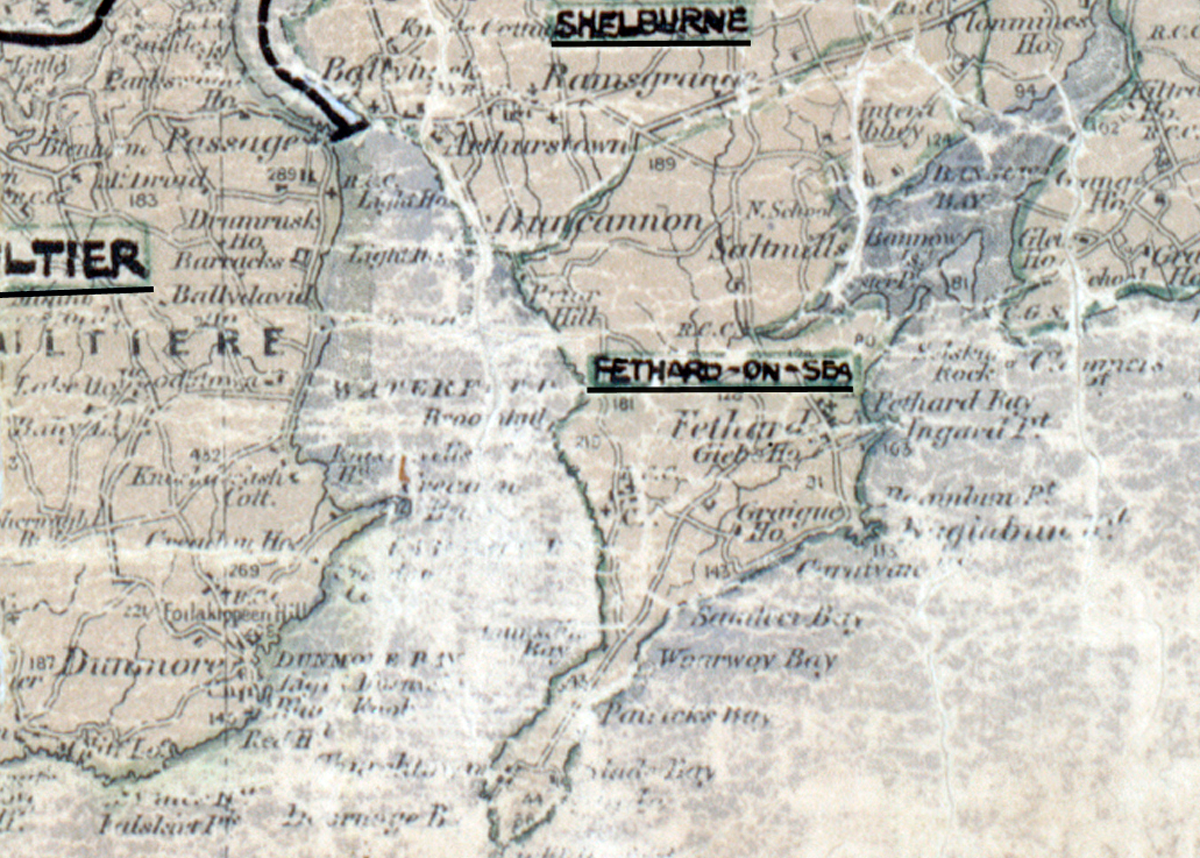
The figures above were sourced from our REO News magazine, to learn more about what these figures mean, visit our interactive map. The map above shows the area boundary and is from a digitised version of the original map used during the scheme.
Hook Lighthouse was mentioned in The REO News from July 1952 as a new consumer in Fethard on Sea.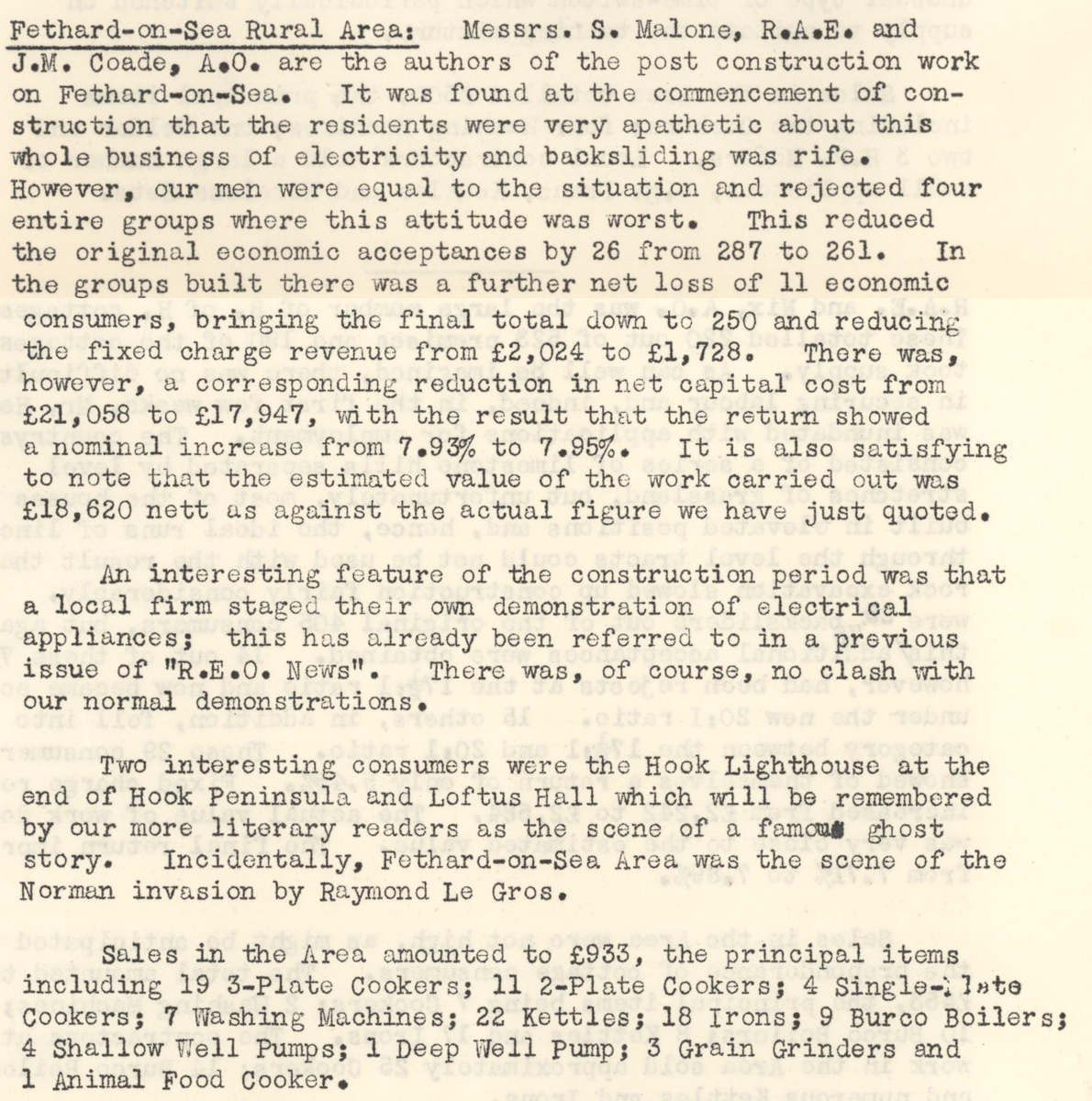 This digital scan from the REO News displays the following text:
“Fethard‑on‑Sea Rural Area: Messrs. S. Malone, R.A.E. and J. Coade, A.O., are the authors of the post‑construction work on Fethard‑on‑Sea. It was found at the commencement of construction that the residents were very apathetic about this whole business of electricity and backsliding was rife. However, our men were equal to the situation and rejected four entire groups where this attitude was worst. This reduced the original economic acceptances by 26 from 287 to 261. In the groups built there was a further net loss of 11 economic consumers, bringing the final total down to 250 and reducing the fixed charge revenue from £2,024 to £1,728. There was, however, a corresponding reduction in net capital cost from £21,058 to £17,947, with the result that the return showed a nominal increase from 7.93% to 7.95%. It is also satisfying to note that the estimated value of the work carried out was £18,620 nett as against the actual figure we have just quoted.
An interesting feature of the construction period was that a local firm staged their own demonstration of electrical appliances; this has already been referred to in a previous issue of ‘R.E.O. News’. There was, of course, no clash with our normal demonstrations.
Two interesting consumers were the Hook Lighthouse at the end of Hook Peninsula and Loftus Hall which will be remembered by our more literary readers as the scene of a famous ghost story. Incidentally, Fethard‑on‑Sea Area was the scene of the Norman invasion by Raymond Le Gros.
Sales in the Area amounted to £933, the principal items including 19 3‑Plate Cookers; 11 2‑Plate Cookers; 9 Single‑plate Cookers; 7 Washing Machines; 22 Kettles; 18 Irons; 9 Burco Boilers; 6 Immersion Heaters; 12 Fuel Pumps; 1 Deep Well Pump; 3 Grain Grinders and 1 Animal Food Cooler.”