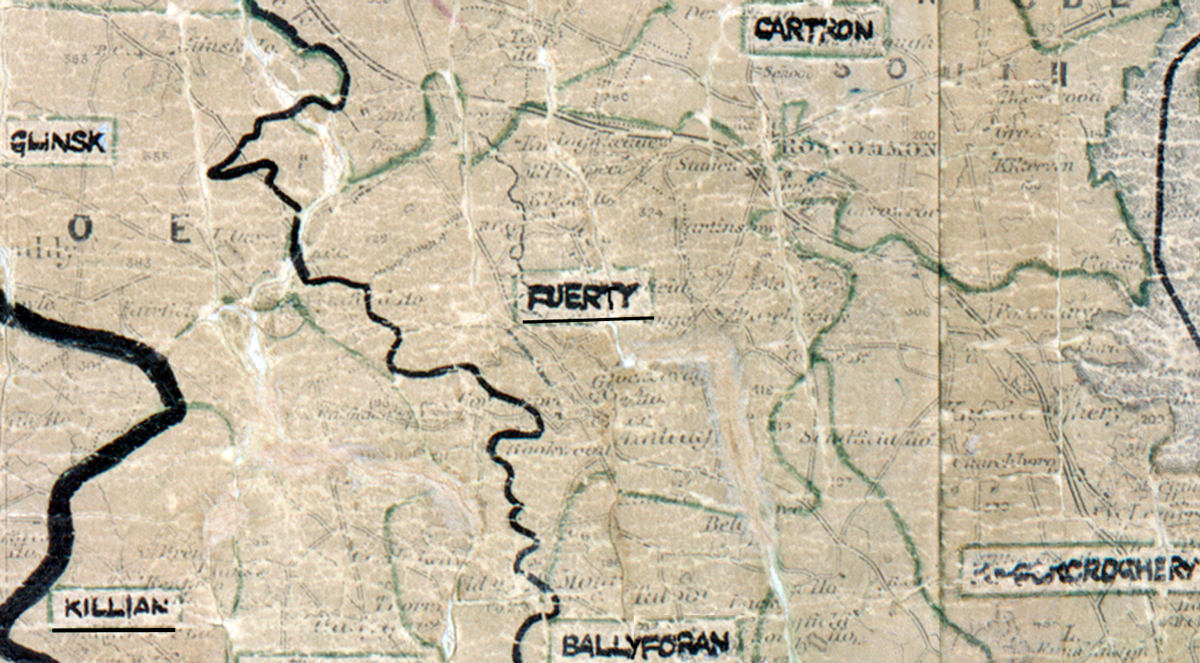
 Area: Fuerty
Started: December 1950
Finished: December 1951
Poles used: 1255
Line used (km): 114
Premises connected: 230
The figures above were sourced from our REO News magazine, to learn more about what these figures mean, visit our interactive map. The map above shows the area boundary and is from a digitised version of the original map used during the scheme.
The REO News from February 1952 contained a report on Fuerty.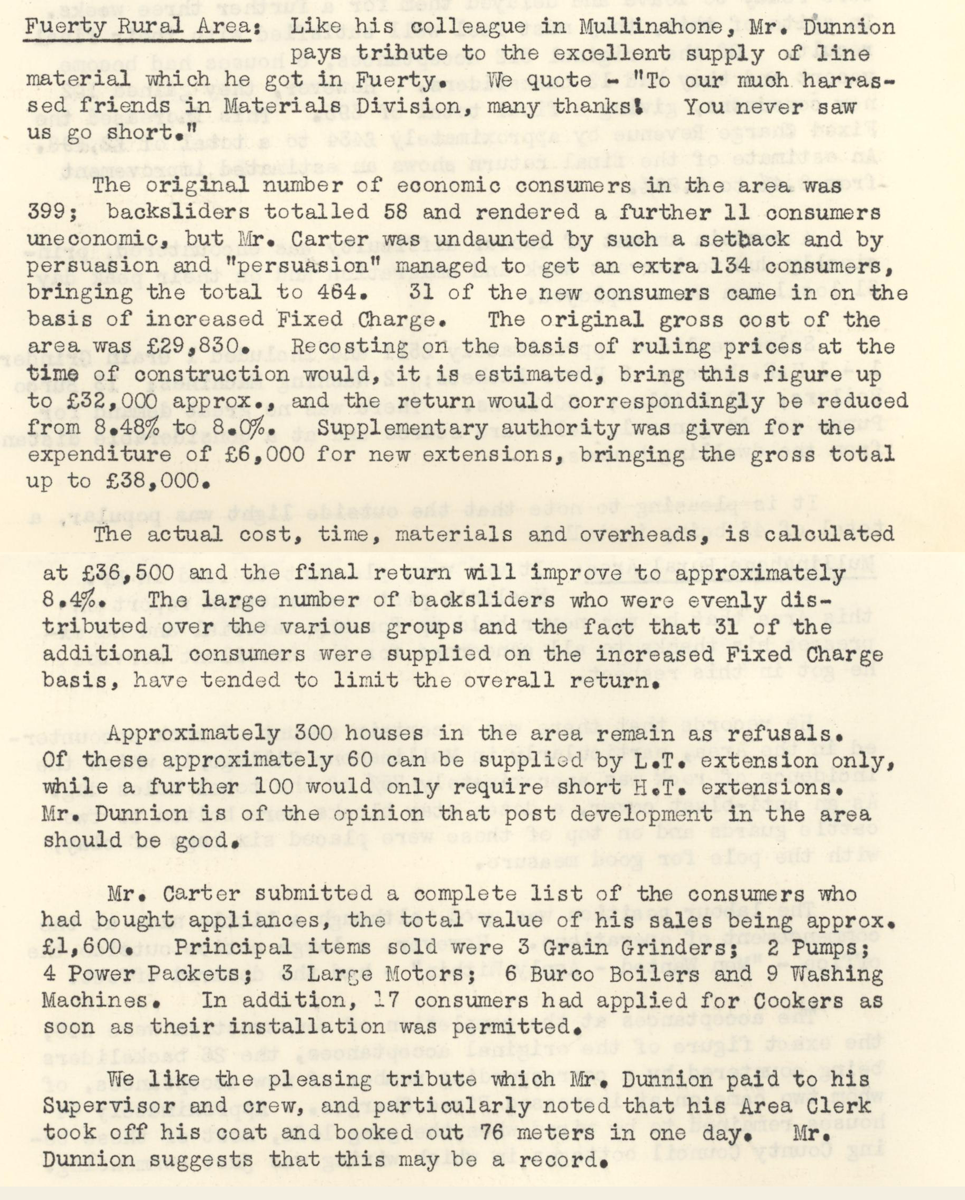 This digital scan from the REO News displays the following text:
"Fuerty Rural Area: Like his colleague in Mullinahone, Mr. Dunnion pays tribute to the excellent supply of line material which he got in Fuerty. We quote – “To our much harassed friends in Materials Division, many thanks! You never saw us go short.”
The original number of economic consumers in the area was 399; backsliders totalled 58 and rendered a further 11 consumers uneconomic, but Mr. Carter was undaunted by such a setback and by persuasion and “persuasion” managed to get an extra 134 consumers, bringing the total to 464. 31 of the new consumers came in on the basis of increased Fixed Charge. The original gross cost of the area was £29,830. Re‑costing on the basis of ruling prices at the time of construction would, it is estimated, bring this figure up to £32,000 approx., and the return would correspondingly be reduced from 8.48% to 8.0%. Supplementary authority was given for the expenditure of £6,000 for new extensions, bringing the gross total up to £38,000.
The actual cost, time, materials and overheads, is calculated at £36,500 and the final return will improve to approximately 8.4%. The large number of backsliders who were evenly distributed over the various groups and the fact that 31 of the additional consumers were supplied on the increased Fixed Charge basis, have tended to limit the overall return.
Approximately 300 houses in the area remain as refusals. Of these approximately 60 can be supplied by L.T. extension only, while a further 100 will only require short H.T. extensions. Mr. Dunnion is of the opinion that the post development in the area should be good.
Mr. Carter submitted a complete list of the consumers who had bought appliances, the total value of his sales being approx. £1,600. The principal items were: 15 Pumps; 6 Grain Grinders; 2 Pumps; 6 Washing Machines; 17 Kettles; 5 Burco Boilers; 10 Fires; 20 Radios; 8 Irons; 10 Washing Machines. In addition, 5 consumers had applied for Cookers and 2 for Electric Motors, but no sales were permitted.
We like the pleasing tribute which Mr. Dunnion paid to his Supervisor and crew, and particularly noted that his Area Clerk served 32 consumers in and out of 76 in the area in one day. Mr. Dunnion suggests that this may be a record."