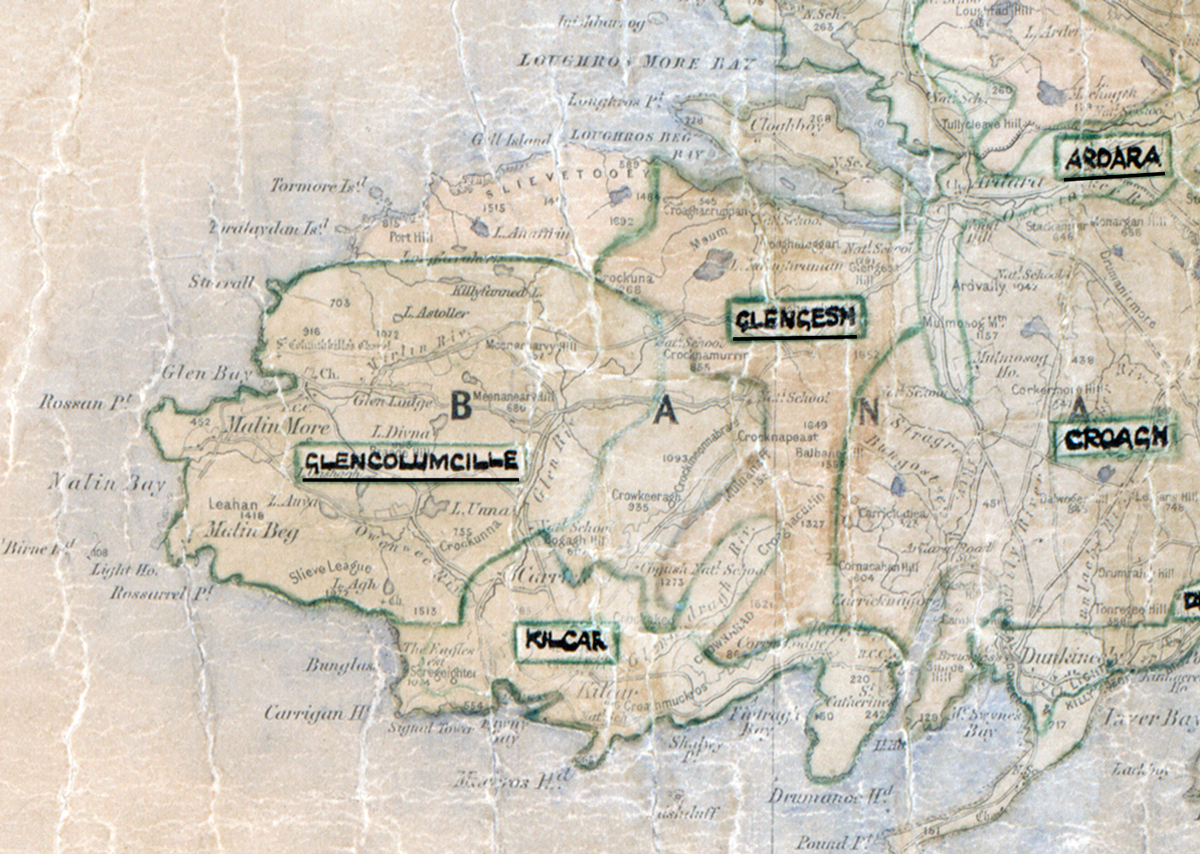
 Area: Glencolmcille
Started: June 1954
Finished: December 1954
Poles used: 880
Line used (km): 73
Premises connected: 200
The figures above were sourced from our REO News magazine, to learn more about what these figures mean, visit our interactive map. The map above shows the area boundary and is from a digitised version of the original map used during the scheme.
Emigration took its toll in Glencolmcille according to The REO News from March 1955.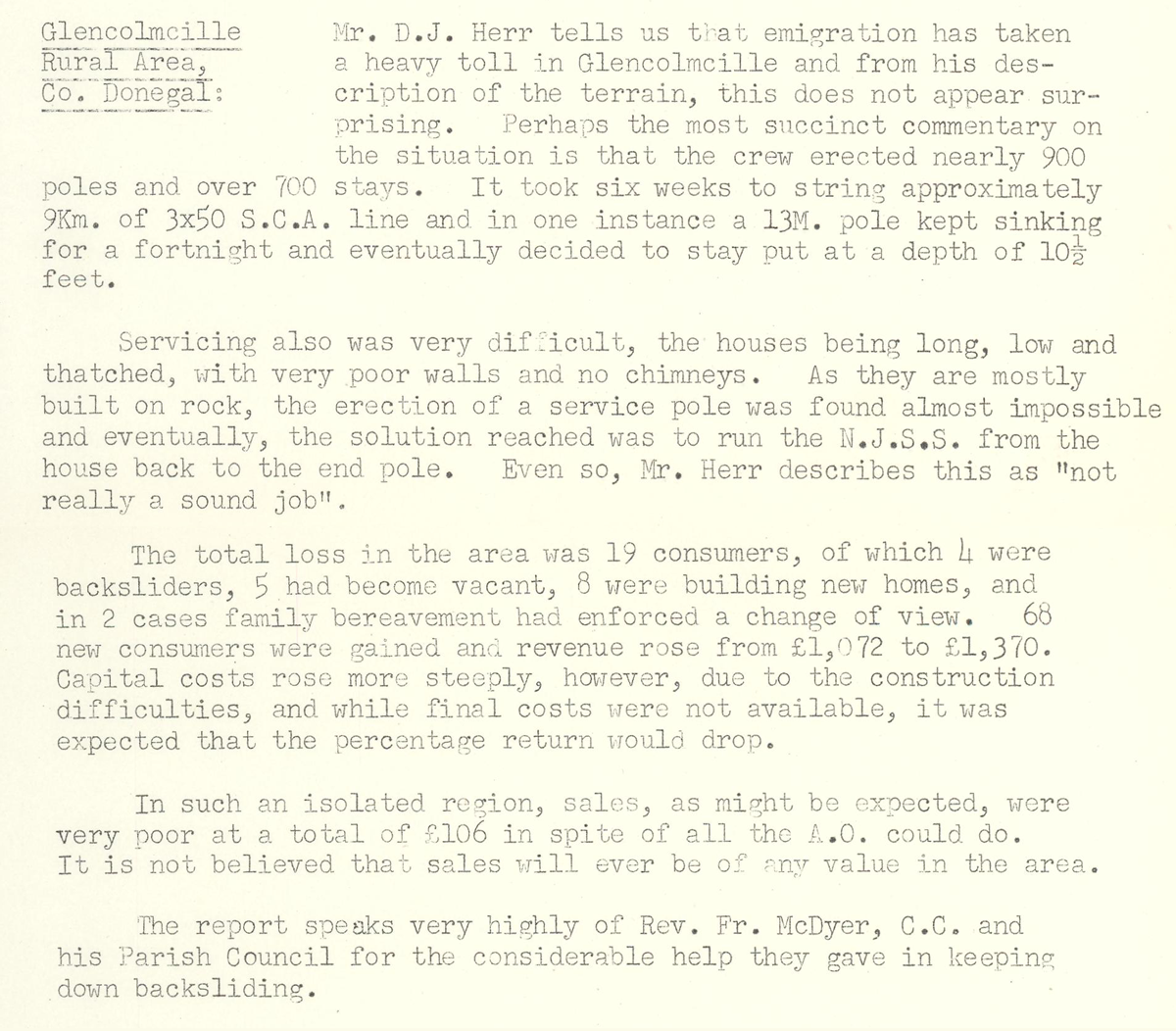 This digital scan from the REO News displays the following text:
"Glencolmcille Rural Area, Co. Donegal: Mr. D. J. Herr tells us that emigration has taken a heavy toll in Glencolmcille and from his description of the terrain, this does not appear surprising. Perhaps the most succinct commentary on the situation is that the crew erected nearly 900 poles and over 700 stays. It took six weeks to string approximately 9 km of 3×50 S.C.A. line and in one instance a 13 M. pole kept sinking for a fortnight and eventually decided to stay put at a depth of 10½ feet.
Servicing also was very difficult, the houses being long, low and thatched, with very poor walls and no chimneys. As they are mostly built on rock, the erection of a service pole was found almost impossible and eventually, the solution reached was to run the N.J.S.S. from the house back to the end pole. Even so, Mr. Herr describes this as “not really a sound job”.
The total loss in the area was 19 consumers, of which 4 were backsliders, 5 had become vacant, 8 were building new homes, and in 2 cases family bereavement had enforced a change of view. 68 new consumers were gained and revenue rose from £1,072 to £1,370. Capital costs rose more steeply, however, due to the construction difficulties, and while final costs were not available, it was expected that the percentage return would drop.
In such an isolated region, sales, as might be expected, were very poor at a total of £106 in spite of all the A.O. could do. It is not believed that sales will ever be of any value in the area.
The report speaks very highly of Rev. Fr. McDyer, C.C. and his Parish Council for the considerable help they gave in keeping down backsliding."