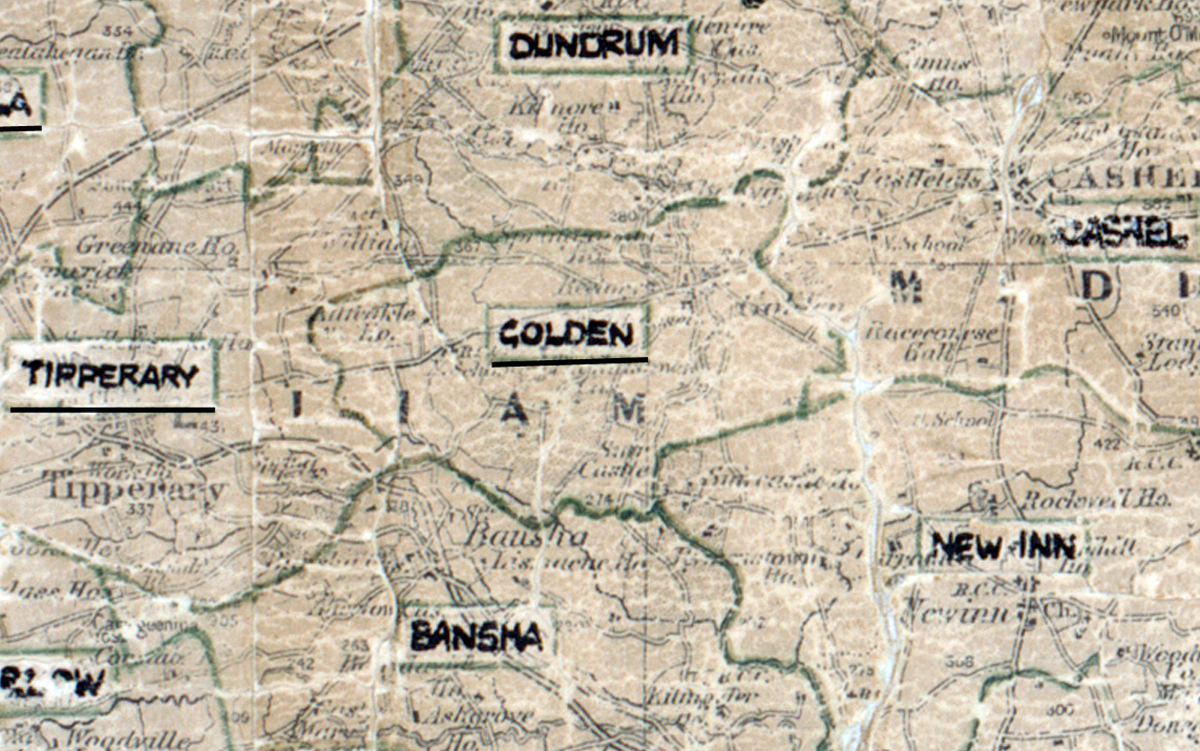
 Area: Golden
Started: August 1950
Finished: July 1951
Poles used: 687
Line used (km): 63
Premises connected: 144
The figures above were sourced from our REO News magazine, to learn more about what these figures mean, visit our interactive map. The map above shows the area boundary and is from a digitised version of the original map used during the scheme.
Survey
An initial survey was conducted in the Golden rural area in Co Tipperary circa May 1950, which covered 17.65 sq miles. The estimated cost of implementing the scheme was recorded as £15,040.00.
From a total of 295 houses, there were: 265 acceptances of the scheme; 19 refusals; 1 ‘doubtful’; and 10 recorded as vacant.
Running water comes to Golden
The vital role of
voluntary organisations in the success of the scheme, as well as the subsequent
roll out of water schemes across Ireland, is captured in the following report
printed in REO News in September 1949: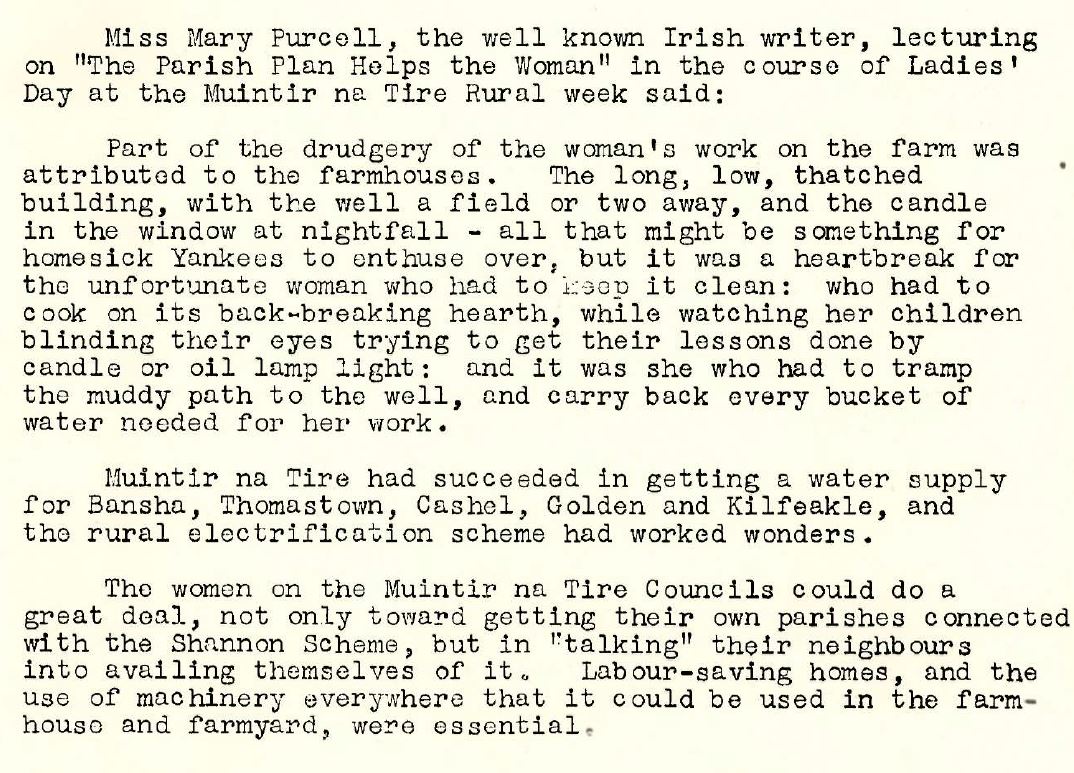 This digital scan from the REO News displays the following text:
"Miss Mary Purcell, the well known Irish writer, lecturing on “The Parish Plan Helps the Woman” in the course of Ladies’ Day at the Muintir na Tire Rural Week said:
Part of the drudgery of the woman’s work on the farm was attributed to the farmhouses. The long, low, thatched buildings, with the well a field or two away, and the candle in the window at nightfall — all that might be something for homesick Yankees to enthuse over, but it was a heartbreak for the unfortunate woman who had to keep it clean, who had to cook on its back‑breaking hearth, while watching her children blinding their eyes trying to get their lessons done by candle or oil lamp light; and it was she who had to tramp the muddy path to the well, and carry back every bucket of water needed for her work.
Muintir na Tire had succeeded in getting a water supply for Bansha, Thomastown, Cashel, Golden and Kilfeakle, and the rural electrification scheme had worked wonders.
The women on the Muintir na Tire Councils could do a great deal, not only towards getting their own parishes connected with the Shannon Scheme, but in “taking” their neighbours into availing themselves of it. Labour‑saving homes, and the use of machinery everywhere that it could be used in the farmhouse and farmyard, were essential."