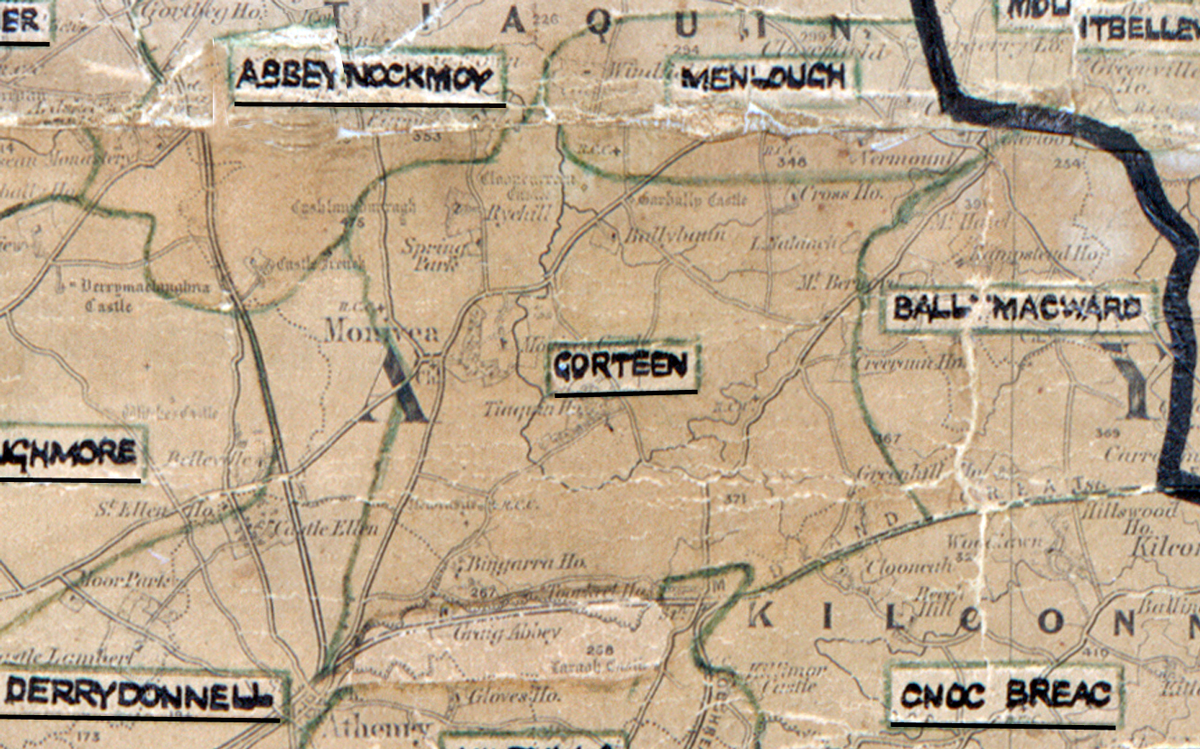
 Area: Gorteen
Started: December 1953
Finished: November 1954
Poles used: 1541
Line used (km): 138
Premises connected: 400
The figures above were sourced from our REO News magazine, to learn more about what these figures mean, visit our interactive map. The map above shows the area boundary and is from a digitised version of the original map used during the scheme.
The weather played an important part in Gorteen according to The REO News from January 1955.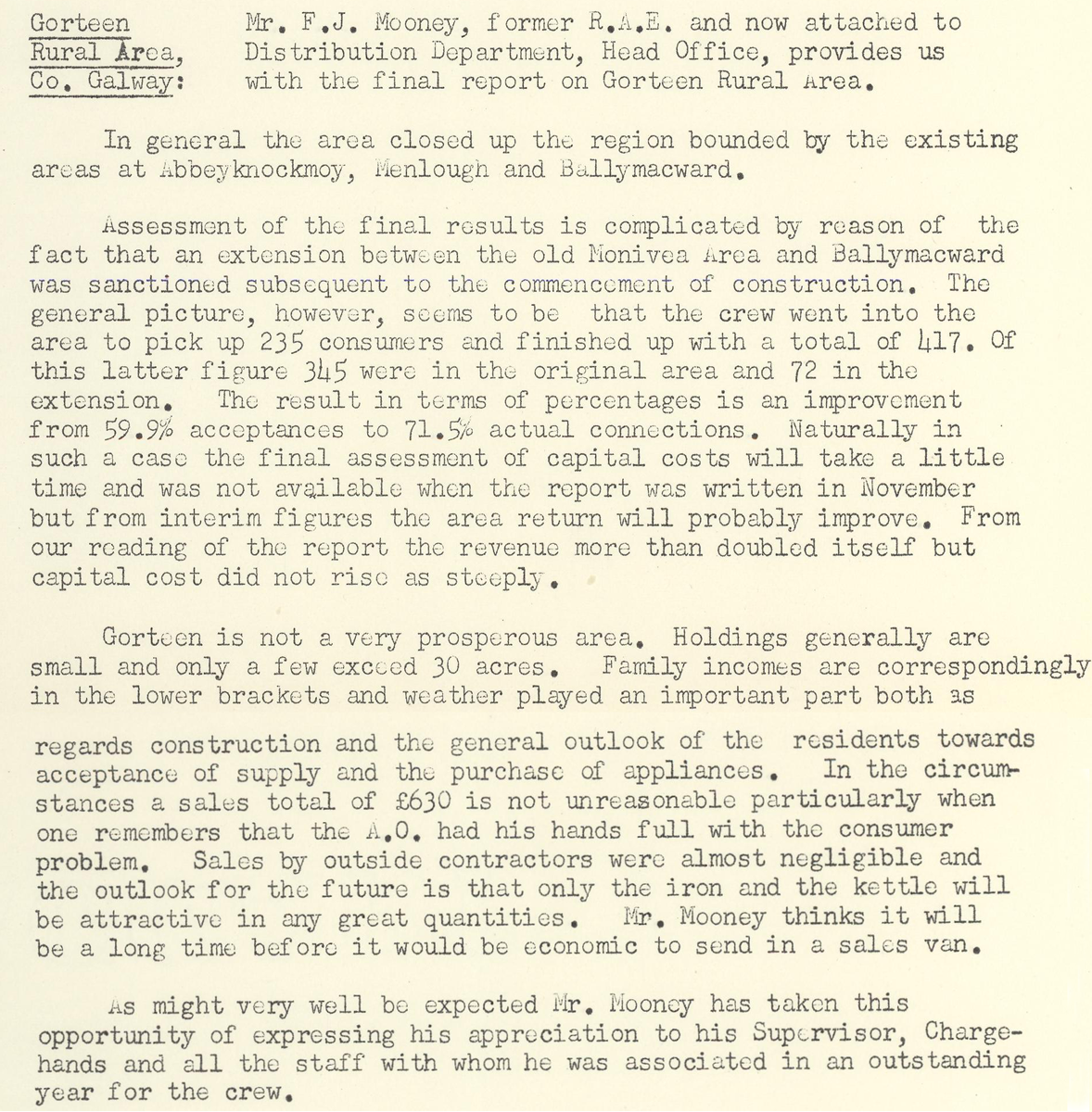
This digital scan from the REO News displays the following text:
"Gorteen Rural Area, Co. Galway: Mr. F. J. Mooney, former R.A.E. and now attached to Distribution Department, Head Office, provides us with the final report on Gorteen Rural Area.
In general the area closed up the region bounded by the existing areas at Abbeyknockmoy, Menlough and Ballymacward.
Assessment of the final results is complicated by reason of the fact that an extension between the old Menlough Area and Ballymacward was sanctioned subsequent to the commencement of construction. The general picture, however, seems to be that the crew went into the area to pick up 235 consumers and finished up with a total of 417. Of this latter figure 345 were in the original area and 72 in the extension. The result in terms of percentages is an improvement from 59.9% acceptances to 71.5% actual connections. Naturally in such a case the final assessment of capital costs will take a little time and was not available when the report was written in November but from interim figures the area return will probably improve. From our reading of the report the revenue more than doubled itself but capital costs did not rise as steeply.
Gorteen is not a very prosperous area. Holdings generally are small and only a few exceed 30 acres. Family incomes are correspondingly in the lower brackets and weather played an important part both as regards construction and the general outlook of the residents towards acceptance of supply and the purchase of appliances. In the circumstances a sales total of £630 is not unreasonable particularly when one remembers that the A.O. had his hands full with the consumer problem. Sales by outside contractors were almost negligible and the outlook for the future is that only the iron and the kettle will be purchased, as household quantities only. Mr. Mooney thinks it will be a long time before it would be considered economic to send in a sales van.
As might very well be expected Mr. Mooney has taken this opportunity of expressing his appreciation to his Supervisor, Charge‑hand and all the staff with whom he was associated in an outstanding year for the crew."