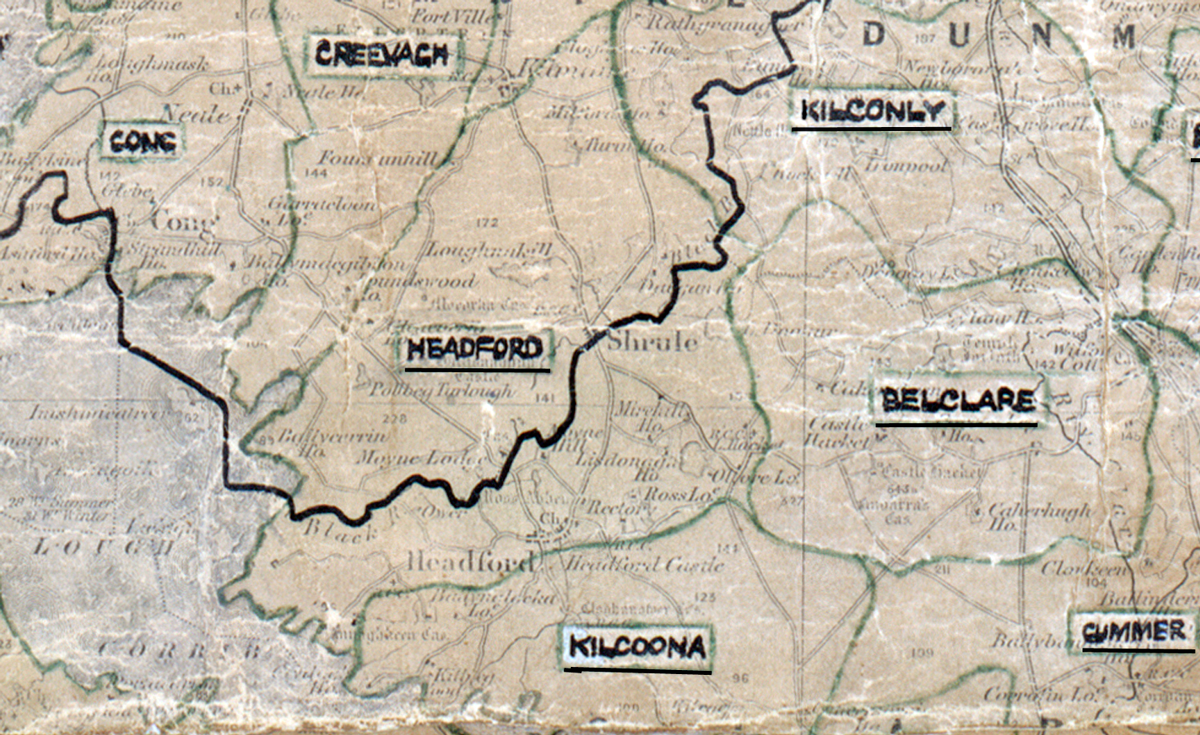
 Area: Headford
Started: August 1950
Finished: November 1951
Poles used: 1530
Line used (km): 140
Premises connected: 571
The figures above were sourced from our REO News magazine, to learn more about what these figures mean, visit our interactive map. The map above shows the area boundary and is from a digitised version of the original map used during the scheme.
Headford rural area extended into four parishes according to The REO News from February 1952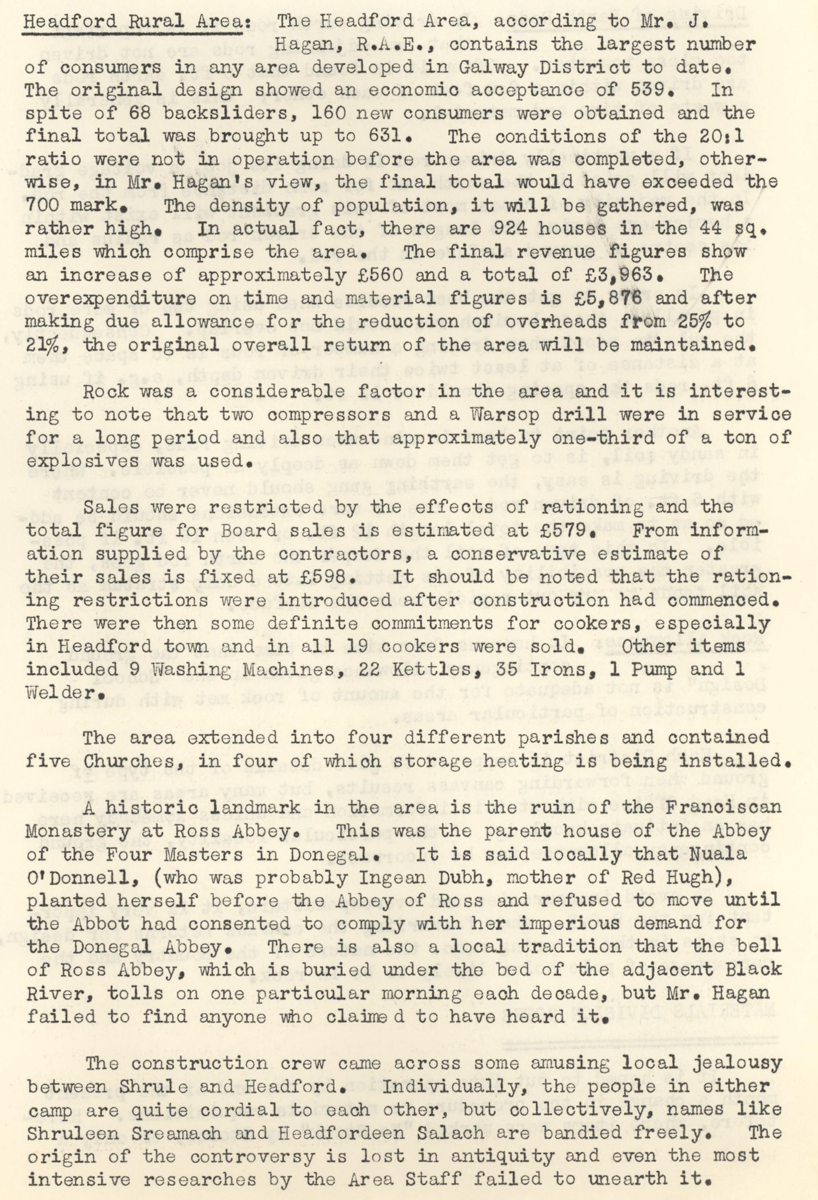 This digital scan from the REO News displays the following text:
"Headford Rural Area: The Headford Area, according to Mr. J. Hagan, R.A.E., contains the largest number of consumers in any area developed in Galway District to date. The original design showed economic acceptances of 539. In spite of 68 backsliders, 160 new consumers were obtained and the final total was brought up to 631. The conditions of the 20:1 ratio were not in operation before the area was constructed; otherwise, in Mr. Hagan’s view, the final total would have exceeded the 700 mark. The density of population in the area is rather high. In actual fact, there are 924 houses in the 44 sq. miles which comprise the group. The final revenue figure shows an increase of approximately £560 and a total of £3,963. The overspent figure on construction, in round figures, was £765 and making due allowance for the fixed charges, the revenue rose from 25% to 21½%. The original overall ratio of the area will be maintained.
Rock was a considerable factor in the area and it is interesting to note that two compressors and a Warsop drill were in service for a long period and that approximately one‑third of a ton of explosives was used.
Sales were restricted by the effects of rationing and the total figure for Board sales is estimated at £579. From information supplied by the contractors, a conservative estimate of their sales is fixed at £598. It should be noted that the rationing restrictions were introduced after construction had commenced. There were then some definite commitments for cookers, etc. In Headford town and in all 19 cookers were sold. Other items included 9 Washing Machines, 22 Kettles, 35 Irons, 1 Pump and 1 Welder.
The area extended into four different parishes and contained five Churches, in four of which storage heating is being installed.
A historic landmark in the area is the ruin of the Franciscan Monastery at Ross Abbey. This was the parent house of the Abbey of the Four Masters in Donegal. It is said locally that Nuala O’Donnell, who was probably Ineen Dubh, daughter of the last chieftain to inhabit the Abbey of Ross, had refused to move until threatened by the head of O’Reilly’s dead son, then abbot of the Donegal Abbey. There is also a local tradition that the Abbot Black was so anxious to prove the identity of the skull that he was prepared to kill one of the monks to match it with the head.
The construction crew came across some amusing local jealousy between an outlying townland and the main area. Apparently the local camp are quite certain that the townland is being neglected, while the men know that it is not. There is also the usual rivalry, names like "Tivoli" and "Valley of Content," but may be the most interesting references by the area staff related to unearth it."