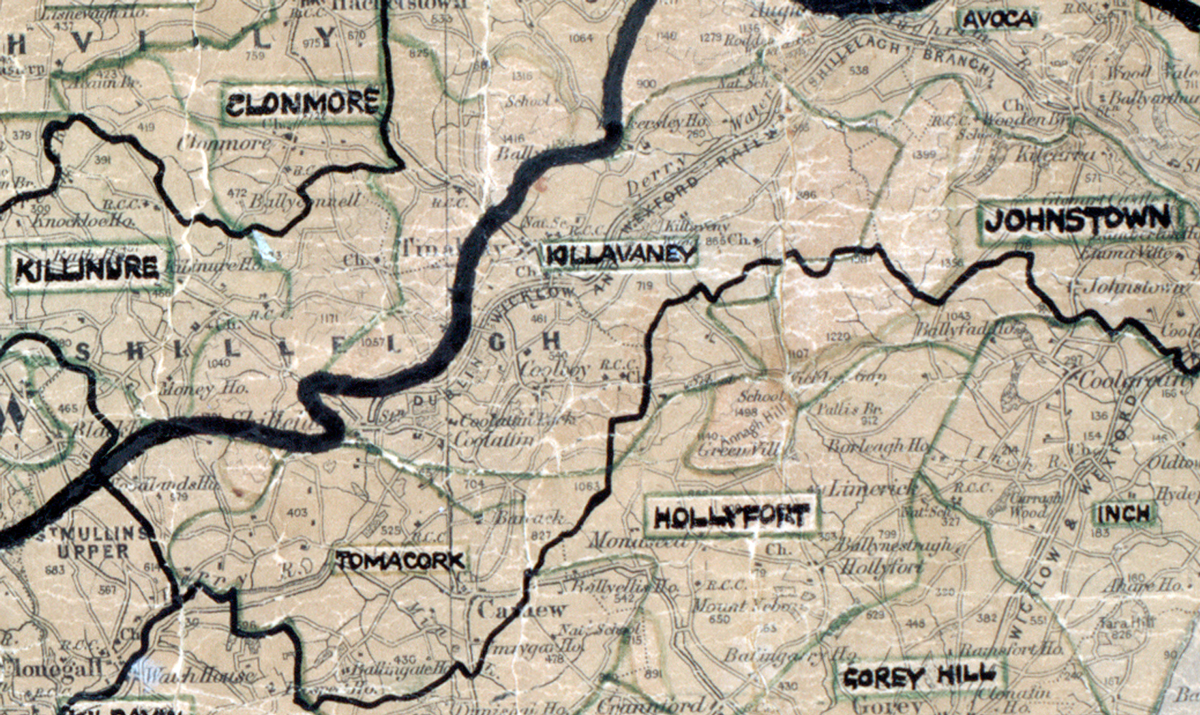
 Area: Killavaney
Started: June 1954
Finished: March 1955
Poles used: 1134
Line used (km): 99
Premises connected: 340
The figures above were sourced from our REO News magazine, to learn more about what these figures mean, visit our interactive map. The map above shows the area boundary and is from a digitised version of the original map used during the scheme.
The REO News from April 1955 mentions how picturesque Killavaney is.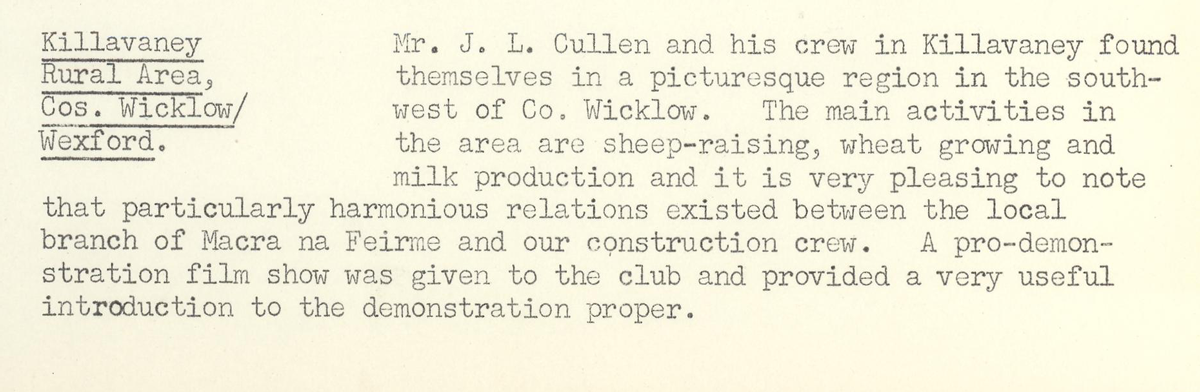 This digital scan from the REO News displays the following text:
"Killavaney Rural Area, Cos. Wicklow / Wexford.
Mr. J. L. Cullen and his crew in Killavaney found themselves in a picturesque region in the south‑west of Co. Wicklow. The main activities in the area are sheep‑raising, wheat growing and milk production and it is very pleasing to note that particularly harmonious relations existed between the local branch of Macra na Feirme and our construction crew. A pro‑demonstration film show was given to the club and provided a very useful introduction to the demonstration proper."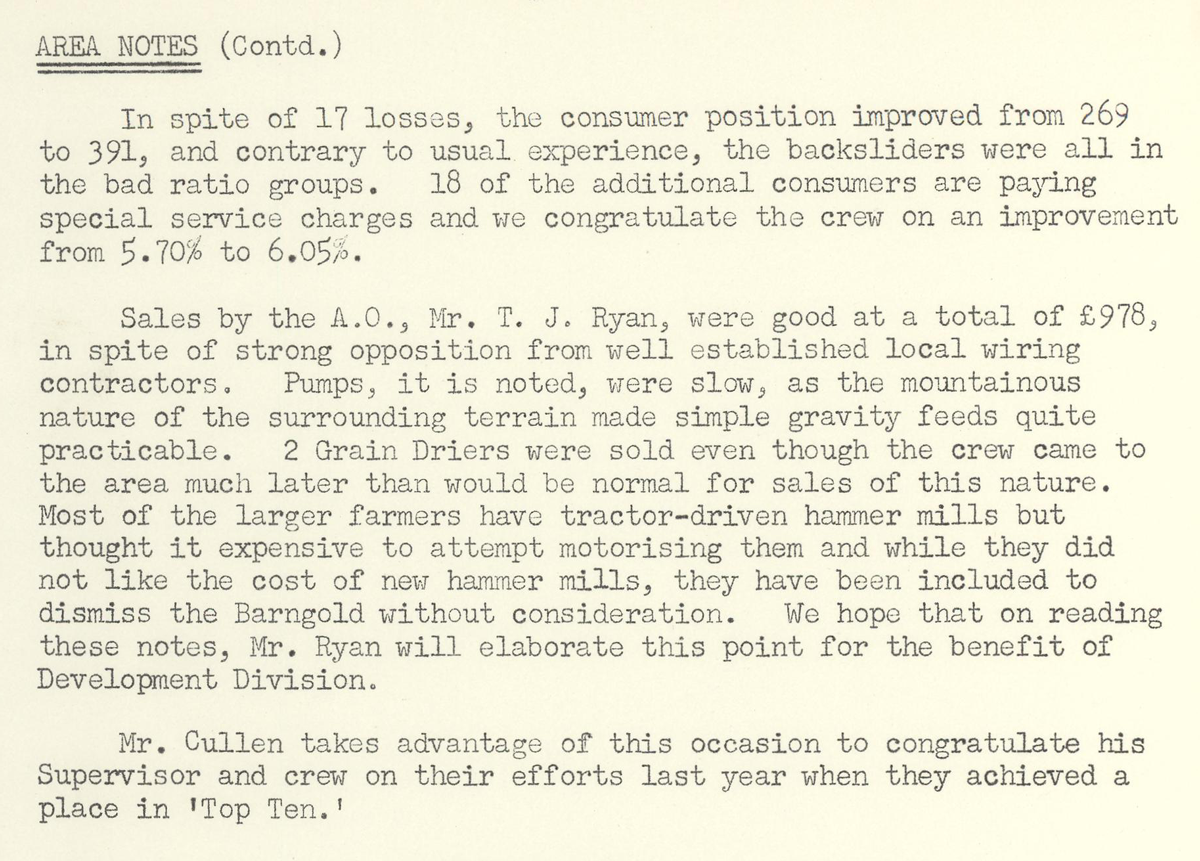 This digital scan from the REO News displays the following text:
"AREA NOTES (Contd.)
In spite of 17 losses, the consumer position improved from 269 to 391, and contrary to usual experience, the backsliders were all in the bad ratio groups. 18 of the additional consumers are paying special service charges and we congratulate the crew on an improvement from 5.70% to 6.05%.
Sales by the A.O., Mr. T. J. Ryan, were good at a total of £978, in spite of strong opposition from well established local wiring contractors. Pumps, it is noted, were slow, as the mountainous nature of the surrounding terrain made simple gravity feeds quite practicable. 2 Grain Driers were sold even though the crew came to the area much later than would be normal for sales of this nature. Most of the larger farmers have tractor-driven hammer mills but thought it expensive to attempt motorising them and while they did not like the cost of new hammer mills, they have been included to dismiss the Barngold without consideration. We hope that on reading these notes, Mr. Ryan will elaborate this point for the benefit of Development Division.
Mr. Cullen takes advantage of this occasion to congratulate his Supervisor and crew on their efforts last year when they achieved a place in ‘Top Ten’."