Area: Killygordon
Started: October 1952
Finished: April 1954
Poles used: 1172
Line used (km): 111
Premises connected: 436
The figures above were sourced from our REO News magazine, to learn more about what these
figures mean, visit our interactive map.
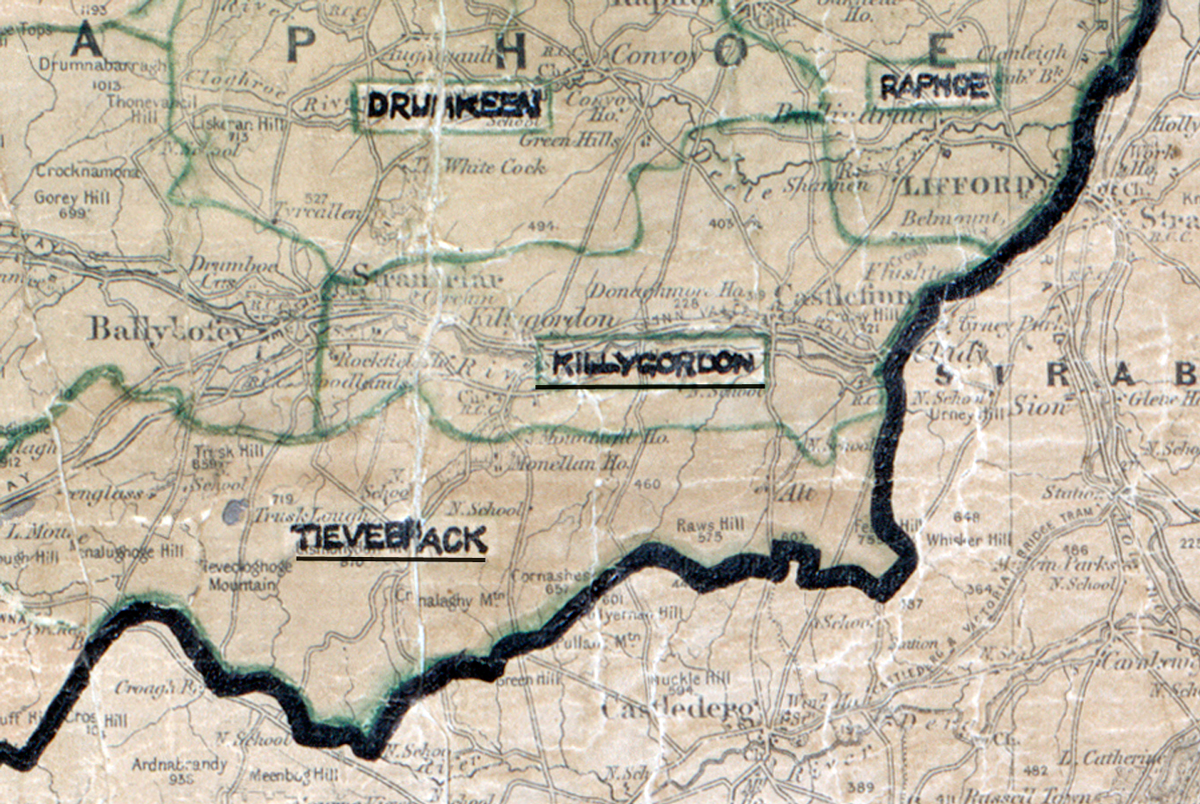
The map above shows the area boundary and is from a digitised
version of the original
map used during
the scheme.The REO News from July 1954 tells us that construction work was straightforward in Killygordon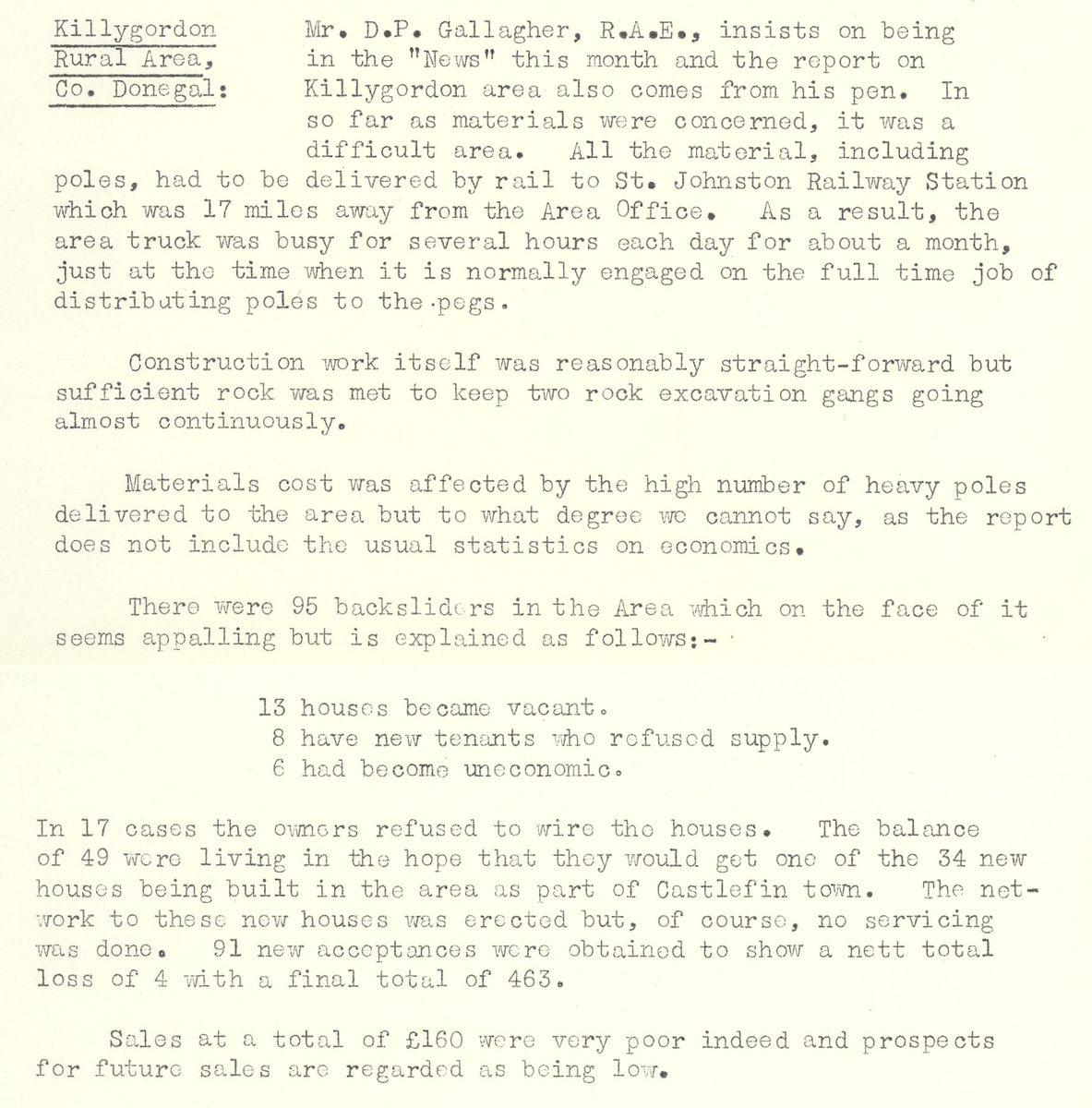 This digital scan from the REO News displays the following text:"Killygordon Rural Area, Co. Donegal:Mr. D.P. Gallagher, R.A.E., insists on being in the “News” this month and the report on Killygordon area also comes from his pen. In so far as materials were concerned, it was a difficult area. All the material, including poles, had to be delivered by rail to St. Johnston Railway Station which was 17 miles away from the Area Office. As a result, the area truck was busy for several hours each day for about a month, just at the time when it is normally engaged on the full‑time job of distributing poles to the pegs.Construction work itself was reasonably straight‑forward but sufficient rock was met to keep two rock excavation gangs going almost continuously.Materials cost was affected by the high number of heavy poles delivered to the area but to what degree we cannot say, as the report does not include the usual statistics on economics.
There were 95 backsliders in the Area which on the face of it seems appalling but is explained as follows:—13 houses became vacant.8 had new tenants who refused supply.6 had become uneconomic.In 17 cases the owners refused to wire the houses. The balance of 49 were living in the hope that they would get one of the 34 new houses being built in the area as part of Castlefin town. The network to these new houses was erected but, of course, no servicing was done. 91 new acceptances were obtained to show a nett total loss of 4 with a final total of 463.Sales at a total of £160 were very poor indeed and prospects for future sales are regarded as being low."