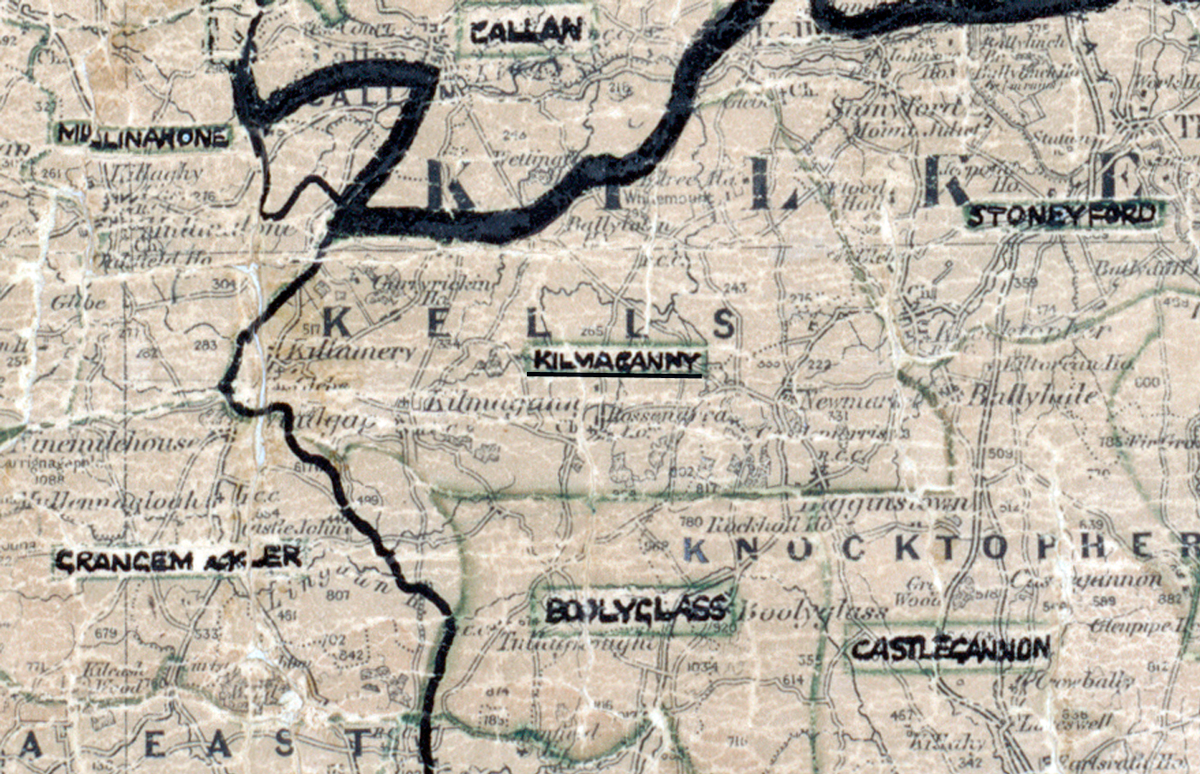
 Area: Kilmoganny
Started: May 1953
Finished: January 1954
Poles used: 1258
Line used (km): 115
Premises connected: 325
The figures above were sourced from our REO News magazine, to learn more about what these figures mean, visit our interactive map. The map above shows the area boundary and is from a digitised version of the original map used during the scheme.
The outside light was very popular in Kilmoganny according to The REO News from February 1954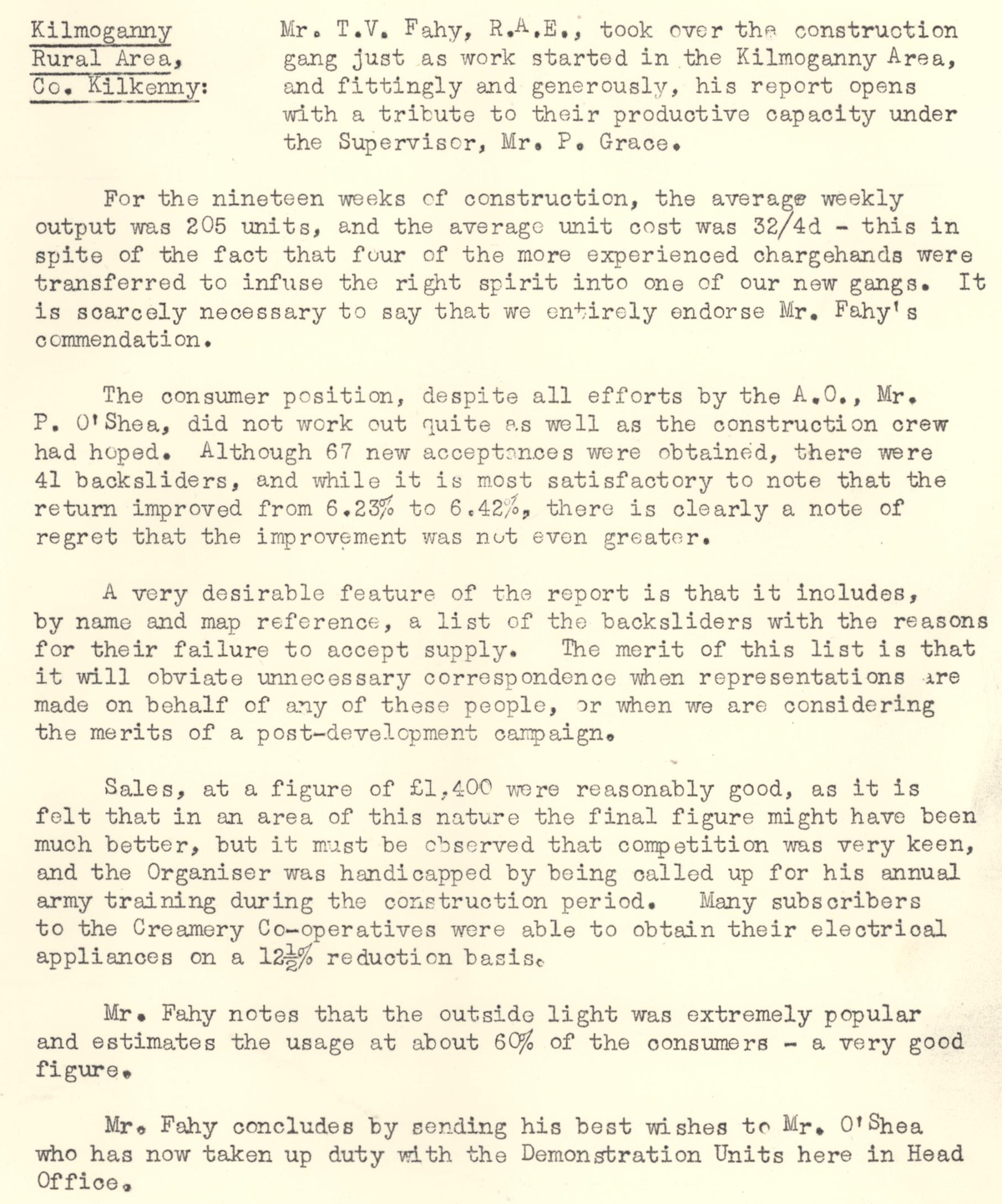 This digital scan from the REO News displays the following text:
"Kilmaganny Rural Area, Co. Kilkenny:
Mr. T. V. Fahy, R.A.E., took over the construction gang just as work started in the Kilmaganny Area, and fittingly and generously, his report opens with a tribute to their productive capacity under the Supervision of Mr. P. Grace.
For the nineteen weeks of construction, the average weekly output was 205 units, and the average unit cost was 32/4d. This in spite of the fact that four of the more experienced chargehands were transferred to infuse the right spirit into one of our new gangs. It is scarcely necessary to say that we entirely endorse Mr. Fahy’s commendation.
The consumer position, despite all efforts by the A.O., Mr. P. O’Shea, did not work out quite as well as the construction crew had hoped. Although 67 new acceptances were obtained, there were 41 backsliders, and while it is most satisfactory to note that the return improved from 6.23% to 6.42%, there is clearly a note of regret that the improvement was not even greater.
A very desirable feature of the report is that it includes, by name and reference, a list of the backsliders with the reasons for their failure to accept supply. The merit of this list is that it will obviate unnecessary correspondence when representations are made on behalf of any of these people, or when we are considering the merits of a post‑development campaign.
Sales, at a figure of £1,400, were reasonably good, as it is felt that in an area of this nature the final figure might have been much better, but it must be observed that competition was very keen, and the Organiser was handicapped by being called up for his annual army training during the construction period. Many subscribers to the Creamery Co‑operatives were able to obtain their electrical appliances on a 12½% reduction basis.
Mr. Fahy notes that the outside light was extremely popular and estimates the usage at about 60% of the consumers — a very good figure.
Mr. Fahy concludes by extending his best wishes to Mr. O’Shea who has now taken up duty with the Demonstration Units here in Head Office."