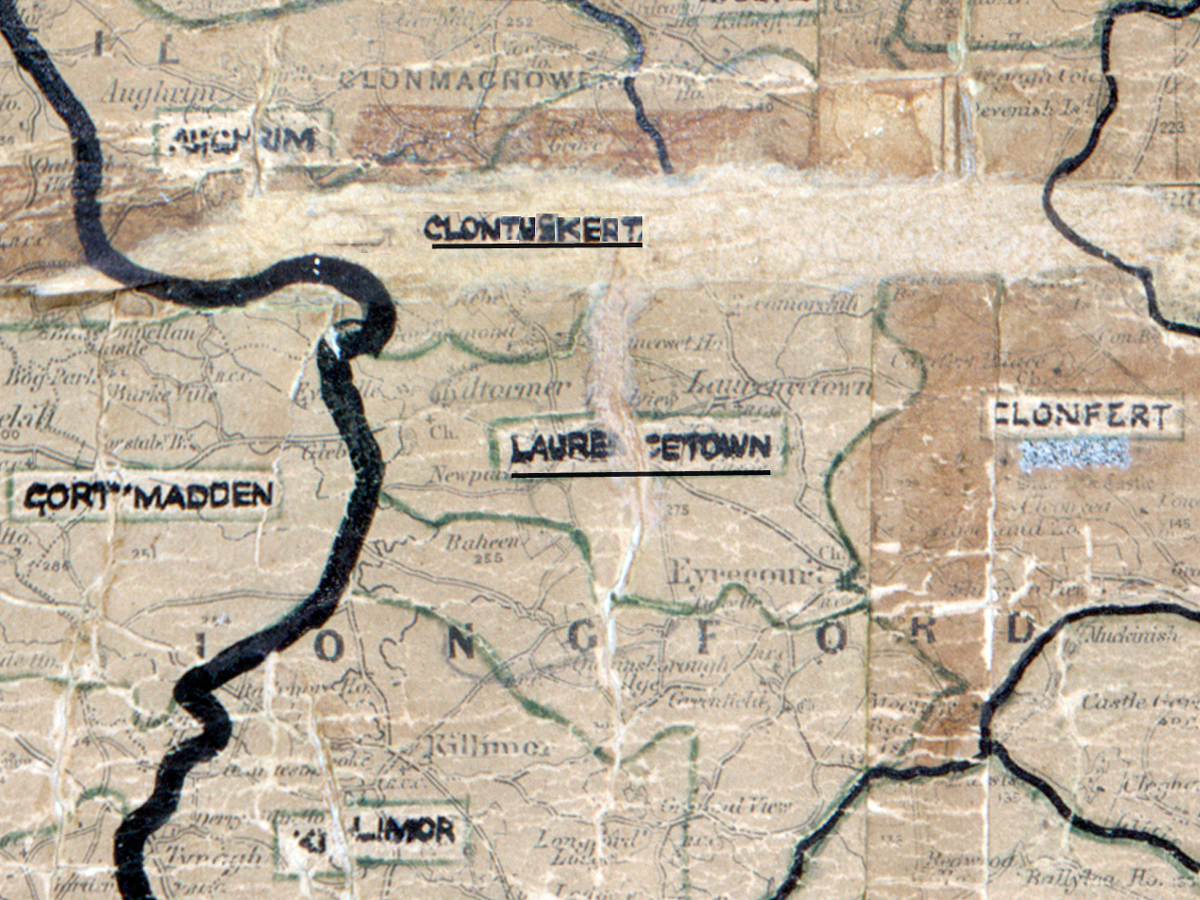
 Area: Laurencetown
Started: December 1950
Finished: July 1951
Poles used: 850
Line used (km): 81
Premises connected: 193
The figures above were sourced from our REO News magazine, to learn more about what these figures mean, visit our interactive map. The map above shows the area boundary and is from a digitised version of the original map used during the scheme.
Sales were poor in Laurencetown according to The REO News from September 1951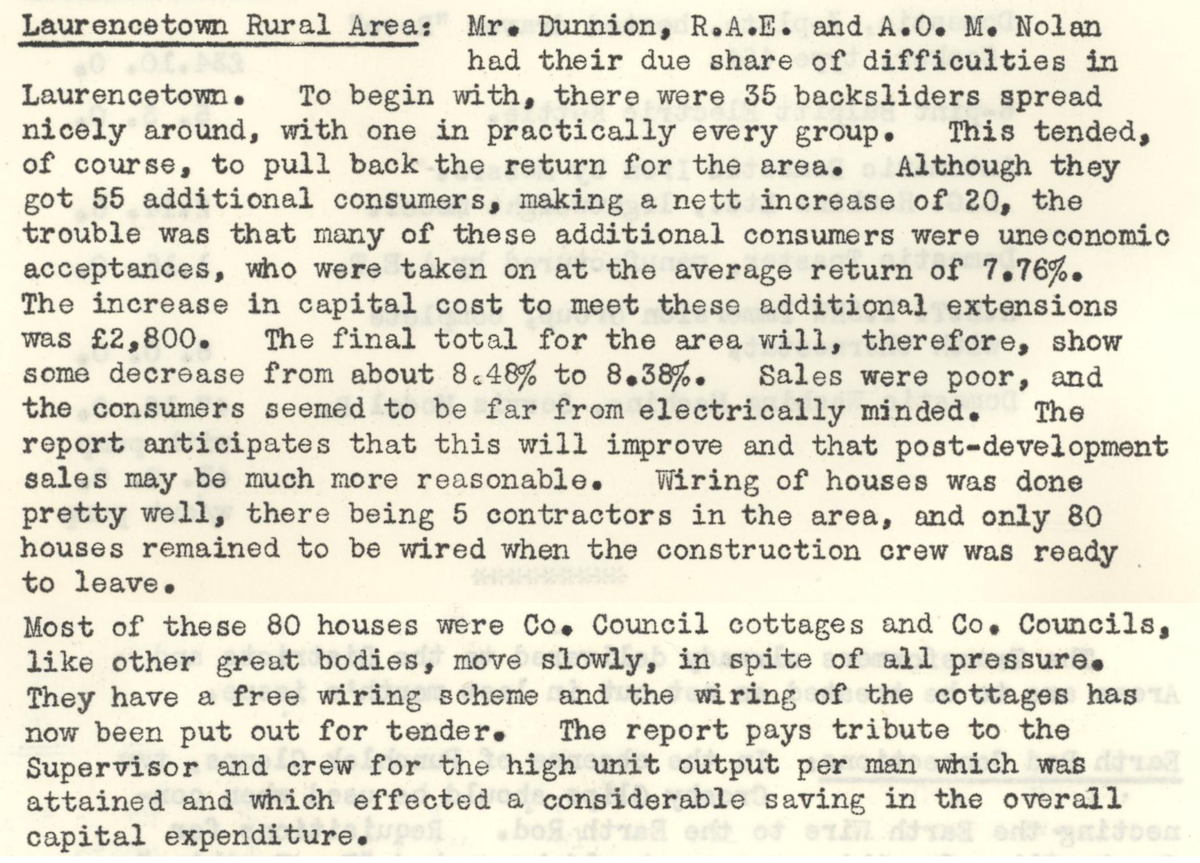 This digital scan from the REO News displays the following text:
"Laurencetown Rural Area:
Mr. Dunnion, R.A.E. and A.O. M. Nolan had their due share of difficulties in Laurencetown. To begin with, there were 35 backsliders spread nicely around, with one in practically every group. This tended, of course, to pull back the return for the area. Although they got 55 additional consumers, making a nett increase of 20, the trouble was that many of these additional consumers were uneconomic acceptances, who were taken on at the average return of 7.76%. The increase in capital cost to meet these additional extensions was £2,800. The final total for the area will, therefore, show some decrease from about 8.48% to 8.38%. Sales were poor, and the consumers seemed to be far from electrically minded. The report anticipates that this will improve and that post‑development sales may be much more reasonable. Wiring of houses was done pretty well, there being 5 contractors in the area, and only 80 houses remained to be wired when the construction crew was ready to leave.
Most of these 80 houses were Co. Council cottages and Co. Councils, like other great bodies, move slowly, in spite of all pressure. They have a free wiring scheme and the wiring of the cottages has now been put out for tender. The report pays tribute to the Supervisor and crew for the high unit output per man which was attained and which effected a considerable saving in the overall capital expenditure."