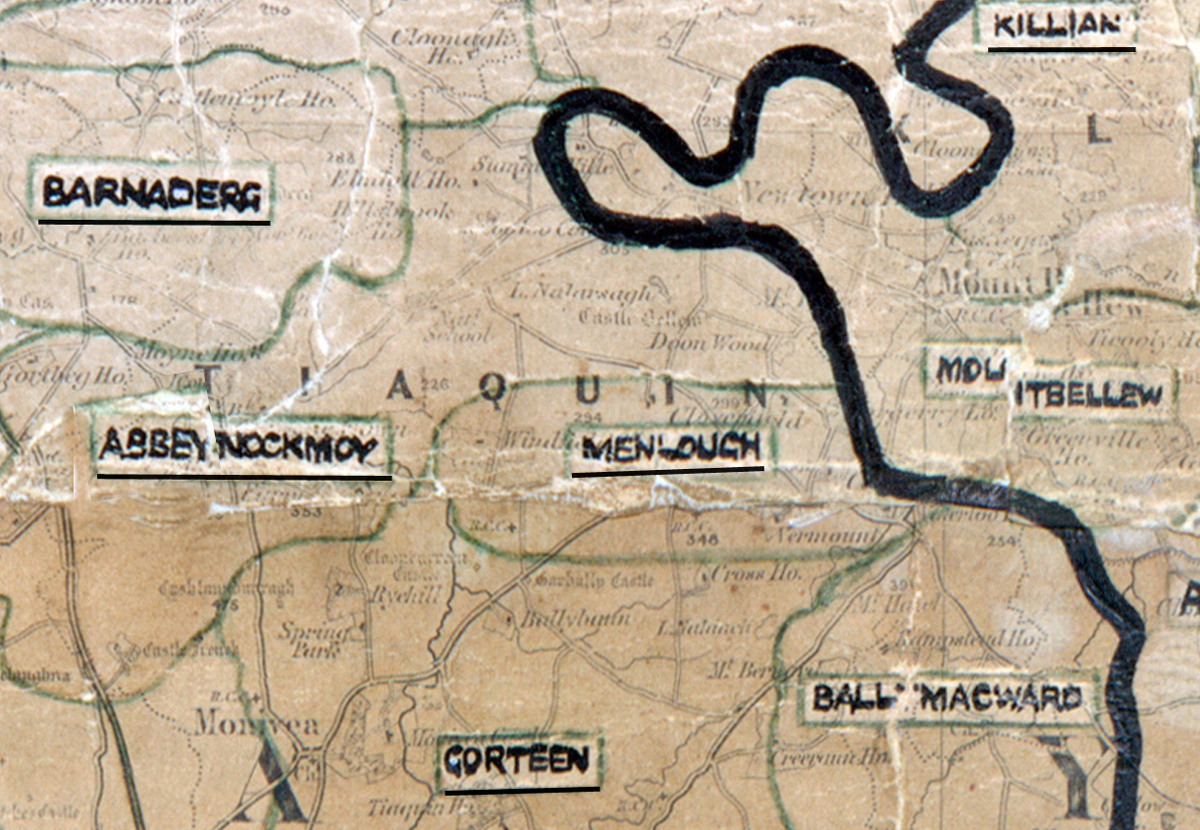
 Area: Menlough
Started: March 1953
Finished: August 1953
Poles used: 879
Line used (km): 74
Premises connected: 200
The figures above were sourced from our REO News magazine, to learn more about what these figures mean, visit our interactive map. The map above shows the area boundary and is from a digitised version of the original map used during the scheme.
The REO News from October 1953 reports that Menlough was a very happy area
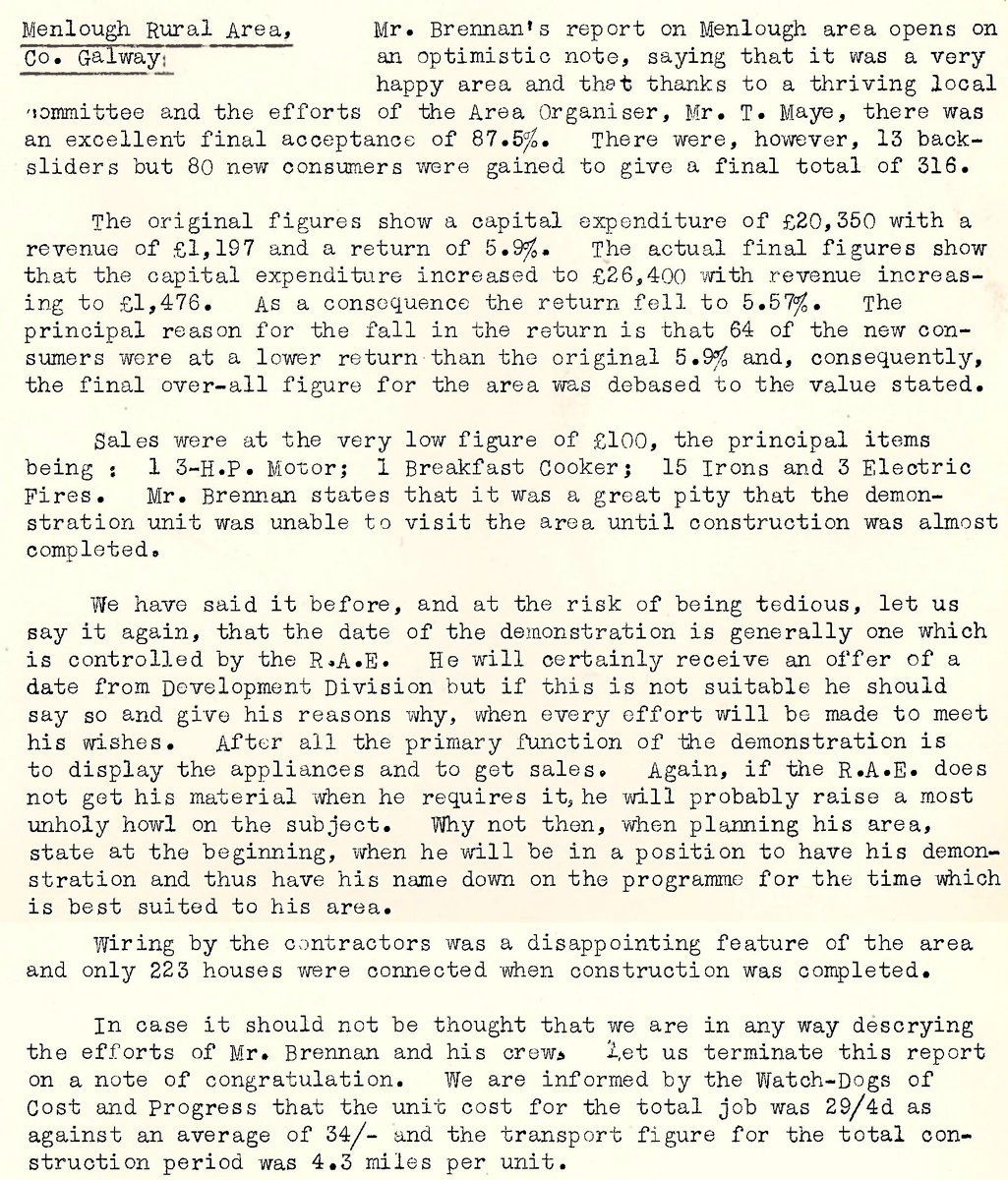 This digital scan from the REO News displays the following text:
"Menlough Rural Area, Co. Galway:
Mr. Brennan’s report on Menlough area opens on an optimistic note, saying that it was a very happy area and that thanks to a thrifty local committee and the efforts of the Area Organiser, Mr. T. Hayes, there was an excellent final acceptance of 87.5%. There were, however, 13 backsliders but 80 new consumers were gained to give a final total of 316.
The original figures show a capital expenditure of £20,350 with a revenue of £1,197 and a return of 5.9%. The actual final figures show the capital expenditure increased to £26,400 with revenue increasing to £1,476. As a consequence the return fell to 5.5%. The principal reason for the fall in the return is that 64 of the new consumers were at a lower return than the original 5.9% and, consequently, the final overall figure for the area was debased to the value stated.
Sales were at the very low figure of £100, the principal items being 1 3‑H.P. Motor; 1 Breakfast Cooker; 15 Irons and 3 Electric Fires. Mr. Brennan states that it was a great pity that the demonstration unit was unable to visit the area until construction was almost completed.
We have said it before, and at the risk of being tedious, let us say it again, that the date of the demonstration is generally one which is controlled by the R.A.E. He will certainly receive an offer of a date from Development Division but if this is not suitable he should say so and give his reasons why, when every effort will be made to meet his wishes. After all the primary function of the demonstration is to display the appliances and to get sales. Again, if the R.A.E. does not get his material when he requires it, he will probably raise a most unholy howl on the subject. Why not then, when planning his area, state at the beginning, when he will be in a position to have his demonstration and thus have his name down on the programme for the time which is best suited to his area.
Wiring by the contractors was a disappointing feature of the area and only 223 houses were connected when construction was completed.
In case it should not be thought that we are in any way destroying the efforts of Mr. Brennan and his crew, let us terminate this report on a note of congratulation. We are informed by the Watch‑Dogs of Cost and Progress that the unit cost for the total job was 29/4d as against an average of 34/‑ and the transport figure for the total construction period was 4.3 miles per unit."