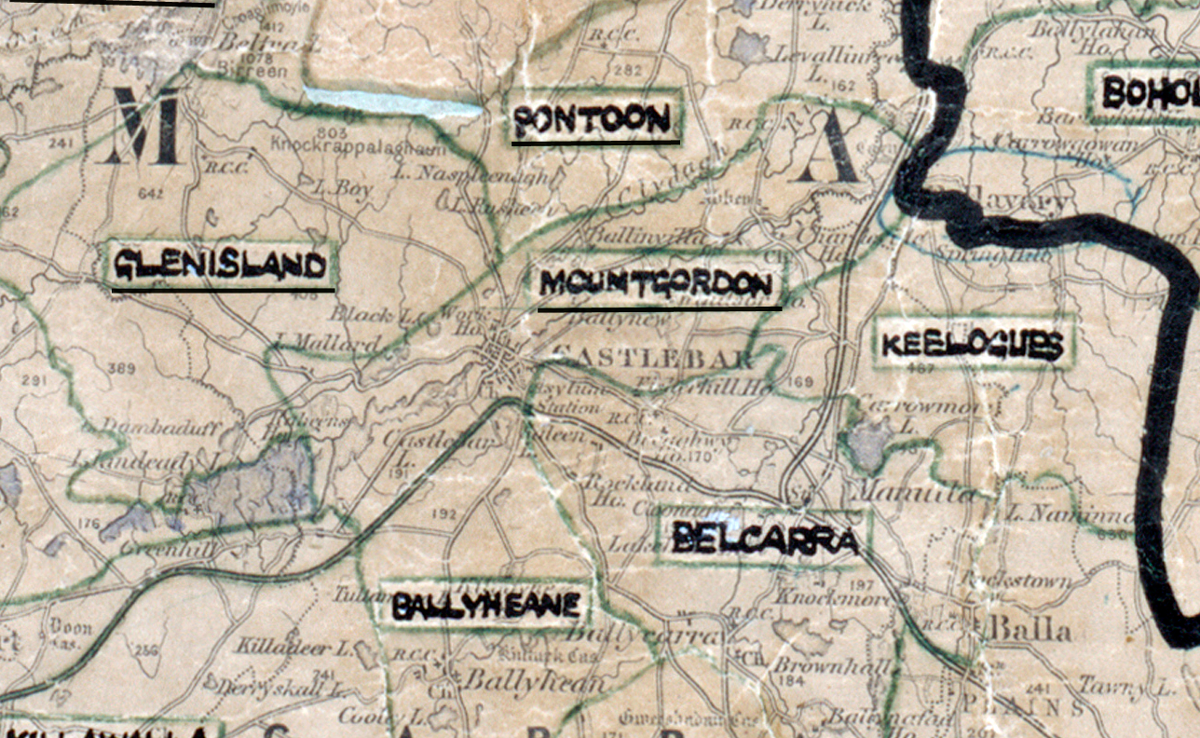
 Area: Mountgordon
Started: October 1952
Finished: April 1953
Poles used: 745
Line used (km): 62
Premises connected: 247
The figures above were sourced from our REO News magazine, to learn more about what these figures mean, visit our interactive map. The map above shows the area boundary and is from a digitised version of the original map used during the scheme.
The switch on ceremony in Mountgordon was filmed according to The REO News from June 1953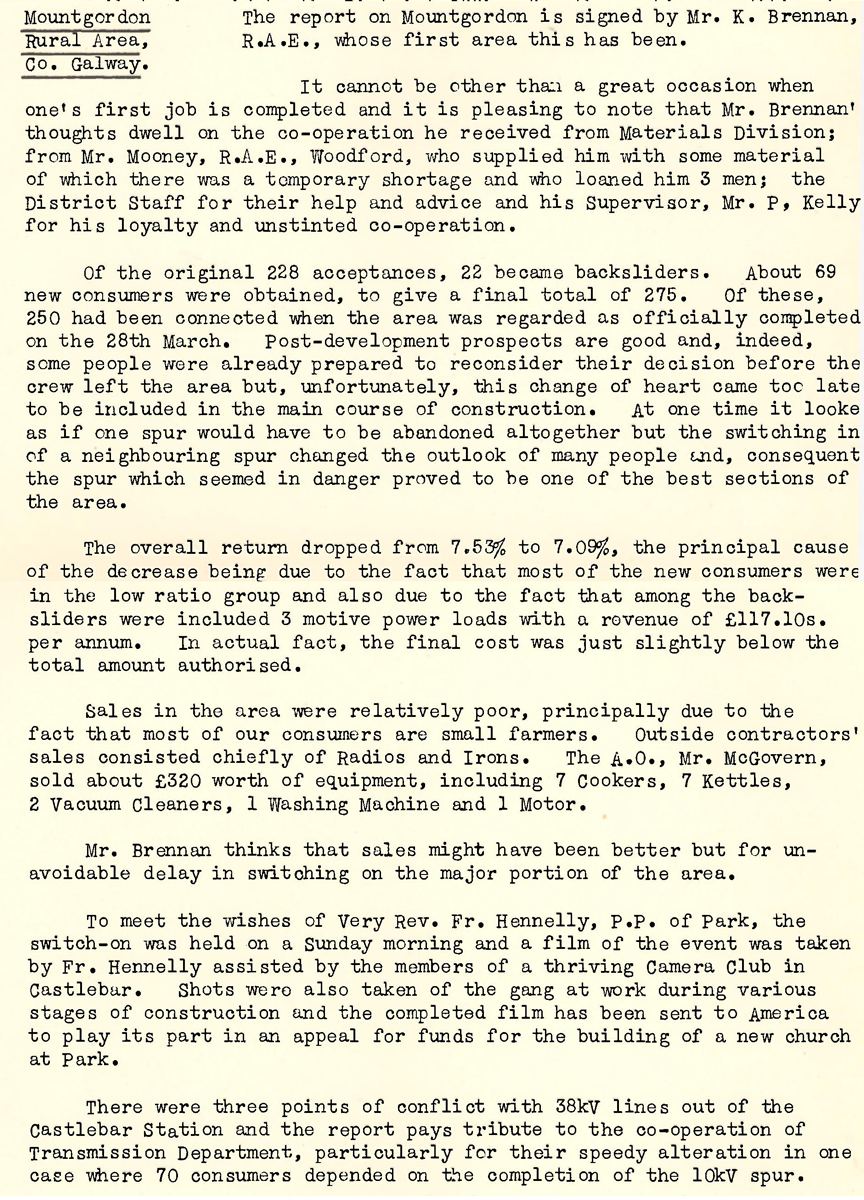 This digital scan from the REO News displays the following text:
"Mountgordon Rural Area, Co. Galway:
The report on Mountgordon is signed by Mr. K. Brennan, R.A.E., whose first area this has been.
It cannot be other than a great occasion when one’s first job is completed and it is pleasing to note that Mr. Brennan dwells well on the co‑operation he received from Materials Division; from Mr. Mooney, R.A.E., Woodford, who supplied him with some material of which there was a temporary shortage and who loaned him 3 men; the District Staff for their help and advice and his Supervisor, Mr. P. Kelly for his loyalty and unstinted co‑operation.
Of the original 228 acceptances, 22 became backsliders. About 69 new consumers were obtained to give a final total of 275. Of these, 250 had been connected when the area was regarded as officially completed on the 28th March. Post‑development prospects are good and, indeed, some people were already prepared to reconsider their decision before the crew left the area, unfortunately, this change of heart came too late to be included in the main course of construction. At one time it looked as if one spur would have to be abandoned altogether but switching in of a neighbouring spur changed the outlook of many people and, consequent upon the spur which seemed in danger proved to be one of the best sections of the area.
The overall return dropped from 7.55% to 7.09%, the principal cause of the decrease being due to the fact that most of the new consumers were of the low ratio group and also due to the fact that among the backsliders were included 3 motive power loads with a revenue of £117‑10s. per annum. In actual fact, the final cost was just slightly below the total amount authorised.
Sales in the area were relatively poor, principally due to the fact that most of our consumers are small farmers. Outside contractors’ sales consisted chiefly of Radios and Irons. The A.O., Mr. McGowan, sold about £320 worth of equipment, including 7 Cookers, 7 Kettles, 2 Vacuum Cleaners, 1 Washing Machine and 1 Motor.
Mr. Brennan thinks that sales might have been better but for unavoidable delay in switching on the major portion of the area.
To meet the wishes of Very Rev. Fr. Hennelly, P.P. of Park, the switch‑on was held on a Sunday morning and a film of the event was taken by Fr. Hennelly assisted by the members of a thriving Camera Club in Castlebar. Shots were also taken of the gang at work during various stages of construction and the completed film has been sent to America to play its part in an appeal for funds for the building of a new church at Park.
There were three points of conflict with 38kV lines out of the Castlebar Station and the report pays tribute to the co‑operation of Transmission Department, particularly for der speedy alteration in one case where 70 consumers depended on the completion of the 10kV spur."