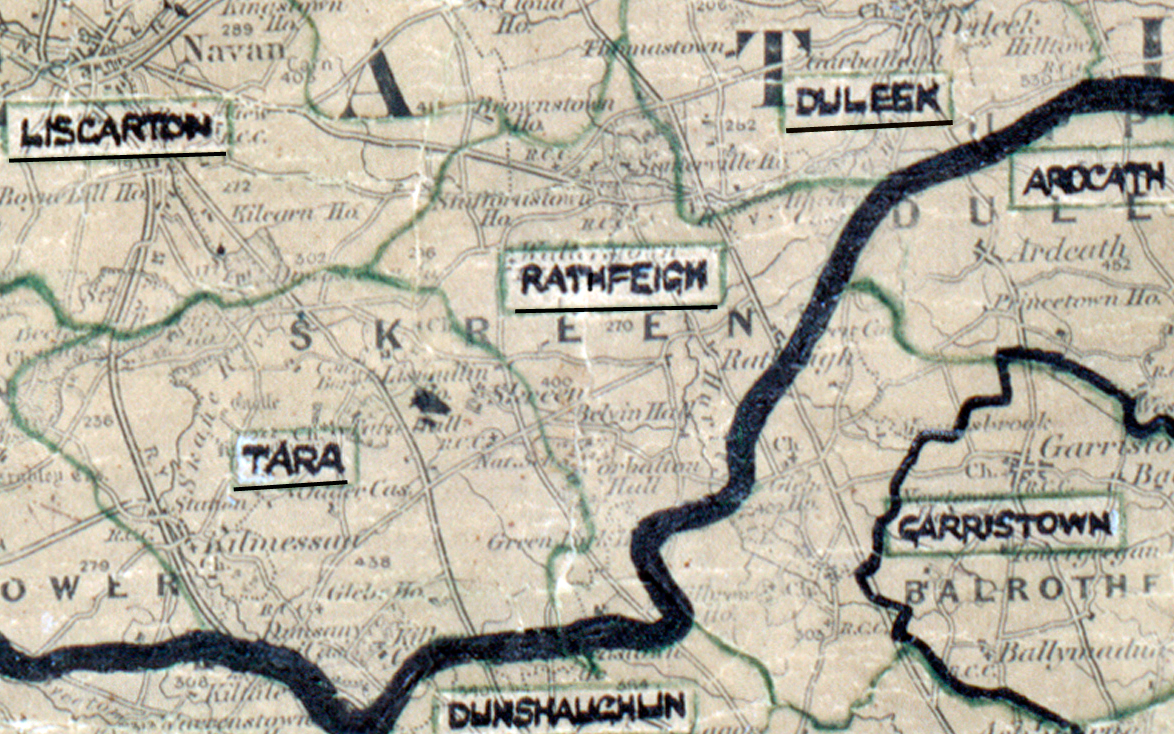
 Area: Rathfeigh
Started: August 1953
Finished: March 1954
Poles used: 743
Line used (km): 74
Premises connected: 88
The figures above were sourced from our REO News magazine, to learn more about what these figures mean, visit our interactive map. The map above shows the area boundary and is from a digitised version of the original map used during the scheme.
Rathfeigh was a dairying area according to The REO News from March 1954.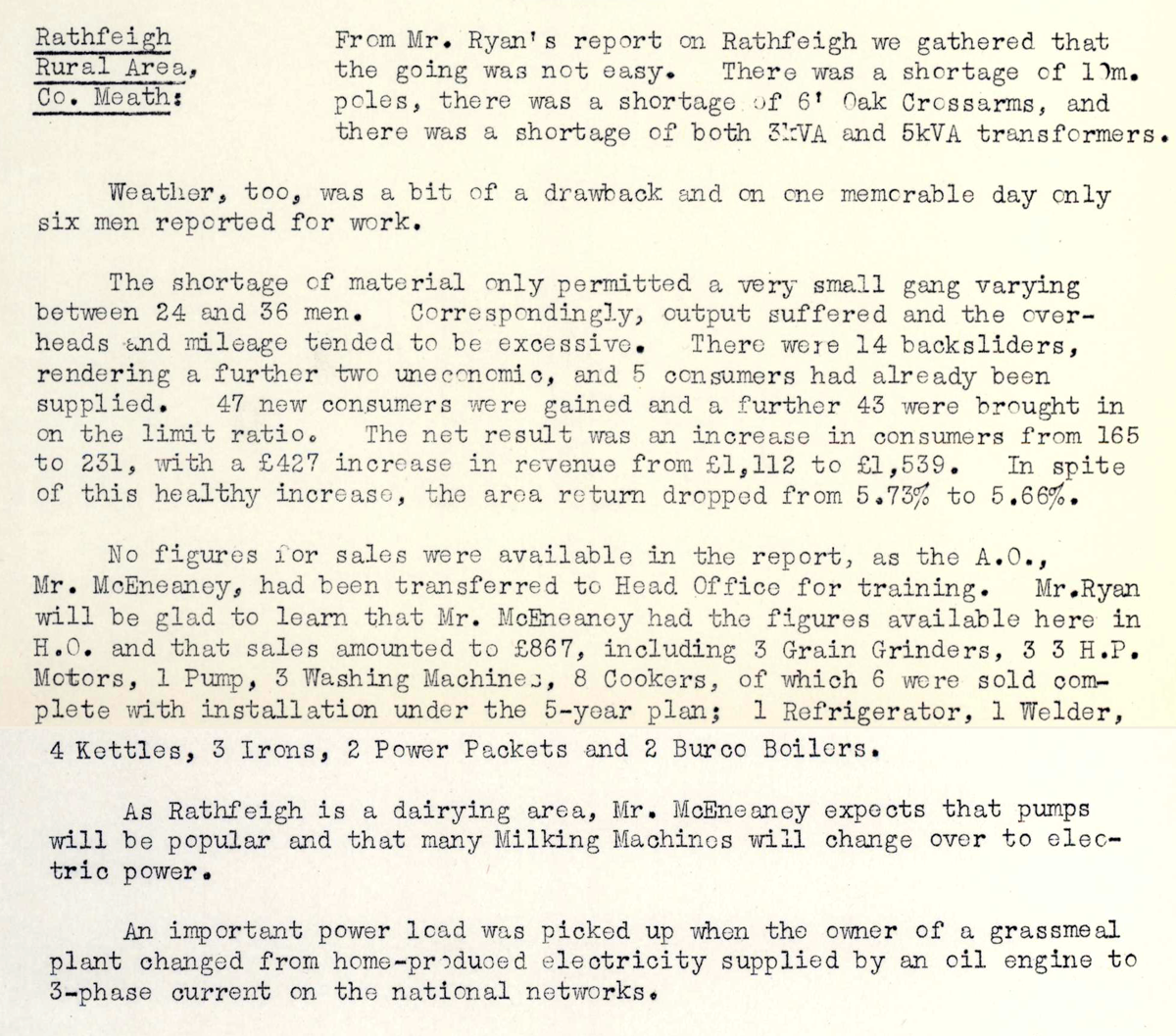 This digital scan from the REO News displays the following text:
"Rathfeigh Rural Area, Co. Meath: From Mr. Ryan’s report on Rathfeigh we gathered that the going was not easy. There was a shortage of 11m. poles, there was a shortage of 9" Oak Crossarms, and there was a shortage of both 3kVA and 5kVA transformers.
Weather, too, was a bit of a drawback and on one memorable day only six men reported for work.
The shortage of material only permitted a very small gang varying between 24 and 36 men. Correspondingly, output suffered and the overheads and mileage tended to be excessive. There were 14 backsliders, rendering a further two uneconomic, and 5 consumers had already been supplied. 47 new consumers were gained and a further 43 were brought in on the limit ratio. The net result was an increase in consumers from 165 to 231, with a £427 increase in revenue from £1,112 to £1,539. In spite of this healthy increase, the area return dropped from 5.73% to 5.66%.
No figures for sales were available in the report, as the A.O., Mr. McEneaney, had been transferred to Head Office for training. Mr. Ryan will be glad to learn that Mr. McEneaney had the figures available here in H.O. and that sales amounted to £887, including: 3 Grain Grinders, 3 H.P. Motors, 1 Pump, 3 Washing Machines, 8 Cookers, of which 6 were sold complete with installation under the 5-year plan; 1 Refrigerator, 1 Welder, 4 Kettles, 3 Irons, 2 Power Packets and 2 Burco Boilers.
As Rathfeigh is a dairying area, Mr. McEneaney expects that pumps will be popular and that many Milking Machines will change over to electric power.
An important power load was picked up when the owner of a grassmeal plant changed from home-produced electricity supplied by an oil engine to 3-phase current on the national networks."