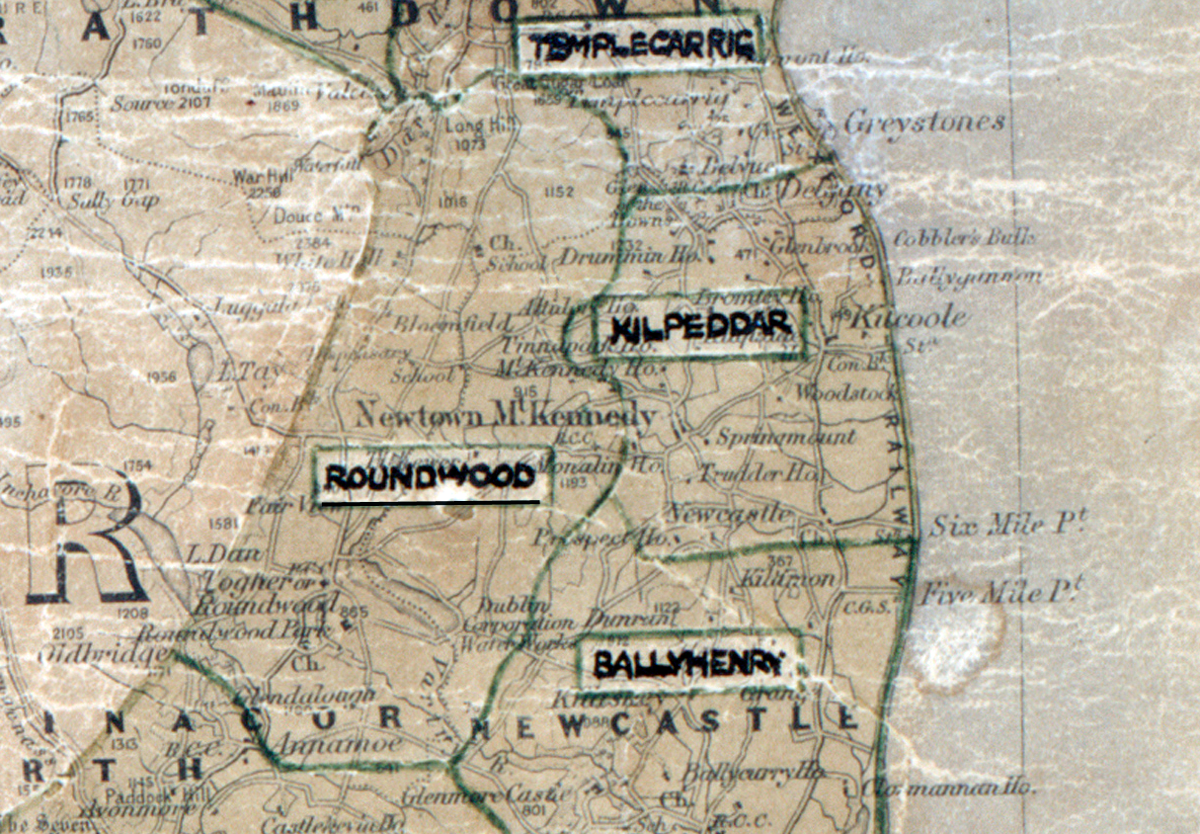
 Area: Roundwood
Started: June 1954
Finished: February 1955
Poles used: 755
Line used (km): 67
Premises connected: 150
The figures above were sourced from our REO News magazine, to learn more about what these figures mean, visit our rural map explanation page. The map above shows the area boundary and is from a digitised version of the original map used during the scheme.
The village of Roundwood is the highest village in Ireland according to The REO News from May 1955
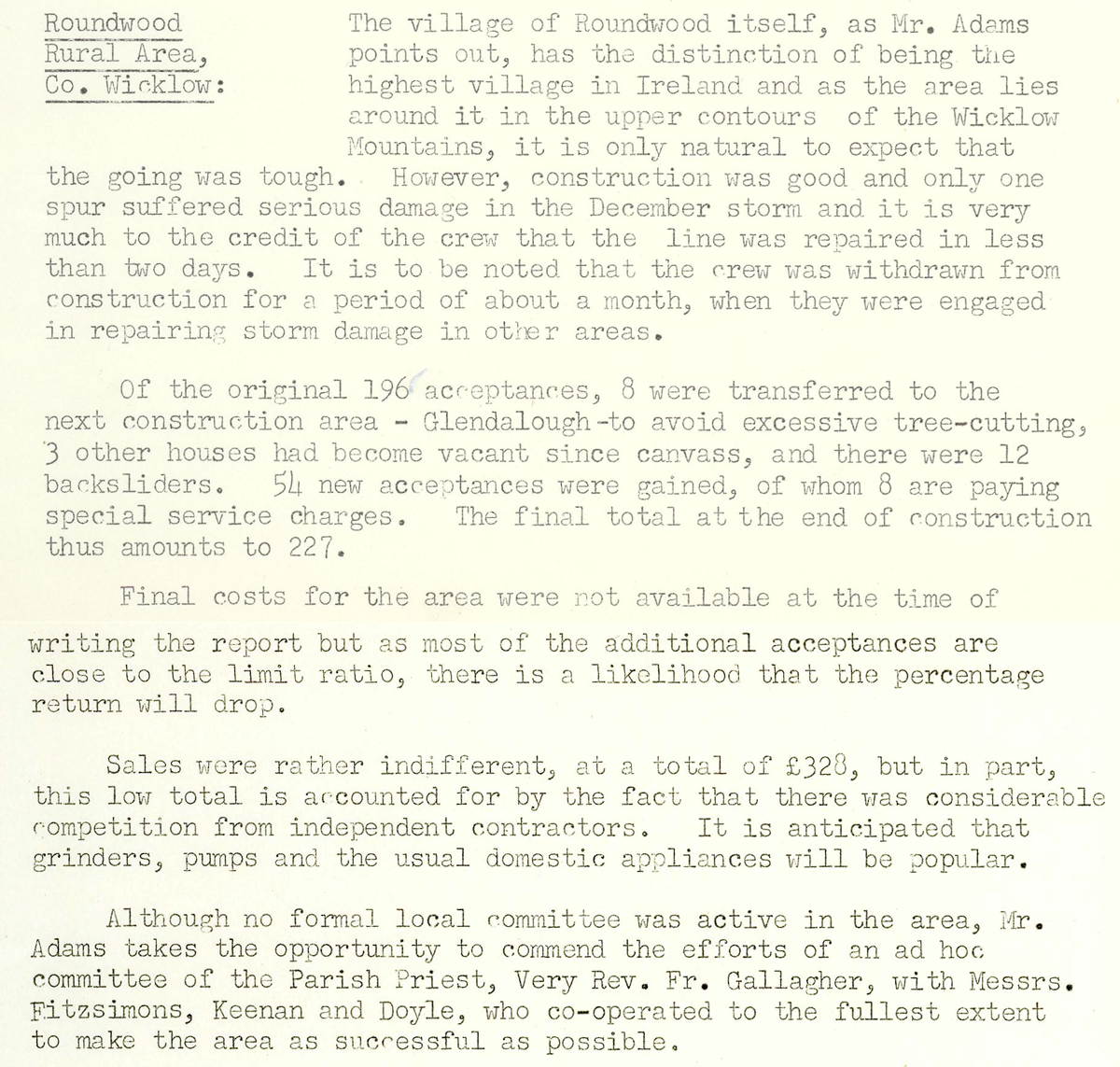 This digital scan from the REO News displays the following text:
"Roundwood Rural Area, Co. Wicklow:
The village of Roundwood itself, as Mr. Adams points out, has the distinction of being the highest village in Ireland and as the area lies around it in the upper contours of the Wicklow Mountains, it is only natural to expect that the going was tough. However, construction was good and only one spur suffered serious damage in the December storm and it is very much to the credit of the crew that the line was repaired in less than two days. It is to be noted that the crew was withdrawn from construction for a period of about a month, when they were engaged in repairing storm damage in other areas.
Of the original 196 acceptances, 8 were transferred to the next construction area – Glendalough – to avoid excessive tree‑cutting, 3 other houses had become vacant since canvass, and there were 12 backsliders. 54 new acceptances were gained, of whom 8 are paying special service charges. The final total at the end of construction thus amounts to 227.
Final costs for the area were not available at the time of writing the report but as most of the additional acceptances are close to the limit ratio, there is a likelihood that the percentage return will drop.
Sales were rather indifferent, at a total of £328, but in part, this low total is accounted for by the fact that there was considerable competition from independent contractors. It is anticipated that grinders, pumps and the usual domestic appliances will be popular.
Although no formal local committee was active in the area, Mr. Adams takes the opportunity to commend the efforts of an ad hoc committee of the Parish Priest, Very Rev. Fr. Gallagher, with Messrs. Fitzsimons, Keenan and Doyle, who co‑operated to the fullest extent to make the area as successful as possible."