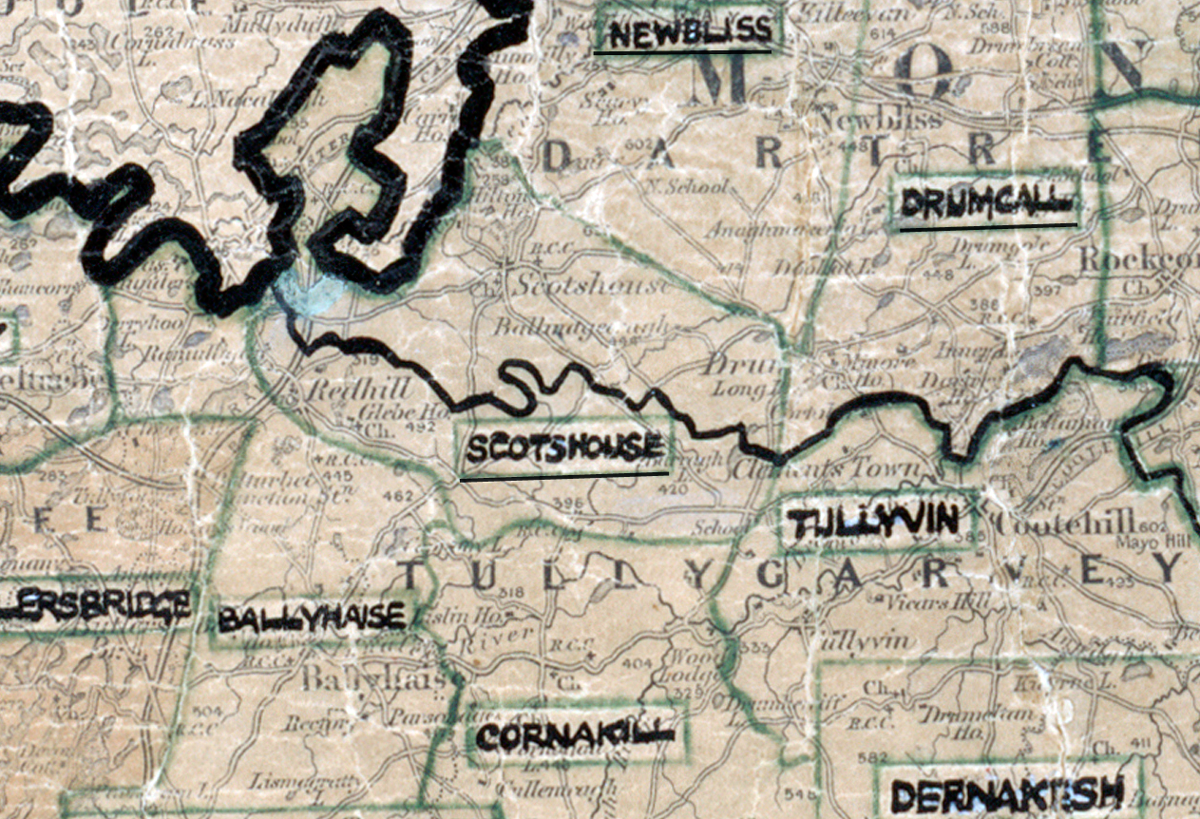
 Area: Scotshouse
Started: March 1952
Finished: February 1953
Poles used: 1536
Line used (km): 120
Premises connected: 377
The figures above were sourced from our REO News magazine, to learn more about what these figures mean, visit our interactive map. The map above shows the area boundary and is from a digitised version of the original map used during the scheme.
Some cross border cooperation was required in Scotshouse as noted in The REO News from May 1953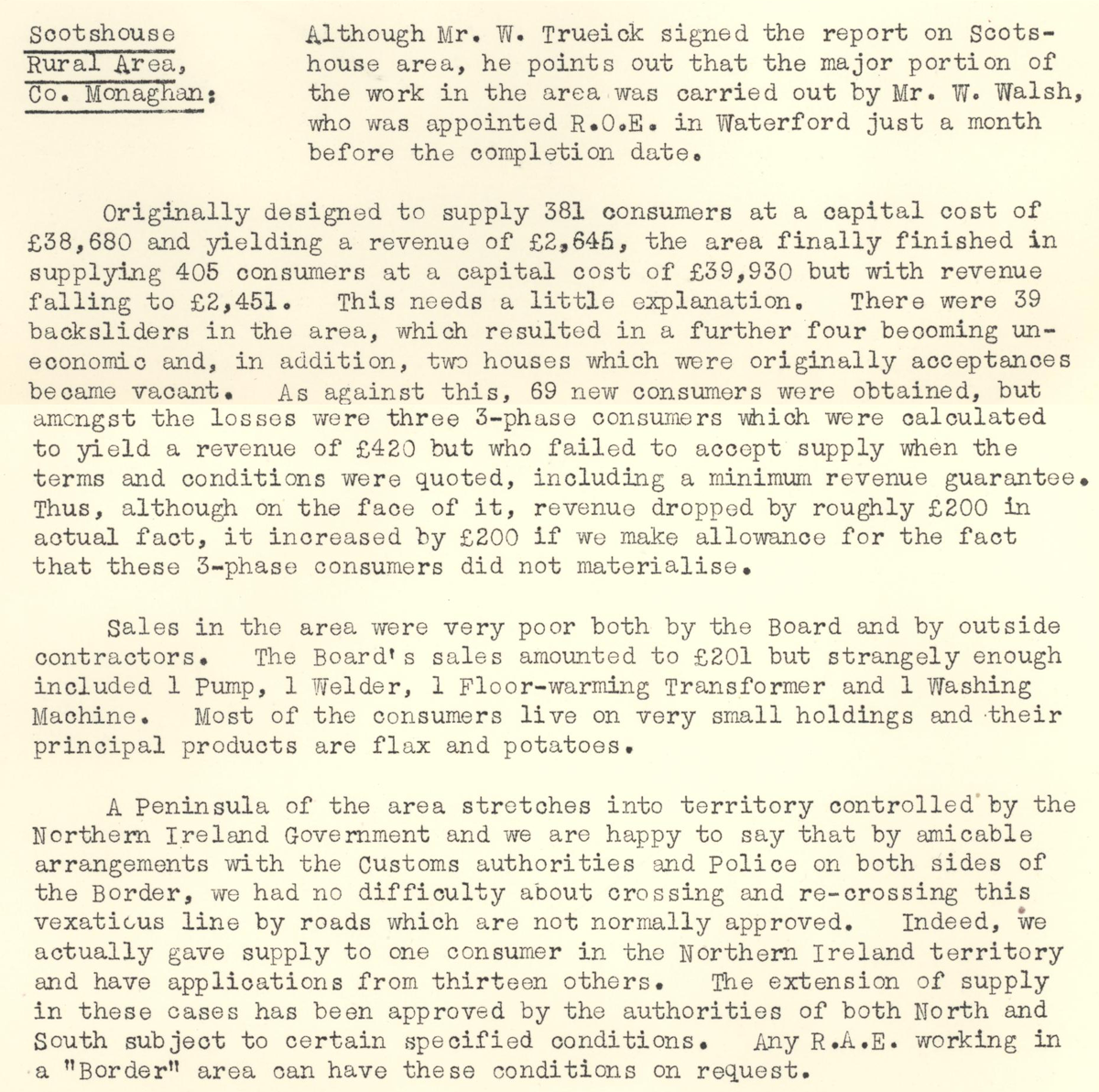 This digital scan from the REO News displays the following text:
"Scotshouse Rural Area, Co. Monaghan:
Although Mr. W. Trueick signed the report on Scotshouse area, he points out that the major portion of the work in the area was carried out by Mr. W. Walsh, who was appointed R.O.E. in Waterford just a month before the completion date.
Originally designed to supply 381 consumers at a capital cost of £38,680 and yielding a revenue of £2,646, the area finally finished in supplying 405 consumers at a capital cost of £39,930 but with revenue falling to £2,451. This needs a little explanation. There were 39 backsliders in the area, which resulted in the further four becoming uneconomic and, in addition, two houses which were originally acceptances became vacant. As against this, 69 new consumers were obtained, but amongst the losses were three 3‑phase consumers which were calculated to yield a revenue of £420 but who failed to accept supply when the terms and conditions were quoted, including a minimum revenue guarantee. Thus, although on the face of it, revenue dropped by roughly £200 in actual fact, it increased by £200 if we make allowance for the fact that these 3‑phase consumers did not materialise.
Sales in the area were very poor both by the Board and by outside contractors. The Board’s sales amounted to £201 but strangely enough included 1 Pump, 1 Welder, 1 Floor‑warming Transformer and 1 Washing Machine. Most of the consumers live on very small holdings and their principal products are flax and potatoes.
A peninsula of the area stretches into territory controlled by the Northern Ireland Government and we are happy to say that by amicable arrangements with the Customs authorities and Police on both sides of the Border, we had no difficulty about crossing and re‑crossing this vexatious line by roads which are not normally approved. Indeed, we actually gave supply to one consumer in the Northern Ireland territory and have applications from thirteen others. The extension of supply in these cases has been approved by the authorities of both North and South subject to certain specified conditions. Any R.A.E. working in a “Border” area can have these conditions on request."